




A Traffic Jam Above the Clouds
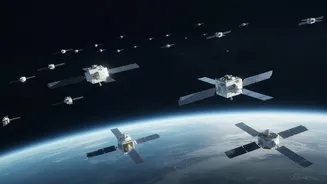
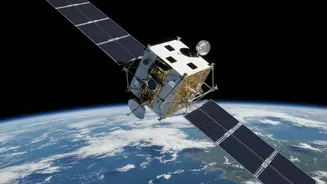
Imagine a highway with no traffic lights, speed limits, or lanes, where thousands of cars hurtle along at 27,000 km/h. That’s the reality of Earth's orbit today. It is populated by thousands of operational satellites, alongside millions of pieces of 'space
junk'—defunct satellites, spent rocket stages, and fragments from past collisions. This orbital debris poses a significant threat. Even a paint flake, travelling at immense velocity, can damage or destroy a vital satellite, disrupting communication, navigation, and security systems we rely on daily. As more nations and private companies launch vast satellite constellations, the risk of catastrophic collisions escalates, making the sustainable use of space a pressing global concern.
India's Proactive Stance: The SMOPS Conference
Recognising this challenge, India recently hosted the International Conference on Spacecraft Mission Operations (SMOPS-2026) in Bengaluru. The event brought together leading minds from ISRO, global space agencies like Roscosmos and JAXA, and private industry experts. The central theme was the urgent need for a robust framework for Space Traffic Management (STM). ISRO Chairman V. Narayanan stressed that effective mission operations are the bedrock of India's expanding space program, pointing to the precision that guided Chandrayaan-3's success as a model for future long-duration missions. The conference served as a platform for India to signal its intent to move from being a user of space to becoming a responsible guardian of the orbital environment.
Defining Space Traffic Management
So, what exactly is Space Traffic Management? It's more than just an early-warning system for collisions. A comprehensive STM system involves cataloguing and tracking objects in space, predicting their paths, and coordinating manoeuvres to avoid potential crashes. However, unlike air traffic control, there is currently no single, universally accepted framework for managing space traffic. An effective STM system would also involve setting international norms for satellite deployment, de-orbiting procedures for old satellites, and managing the radio frequency spectrum to prevent interference. It’s about creating a set of rules for the road to ensure the long-term safety and sustainability of all space activities.
Project NETRA: India's Eyes in the Sky
India is not just talking about the problem; it's actively building solutions. The cornerstone of its effort is Project NETRA (Network for Space Object Tracking and Analysis). This ambitious initiative aims to give India an independent capability for Space Situational Awareness (SSA), reducing its reliance on data from foreign agencies. NETRA integrates a network of radars and telescopes to detect and track objects as small as 10 centimetres. This indigenous system provides early warnings of potential threats to India’s fleet of over 50 operational satellites, which are crucial for communication, national security, and scientific research. The IS4OM (ISRO System for Safe & Sustainable Operations Management) control centre in Bengaluru serves as the hub for these activities, coordinating collision avoidance manoeuvres.
The Road Ahead for India
The discussions at SMOPS-2026 and initiatives like ISRO's goal for debris-free missions by 2030 underscore a strategic shift. As India prepares for ambitious projects like the Gaganyaan human spaceflight mission and the Bharatiya Antriksh Station by 2035, ensuring orbital safety is paramount. The country is also seeing a surge in private space startups, many of which are focusing on innovative solutions for debris management. By developing its technical capabilities and advocating for global cooperation, India is positioning itself not just as a major space power, but as a key architect of the rules that will govern humanity's future in orbit. The goal is to build mutual respect and foster data-sharing agreements that strengthen the security of all space assets.