


What Are Hanging Glaciers?
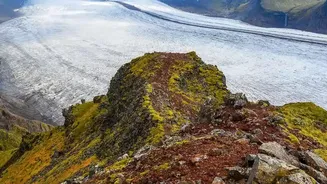
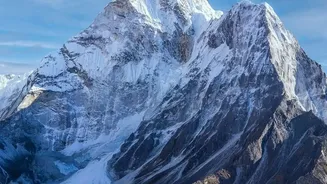
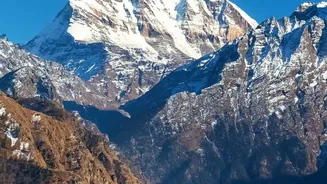
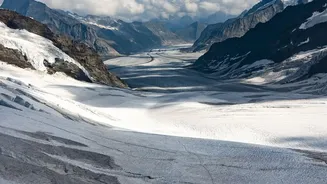
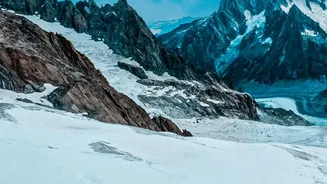
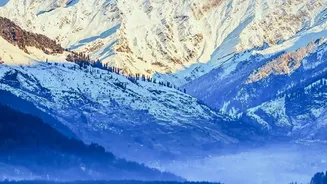
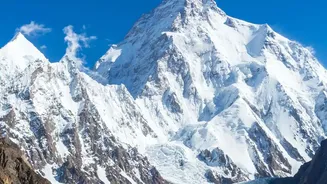
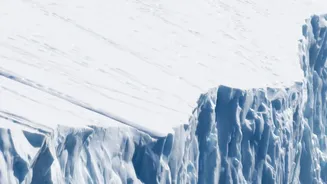
A hanging glacier is a body of ice that originates high on the steep wall of a mountain or valley, ending abruptly in a cliff face rather than flowing smoothly to the valley floor. They are essentially glaciers perched precariously on slopes. Unlike valley glaciers that carve
out U-shaped troughs over millennia, hanging glaciers are often remnants of larger ice systems or form in smaller tributary valleys. Their defining characteristic is their instability; gravity constantly pulls on the heavy ice, and they transfer mass to the valley below through dramatic icefalls and avalanches, a natural but hazardous process.
A Warming Grip Leads to Greater Risk
The Himalayas are warming faster than the global average, a fact that is dangerously weakening the ice. This accelerated melting acts as a multiplier for the inherent risks of hanging glaciers. Warmer temperatures can cause meltwater to seep into the cracks and base of the glacier, lubricating its connection to the bedrock and making a catastrophic failure more likely. This process of thawing and freezing weakens the ice's structural integrity over time. Recent studies have highlighted this growing instability, noting that climate change is a key contributing factor to the increased frequency and intensity of glacier-related hazards.
A Cascade of Destruction
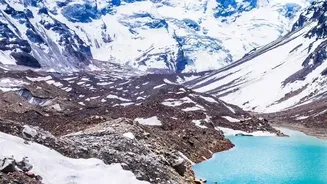
When a hanging glacier breaks off, it doesn't just cause an avalanche. The falling ice and rock can trigger a devastating chain reaction known as a multi-hazard cascade. The initial collapse can be enormous, with simulations for some areas predicting avalanche flows over 50 metres high, capable of burying entire settlements. If this mass of debris crashes into a river, it can create a temporary dam. Water builds up behind this unstable barrier until it bursts, unleashing a glacial lake outburst flood (GLOF) — a violent surge of water, mud, and boulders that rushes downstream, destroying everything in its path, from bridges and roads to hydropower plants. The 2021 disaster in Chamoli, Uttarakhand, was a tragic example of how a rock and ice avalanche can evolve into a deadly debris flow.
What's at Stake in India?
The threat is particularly acute in rapidly developing Himalayan states. A recent study focusing on Uttarakhand's Alaknanda basin identified 219 hanging glaciers, with nearly a third deemed highly unstable. This basin is not just a fragile ecosystem; it's a hub of human activity, hosting major pilgrimage routes like the one to Badrinath, along with towns, hotels, and critical hydropower projects. Research indicates a worrying trend: the land area occupied by buildings and infrastructure in these vulnerable zones is projected to be 120% higher by 2030 compared to the year 2000. This rampant expansion into high-altitude danger zones puts thousands of lives and vital national infrastructure directly in the path of potential disaster.
The Challenge of Monitoring and Preparedness
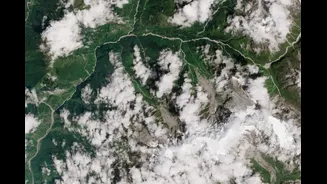
Addressing this threat is a monumental challenge. The sheer scale and remoteness of the Himalayas make ground monitoring of every glacier impossible. Scientists rely on a combination of satellite imagery, remote sensing technology, and on-the-ground studies to create inventories and assess risks. Organisations like the International Centre for Integrated Mountain Development (ICIMOD) are working to monitor glacial changes, but experts stress the urgent need for more systematic identification of high-risk glaciers and the development of early-warning systems. However, even with warnings, the speed of these events makes evacuation difficult. This underscores the importance of risk-informed land-use planning to prevent further development in the most hazardous zones.