





The Visionary Bet
Long before Skyroot Aerospace became India's first space-tech unicorn, it was an ambitious dream shared by two former ISRO scientists. In 2018, when Pawan Kumar Chandana and Naga Bharath Daka were struggling to find backers, they sent a cold message on LinkedIn
to entrepreneur Mukesh Bansal. At the time, India's space sector was not yet liberalized for private players, making investment in a rocket-building startup a high-risk venture. Most investors were focused on consumer internet businesses with faster returns. Yet, Bansal saw potential in the founders' vision. He became Skyroot’s first and only angel investor, putting in an initial Rs. 10-12 crore when no one else would. This early capital was critical, coming two years before the government officially opened the space sector to private enterprise in 2020.
A Dream Forged at ISRO
Skyroot was founded in Hyderabad by Pawan Kumar Chandana and Naga Bharath Daka, both alumni of India's esteemed space agency, ISRO. Having worked on major national launch vehicle programs like the GSLV Mk III, they possessed deep technical expertise. The duo spotted an opportunity in 2017 with the drafting of India's Space Activities Bill, which signaled a future for private rocket launches. They left their secure government jobs to build a company with a bold mission: to make space accessible and affordable. Their goal was to create a "cab service to space," offering on-demand launches for the booming small satellite market. This ambition required immense capital and navigating a regulatory landscape that was still in its infancy, a challenge that initially deterred many institutional investors.
The Vikram-1 Milestone
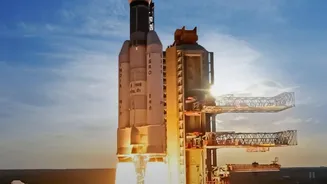
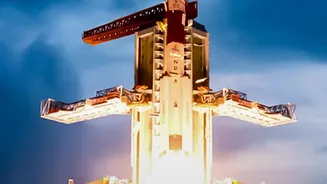
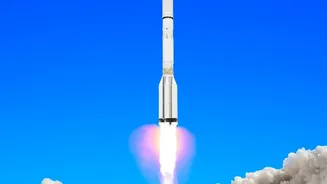
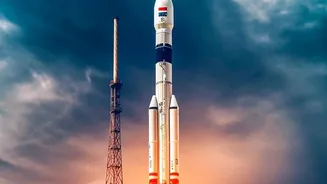
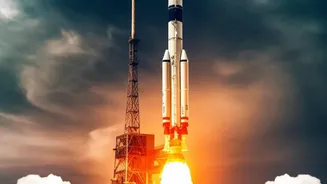
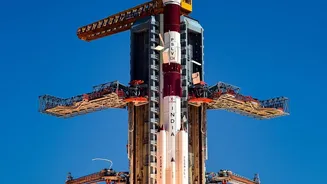
The successful launch of Vikram-1 on July 18, 2026, was a landmark moment, not just for Skyroot but for the entire nation. The mission, named 'Aagaman' (Arrival), saw the seven-storey-tall rocket lift off from Sriharikota and successfully place its payloads into a 450 km orbit. This achievement made India only the third country, after the US and China, with private orbital launch capability. Unlike Skyroot's earlier suborbital flight with Vikram-S, this was an orbital mission, meaning the vehicle was powerful enough to place satellites into a stable path around Earth. The rocket itself is an engineering marvel, featuring an all-carbon composite structure for reduced weight and 3D-printed engines.
An Investment That Soared
Bansal’s early faith has paid off spectacularly. His initial investment of around Rs. 12 crore has grown exponentially. As of July 2026, with Skyroot valued as a unicorn, Bansal's remaining stake is reportedly worth over Rs. 600 crore. Factoring in partial exits over the years, his total returns are estimated at over Rs. 700 crore, a nearly 60-fold increase on his original investment. This incredible return underscores the immense potential of deep-tech and spacetech in India. The success of Vikram-1 is seen as a major validation for the government's 2020 reforms, which have catalyzed the growth of over 400 space startups in the country.
The Dawn of a New Space Era
The Vikram-1 launch does more than just validate an investment; it fundamentally reshapes India's space capabilities. For decades, ISRO was the sole driver of the country's space program. Now, with private players like Skyroot demonstrating end-to-end launch capabilities, India has a more robust and flexible space ecosystem. This creates a sovereign "surge capacity," allowing the nation to rapidly launch satellites for intelligence, surveillance, and communication without solely relying on the national agency. As ISRO focuses on advanced research and deep space missions, private companies are poised to handle the growing commercial demand for low Earth orbit launches, heralding a new, collaborative era for India in space.