





What is NavIC?
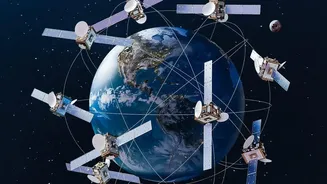
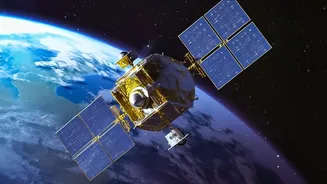
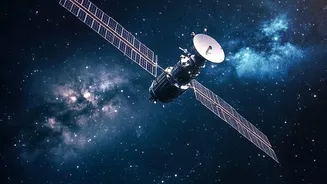
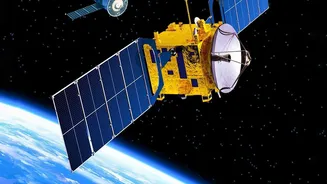
Navigation with Indian Constellation (NavIC) is India’s homegrown satellite navigation system, developed by the Indian Space Research Organisation (ISRO). Much like the American GPS, Russia’s GLONASS, or Europe's Galileo, NavIC provides crucial position,
navigation, and timing (PNT) services. It was conceived to give India strategic autonomy, ending its reliance on foreign-owned systems that could be denied during times of conflict—a lesson learned during the Kargil War. The system is designed to provide coverage over the Indian mainland and a region extending 1,500 km beyond its borders. It offers two main services: a Standard Positioning Service (SPS) for all civilian users and an encrypted Restricted Service (RS) for strategic and military applications. From disaster management and vehicle tracking to guiding precision missiles, NavIC is a critical piece of national infrastructure.
The Ticking Clock Problem
The heart of any navigation satellite is its atomic clock. These ultra-precise clocks provide the timing data needed to calculate a location on Earth. A timing error of even a billionth of a second can throw off a position by several metres. The original IRNSS constellation of satellites, launched between 2013 and 2018, relied on imported rubidium atomic clocks. Unfortunately, these clocks began failing prematurely across multiple satellites. By early 2026, the problem had become a full-blown crisis. Satellite after satellite saw its clocks fail, rendering them useless for navigation. The situation was dire: a navigation system needs a minimum of four functional satellites to provide a standalone position fix. As of March 2026, failures had reduced NavIC’s operational fleet to just three satellites, effectively taking its independent positioning service offline.
Enter NVS-03: The Next Generation
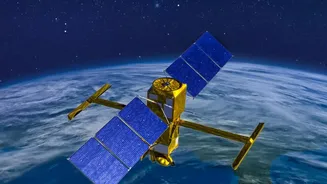
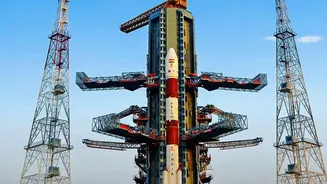
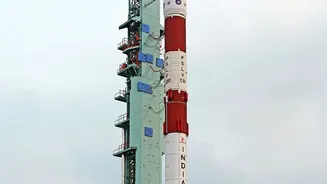
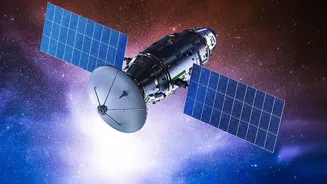
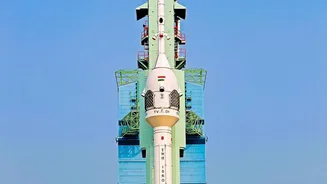
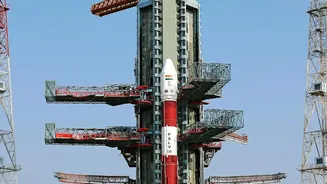
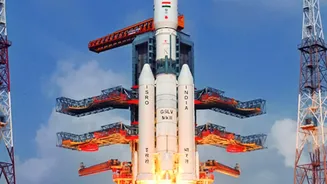
With the constellation crippled, everything rode on the next wave of satellites. The NVS-03 mission, scheduled for an October 2026 launch, was therefore not just a routine replenishment but a critical rescue operation. NVS-03 is a second-generation satellite, designed to be more robust and capable than its predecessors. Its most important upgrade is an indigenously developed rubidium atomic clock, created by the Space Applications Centre in Ahmedabad to replace the failure-prone imported ones. Furthermore, NVS-03 introduced a new L1 frequency band alongside the existing L5 and S bands. This is significant because the L1 band is the most common frequency used by civilian GPS receivers in smartphones and other consumer devices, paving the way for wider adoption of NavIC. The satellite also has a planned mission life of 12 years, longer than the first generation.
Why This Mission Was Critical
The stakes for the NVS-03 launch could not have been higher. With only three active satellites, NavIC was unable to fulfill its primary function for the armed forces, which rely on its secure, encrypted signals for everything from missile guidance to troop movements. A successful launch of NVS-03 would restore the minimum four-satellite quorum, reactivating NavIC’s standalone positioning capabilities. Another failure would have been a major setback. The previous attempt to bolster the constellation, the NVS-02 launch in January 2025, had failed to reach its intended orbit. This made the success of NVS-03 even more crucial to demonstrate that ISRO had overcome past hurdles and could reliably maintain this vital national asset. Restoring the system was a matter of ensuring India's strategic autonomy and operational readiness.
The Future of Indian Navigation
The successful launch of NVS-03 is the first step in a broader plan to overhaul and expand the NavIC constellation. Following NVS-03, ISRO has NVS-04 and NVS-05 in advanced stages of production, with more planned to follow. The goal is not just to replace the ageing first-generation satellites but to build a more resilient, capable, and redundant system. The introduction of the L1 band and domestically built atomic clocks are key pillars of this strategy, promising greater reliability and wider civilian use. By ensuring NavIC is fully functional, India solidifies its position among a handful of nations with independent navigation capabilities, safeguarding its security and technological sovereignty for years to come.