





An Unseen Nursery for Pests
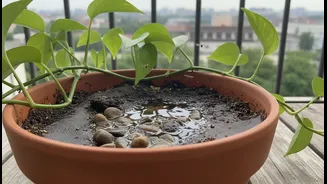
That small amount of runoff water sitting in your plant saucer is the perfect nursery for mosquitoes. A female mosquito can lay hundreds of eggs in a body of stagnant water as small as a bottle cap. In as little as five to seven days, those eggs can hatch
into larvae (often called "wigglers"), transform into pupae, and emerge as flying, biting adults. This rapid life cycle means that even a briefly forgotten saucer of water can lead to a sudden infestation in your home. The key to stopping this is to disrupt their life cycle by eliminating the standing water they depend on.
The Obvious First Step: Tip and Dry
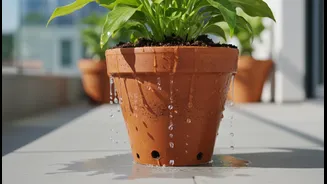
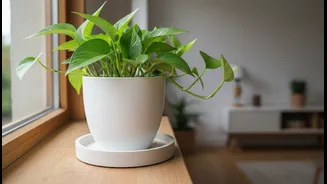
The most straightforward and cost-free solution is to simply empty your drainage trays regularly. About 30 minutes after watering your plants, tip any excess water from the saucer into a sink. It's crucial to do this consistently, ideally every two to three days, to ensure you're interrupting the mosquito breeding cycle. Some mosquito eggs can be laid on the sides of containers and survive even when dry, waiting for the next watering to hatch. Wiping the saucer dry can help remove these persistent eggs. While effective, this manual approach can be tedious, especially if you have many plants, which is why other methods can be a welcome alternative.
Create a Physical Barrier with Sand or Gravel
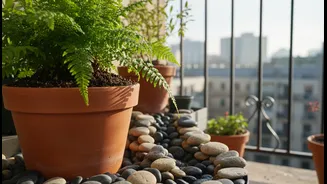
A simple and aesthetically pleasing way to prevent mosquitoes is to fill your plant saucers with a physical barrier like sand or fine gravel. Fill the saucer to a level where the water that drains from the pot will not pool on the surface. The sand or gravel will retain moisture for the plant's roots to absorb but will prevent a standing pool of water from forming. This denies mosquitoes a place to lay their eggs. It's an easy, set-it-and-forget-it solution that works well for both indoor and outdoor potted plants.
A Safe and Targeted Solution: Bti
For a more powerful, long-lasting approach, consider using a biological larvicide containing Bti (Bacillus thuringiensis israelensis). Bti is a naturally occurring soil bacterium that is deadly to mosquito, fungus gnat, and black fly larvae but is completely harmless to humans, pets, plants, and beneficial insects like bees. It comes in various forms, including small, donut-shaped "dunks" or granular "bits". When mosquito larvae ingest the Bti, it destroys their digestive system, stopping them before they can mature. For plant saucers, you can break off a small piece of a dunk and place it in the tray or simply add a few granules. The Bti will remain effective for about 30 days, treating the water with each subsequent watering.
Using Bti for Indoor Plants and Fungus Gnats
The same Bti products are also remarkably effective against another common houseplant pest: fungus gnats. These small, dark flies thrive in damp soil and lay their eggs there. To combat them, you can create a "tea" by soaking a piece of a mosquito dunk or some mosquito bits in your watering can for several hours or overnight. Use this water to irrigate your houseplants. The Bti in the water will kill the fungus gnat larvae in the soil without harming your plants. This method, combined with yellow sticky traps to catch the adults, is a powerful two-pronged attack to reclaim your indoor garden from pests.