





Wind: The Atmosphere's Housekeeper
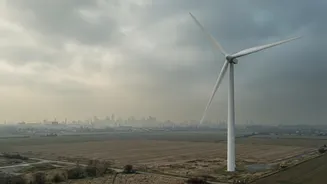
Think of wind as nature’s vacuum cleaner. On a breezy day, strong winds actively disperse pollutants, scattering them across a wide area and mixing them into the vast upper atmosphere. This is why, even with the same amount of traffic and industrial activity,
the air can feel much cleaner on a windy day compared to a still one. During and immediately after the monsoon, for instance, stronger winds and rain work together to wash and blow away pollutants, often leading to some of the best air quality days of the year for the region.
When the Wind Stops
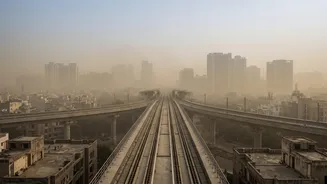
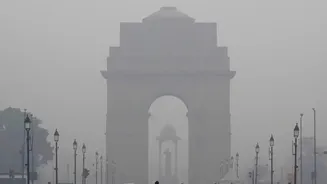
Starting around October, as the monsoon recedes, this atmospheric cleaning service grinds to a halt. Wind speeds over northern India drop significantly. Without the horizontal force of the wind to push them away, pollutants emitted from vehicles, industry, construction dust, and local biomass burning start to stagnate. Instead of dispersing, the emissions linger where they are produced, leading to a rapid accumulation of harmful particles in the air we breathe. This stagnation is the first key ingredient in the recipe for Delhi's severe pollution episodes.
The Inversion Lid
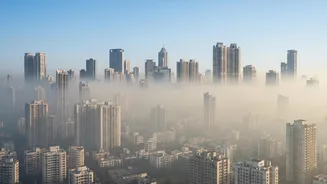
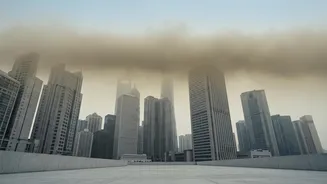
The second ingredient is a phenomenon called a temperature inversion. Normally, the air is warmest near the ground and gets colder with altitude. This allows warm, polluted air to rise and mix with cleaner, cooler air above. But during winter nights, the ground cools rapidly, chilling the air closest to it. The air layer above remains comparatively warm. This creates an 'inversion': a layer of cool, dense air trapped at the surface by a lid of warmer air above it. This atmospheric lid prevents the vertical movement of air, effectively trapping all the pollutants from the day near the ground.
A Shrinking Ceiling: The Boundary Layer
The third and final factor is the atmospheric boundary layer—the lowest part of the atmosphere where we live and where weather happens. This is the volume of air into which pollutants can mix. In summer, this layer can be over a kilometre high, giving pollution plenty of room to dilute. However, in winter, due to the cold, calm conditions, this boundary layer shrinks dramatically, sometimes to just a few hundred metres. Imagine the pollution as smoke inside a room. In summer, the ceiling is very high, but in winter, the ceiling is lowered significantly. The same amount of smoke now fills a much smaller space, making its concentration far more intense and toxic.
A Perfect Meteorological Storm
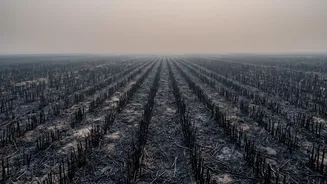
When these three factors—low wind speeds, a temperature inversion, and a shallow boundary layer—occur simultaneously, they create a perfect storm for hazardous air quality. The lack of wind prevents horizontal dispersal, the inversion layer stops vertical mixing, and the low boundary layer concentrates everything in a shallow pocket of air. This is why even on days with no significant increase in pollution-causing activities, the Air Quality Index (AQI) can spike into the 'Severe' category. The pollution isn't necessarily new; it's the same local and regional pollution, now trapped in a meteorological cage with nowhere to go. External sources like stubble burning from neighbouring states add a massive load of particulates into an atmosphere that has already lost its ability to clean itself.