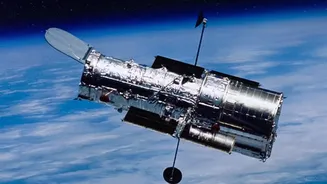

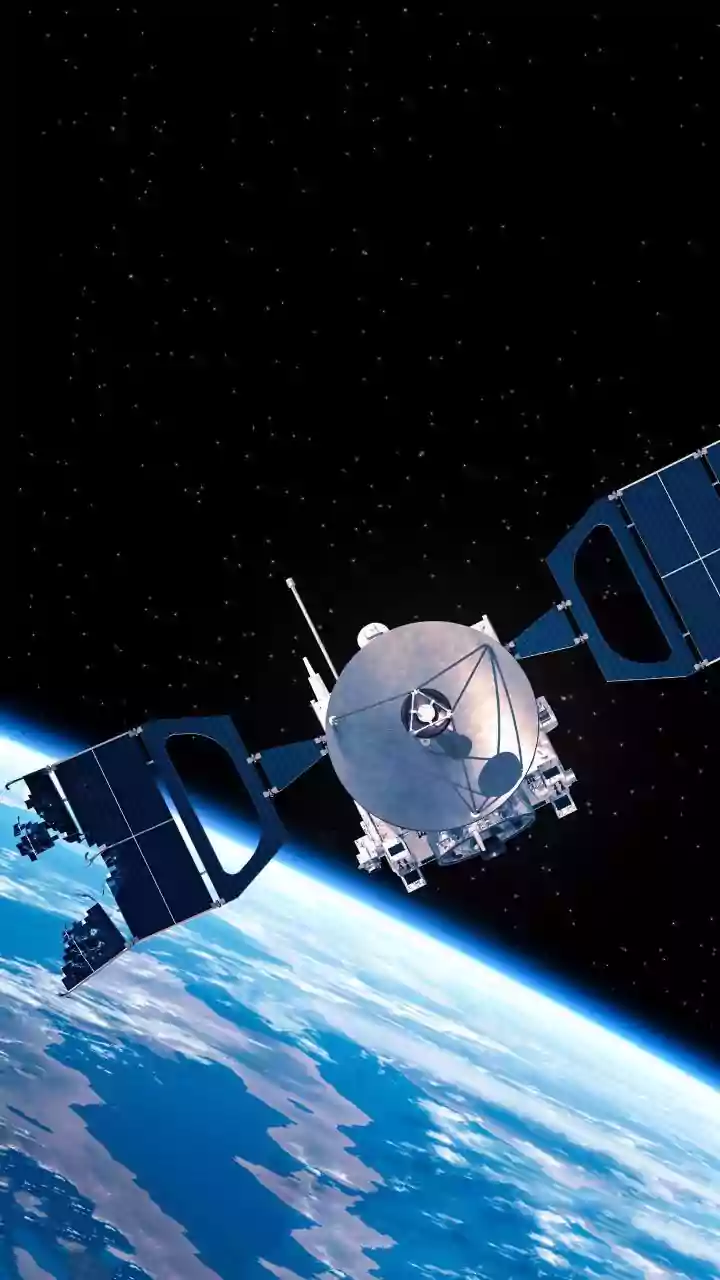


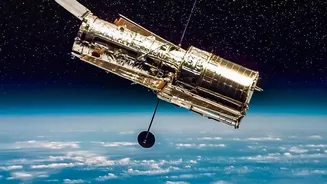


After a storied, 22-year career scanning the cosmos for its most violent explosions, NASA’s Neil Gehrels Swift Observatory came home on November 4. Its fiery end over Indonesia was not a failure, but the final chapter for a mission that lived a decade
past its warranty.
A Groundbreaking Cosmic Detective
Launched in November 2004, Swift was designed with a unique purpose: to be the universe's first responder. Its mission was to detect gamma-ray bursts (GRBs), the most powerful explosions in the cosmos, which flare up and vanish in minutes. Before Swift, these events were too fleeting for large telescopes to study. But Swift was built for speed. Within a minute of spotting a GRB, it could pivot its X-ray and ultraviolet/optical telescopes to the source, capturing the fading afterglow and broadcasting the coordinates to observatories worldwide. Originally planned for a two-year mission, Swift exceeded all expectations, operating for nearly 22 years. In that time, it observed over 2,000 GRBs and 1,400 supernovae, contributed to roughly 7,000 scientific papers, and helped confirm that short gamma-ray bursts are caused by colliding neutron stars. It was renamed in 2018 to honor its late principal investigator, Neil Gehrels.
The Science of a Slow Fall
So, what brought this prolific observatory down? The simple answer is atmospheric drag. Even hundreds of kilometers above Earth, the atmosphere isn't a perfect vacuum. There are still air molecules, and satellites in Low Earth Orbit (LEO) like Swift constantly collide with them. Each collision imparts a tiny bit of friction, or drag, which slows the satellite down. This is the beginning of a process called orbital decay. As the satellite slows, it can no longer maintain its altitude and begins to fall, a little at a time. As it descends, it enters slightly denser parts of the atmosphere, which increases the drag, causing it to slow down even more and fall even faster. It’s a feedback loop that, once started, is irreversible without an engine to provide a boost. Swift had no onboard propulsion system to counteract this relentless process.
An Accelerated Demise
For most of its life, Swift's orbital decay was slow and predictable. But in recent years, the process accelerated. The culprit was the Sun. Increased solar activity heats and expands Earth's upper atmosphere, pushing denser air to higher altitudes where Swift was orbiting. This dramatically increased the drag on the satellite, hastening its descent. Recognizing the inevitable, NASA even supported a high-risk, high-reward rescue attempt earlier in 2026. A commercial spacecraft called LINK, built by Katalyst Space, was launched to rendezvous with Swift and push it into a higher, more stable orbit. However, the LINK spacecraft suffered its own technical problems after launch and the daring rescue was abandoned, sealing Swift's fate.
The Final Fiery Plunge
On Wednesday, November 4, Swift's long, slow fall ended in a final, highspeed plunge. The U.S. Space Force confirmed the observatory reentered the atmosphere at 7:39 a.m. EST over the North Sumatra region of Indonesia. Hitting the upper atmosphere at roughly 17,000 miles per hour, the spacecraft experienced intense heat as the air in front of it compressed. Temperatures can reach thousands of degrees than causing the satellite to break apart and vaporize. NASA expected most of the $1$,$450$ kg spacecraft to burn up entirely than though it's possible some dense heat resistant components made of materials like titanium or stainless steel survived the reentry. The risk of any debris causing harm on the ground was calculated to be very low.