





From Relays to Robots
For decades, the model for satellite operations has been straightforward: a satellite collects data and beams it back to a ground station on Earth, where humans or computers analyze it and send back instructions. This process is reliable but slow, creating
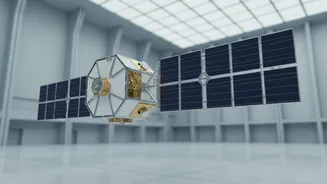
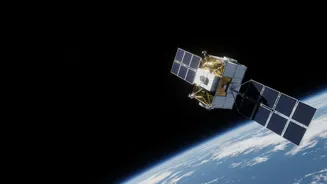
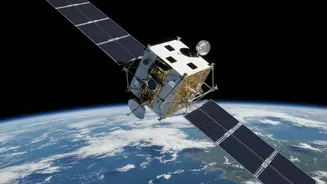
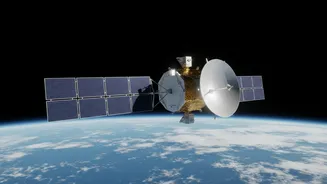
a significant time lag between data collection and action. Imagine waiting for a photo to download from a probe millions of miles away, only to realize you need to adjust the camera angle. Now, a new paradigm is taking shape: autonomous operations. This involves embedding artificial intelligence and powerful processors directly onto the satellite, a concept known as edge computing. Instead of just relaying raw data, these 'smart' satellites can process and analyze information in orbit, making decisions on their own without constant human intervention.
The Need for Speed and Efficiency
The push for autonomy is driven by several critical factors. First is the sheer volume of data being generated. Modern Earth observation satellites can create terabytes of imagery daily. Transmitting all of that information to Earth is a massive bottleneck, straining bandwidth and increasing costs. Onboard processing allows satellites to filter this data, sending back only what’s essential—for example, notifying authorities about a new wildfire without sending thousands of images of empty forest. Second is the explosion of satellite mega-constellations. With tens of thousands of satellites projected to be in low-Earth orbit by 2030, manual management is becoming impossible. Autonomous systems are needed to handle collision avoidance, manage network traffic between satellites, and ensure the entire constellation works in harmony.
Thinking on the Fly in Orbit
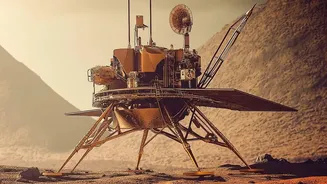
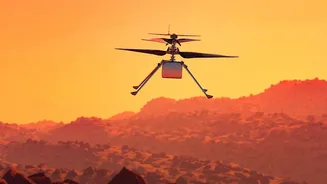
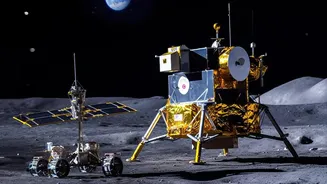
The applications for this technology are transformative. In disaster response, an autonomous satellite could detect signs of a flood or earthquake and immediately retask itself—and nearby satellites—to provide continuous coverage for first responders, all before a human on the ground is even aware of the event. For deep space exploration, where communication delays can be hours long, autonomy is a necessity. A Mars rover with onboard AI can navigate treacherous terrain on its own, and a deep-space probe can decide which scientific data is most valuable to transmit back across the solar system. In defence and security, smart satellites can detect signal jamming or spoofing attempts and adjust their operations in real-time to maintain resilience.
The Challenges in the Void
Despite the immense potential, the path to full autonomy is not without obstacles. The space environment is incredibly harsh, with extreme temperatures and radiation that can disrupt sensitive electronics. Processors used in space must be 'radiation-hardened,' which means they are typically several generations behind their faster, more powerful terrestrial counterparts. This limits the complexity of AI models that can be run onboard. Furthermore, there is the critical issue of trust and reliability. A software bug in an autonomous system could lead to the loss of a billion-dollar mission. Engineers must rigorously test these systems and often build in human oversight for critical decisions, striking a balance between machine efficiency and human judgment.
A New Era for the Space Economy
Companies and space agencies worldwide are racing to solve these challenges. Startups are developing specialized AI accelerators for space, while major players like Planet Labs and various NASA and ESA missions are already deploying satellites with onboard AI capabilities. These systems are proving their worth by enabling faster delivery of insights and reducing operational costs. This isn't just an incremental improvement; it's a fundamental shift that will unlock new business models and scientific discoveries. From providing real-time agricultural data to farmers to managing global internet constellations, autonomous satellites are set to become the backbone of a more dynamic and responsive space infrastructure.