


From Surface Dweller to Underwater Explorer
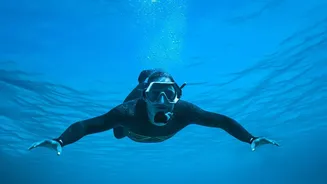
Being able to swim is a fantastic life skill. It’s about propulsion, endurance, and staying afloat. Most swimmers think about getting from point A to point B on the surface. Scuba diving, however, is fundamentally different. It's not about crossing the water,
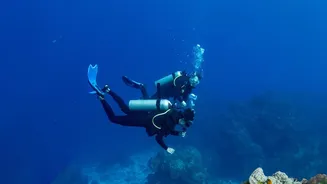
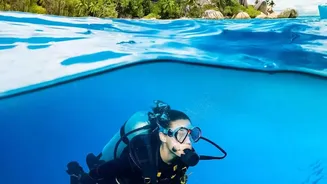
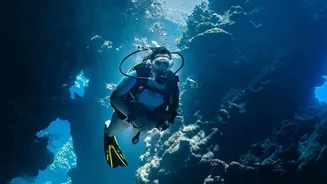
but about existing within it. While basic water comfort is a prerequisite for certification—courses like PADI's Open Water Diver require a 200-metre swim and a 10-minute float—the skills you learn are not advanced swimming techniques. Instead, they form a new foundation for interacting with an aquatic environment. You transition from a visitor on the surface to a calm, competent explorer who can navigate the three-dimensional world beneath the waves.
The Art of Meditative Breathing
The first and most profound skill a diver learns is to control their breath in a completely new way. Swimmers learn to time their breaths between strokes, often holding it for short bursts. In scuba, you learn to breathe slowly, deeply, and continuously from a regulator. This deliberate breathing is crucial for managing air consumption and staying calm. Many divers describe it as a form of underwater meditation. This focused breathing can activate the body's relaxation response, reducing stress and anxiety. Mastering this skill teaches you to remain composed even when faced with the unfamiliar, a practice that builds immense mental fortitude and confidence both in and out of the water.
Mastering Weightlessness: Neutral Buoyancy
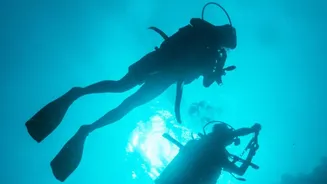
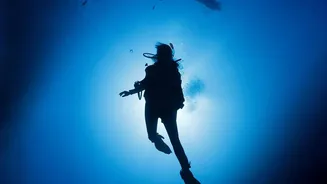
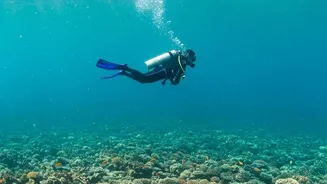
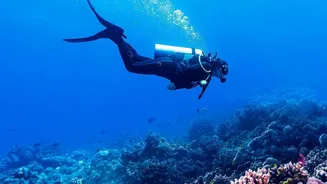
For a swimmer, the goal is always to stay on top of the water. A diver's goal is to achieve 'neutral buoyancy'—a state of being perfectly weightless, neither sinking nor rising. This is perhaps the most defining skill of a good diver and one that has no parallel in swimming. It's achieved by making micro-adjustments to the air in your Buoyancy Control Device (BCD) and controlling your lung volume with your breath. Learning to hover effortlessly in mid-water, to ascend or descend with just an inhale or exhale, is a feeling of total freedom and control. It requires practice and finesse, but once mastered, it allows you to glide through the water with minimal effort, conserving energy and air while protecting the delicate marine environment below.
A New Level of Situational Awareness
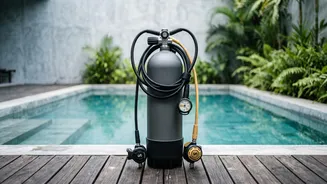
Scuba diving demands a level of situational awareness far beyond that of a casual swimmer. Before you even enter the water, you learn to assemble and check your own life-support equipment. Underwater, you are constantly monitoring your depth, time, and remaining air supply. You also learn to communicate with your dive buddy using hand signals and stay aware of their position and status. This 'buddy system' introduces a layer of shared responsibility. You are not just responsible for yourself, but also for your partner. This suite of skills—equipment management, dive planning, team communication, and environmental awareness—builds a robust sense of preparedness and self-reliance.
Confidence Forged Under Pressure
During training, every diver practices emergency procedures, such as how to share air with a buddy, how to do an emergency ascent, or how to handle a flooded mask while underwater. Successfully navigating these simulated challenges in a controlled environment is incredibly empowering. You prove to yourself that you can manage unexpected situations calmly and methodically. This process of overcoming challenges and mastering complex skills builds a deep, resilient form of self-confidence that extends far beyond diving. The knowledge that you can handle yourself in a completely alien environment provides a powerful psychological boost, reinforcing your ability to tackle challenges in all aspects of life.