



Why the Path Trumps Pace
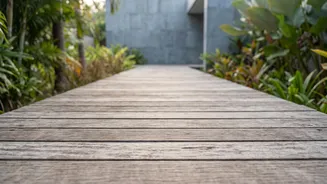
The single most important rule of reverse walking has nothing to do with speed, incline, or duration—it's about safety. Because you can't see what's behind you, the risk of tripping over obstacles or colliding with someone is significantly higher. A clear,
smooth, and predictable path is non-negotiable. Experts recommend starting in a controlled environment like an empty hallway, a quiet park with a paved path, or on a treadmill. Trying to navigate a bumpy road or a crowded area is a recipe for a fall. Your brain has to work much harder to maintain balance and spatial awareness when moving in reverse, so removing potential hazards allows you to focus on form and reap the benefits without injury. Speed will come naturally as you build confidence and coordination, but a safe space must always come first.
The Surprising Benefits of Walking Backward
So why bother with this seemingly awkward exercise? The benefits are surprisingly robust. For one, it can be a game-changer for people with knee pain. The toe-to-heel motion of retro walking reduces compressive forces on the knee joint, which can provide relief for those with conditions like osteoarthritis. It also strengthens the quadriceps, the muscles at the front of your thighs that provide crucial support for your knees. Beyond joint health, reverse walking burns significantly more calories—up to 40% more than forward walking at the same pace. It also enhances balance, coordination, and posture, forcing you to stand more upright and engage your core.
Your Step-by-Step Guide to Getting Started
Ready to give it a try? The key is to start slow and prioritise proper form. First, find your safe space. If you're on a treadmill, set the speed very low (around 1-2 MPH) and hold onto the handrails until you feel stable. If you're outdoors, choose a flat, open area with no obstacles. Focus on your movement: land on the ball of your foot and roll back to the heel. Keep your posture upright and your core engaged; try not to slouch or hinge too far forward. Start with short intervals, such as walking backward for one or two minutes for every five to ten minutes of forward walking. You can gradually increase the duration as you become more comfortable with the unfamiliar movement.
Common Mistakes to Avoid
To ensure your backward journey is a safe one, be mindful of a few common pitfalls. The most obvious is not paying attention to your surroundings. Even in a seemingly clear area, it's wise to occasionally glance over your shoulder to ensure your path is still free of obstacles. Another mistake is going too fast, too soon. Your backward pace will naturally be slower than your forward one, and that’s perfectly fine. Trying to match your forward speed before you’ve mastered the movement increases your risk of falling. On a treadmill, always attach the safety key to your clothing. Finally, avoid relying too heavily on the handrails if you're using a treadmill; while helpful for beginners, constantly holding on can lead to poor posture and negate some of the balance-building benefits.
How to Integrate It Into Your Routine
You don't need to dedicate an entire workout to reverse walking to see results. The easiest way to start is by incorporating it as a 'finisher' at the end of your regular walks. Just turn around and walk backward for the last five minutes. This can serve as a cooldown that also provides unique neuromuscular benefits. You can also use it for cross-training. For runners and other athletes, retro walking can help strengthen underused muscle groups, improve hip extension, and prevent overuse injuries. Some people use it as a warm-up to activate the quads and glutes before a leg workout. A study on individuals with knee osteoarthritis found that walking backward for just 10 minutes, three times a week, led to significant pain relief. The key is consistency, even in small doses.