





The New Official Height
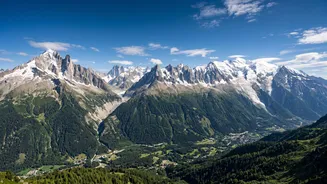
According to the latest survey announced on October 14, 2026, the summit of Mont Blanc now stands at 4,807.47 metres. This marks a significant increase of nearly two metres from its 2023 measurement of 4,805.59 metres, which was the lowest recorded in recent
years. A team of expert surveyors from France's Haute-Savoie region made the climb in September to gather the data, continuing a tradition that has been taking place every two to three years since 2001. This regular monitoring provides a fascinating glimpse into the life of a mountain that is in constant flux.
Why The Mountain 'Grows' and 'Shrinks'
It's a common misconception to think the rock of the mountain itself is rising and falling. The actual rock summit of Mont Blanc is stable at around 4,792 metres. The variation in height comes from the thick cap of ice and snow that sits on top. This snowy crown can be anywhere from 15 to 20 metres thick. Its depth changes based on the year's weather conditions. High winds can blow snow off the peak or accumulate it in massive drifts, while the amount of summer and winter precipitation determines how much snow is added or lost. So, when we talk about Mont Blanc's height changing, we're really talking about the fluctuating size of its snowpack.
The Science of a Summit Survey
Measuring a mountain like Mont Blanc is a formidable task that combines modern technology with old-fashioned mountaineering. Surveyors carry nearly 30 kilograms of equipment to the summit. They use high-precision GPS and other satellite positioning systems to get an exact reading of the highest point. In recent expeditions, drones have also been used to create detailed 3D models of the summit's snow and ice cover. The team often spends hours at the peak in freezing conditions to ensure their measurements are accurate. This data isn't just a number; it helps scientists understand the volume and shape of the ice cap with incredible detail.
A Barometer for Weather, Not Climate Change (Yet)
While it's tempting to link a lower summit to climate change-induced melting, experts caution against jumping to conclusions based on a single measurement. The biennial changes are largely driven by short-term weather patterns. A year with heavy snowfall and less wind can lead to a 'taller' mountain, as seen in the 2026 results, while a hot summer or different wind patterns can cause it to 'shrink'. However, the long-term collection of this data is invaluable for climatologists and glaciologists. Over decades, this consistent record will help scientists distinguish between normal weather variations and the underlying impacts of climate change on the alpine environment. Jean des Garets, the chief surveyor, noted that the data is being gathered for future generations to analyze these long-term trends.
A History of Fluctuation
This isn't the first time Mont Blanc's height has captured public attention. The summit has been on a rollercoaster ride for decades. For instance, after being measured at a record high of 4,810.90 metres in 2007, it entered a period of gradual decline, culminating in the 2023 low point. The most recent measurement reverses that trend, bringing the peak back above the 4,807-metre mark. These fluctuations highlight the dynamic nature of high-altitude environments. Far from being a static landmark, Mont Blanc is a living mountain, constantly reshaped by the forces of nature, offering a valuable lesson in how our planet breathes and evolves.