

Our solar system seems orderly, but new research suggests a missing piece. Scientists now believe a 'Super-Earth' once roamed our cosmic neighbourhood before mysteriously vanishing. Here’s what the evidence shows and why it matters.
A Cosmic Puzzle
When we look out into
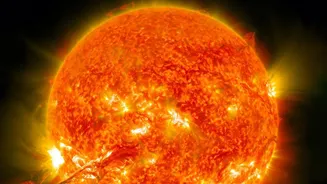
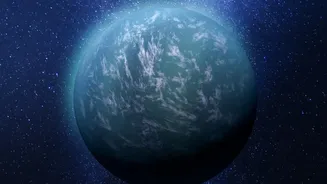
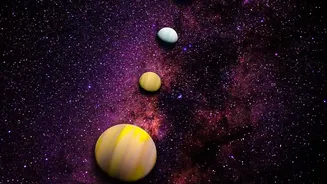
the galaxy, astronomers have found that a very common type of planet is the 'Super-Earth'—a world larger than Earth but smaller than Neptune. Yet, in our own solar system, there are none to be found. This has been a long-standing puzzle for planetary scientists. Why is our cosmic family missing such a common member? Furthermore, the sun itself holds mysteries. Its chemical composition has subtle quirks, like a lower-than-expected amount of lithium, that don't perfectly match standard models of stellar evolution. A recent hypothesis published in the Monthly Notices of the Royal Astronomical Society suggests these two anomalies might be linked by a single, dramatic event from our solar system's distant past.
The Ghost Planet Hypothesis
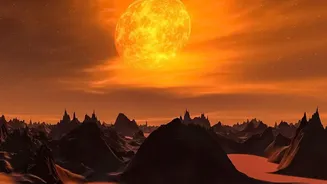
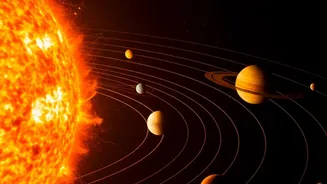
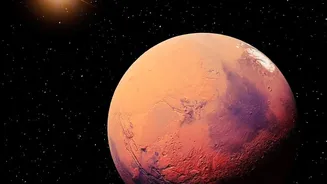
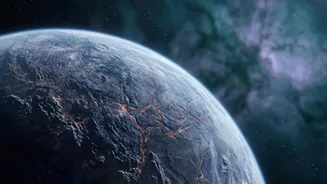
Scientists are now exploring the possibility that our solar system was not always this way. Computer simulations suggest that a Super-Earth, a planet five to ten times the mass of our own world, may have formed in the inner solar system billions of years ago. This hypothetical planet would have orbited much closer to the sun, perhaps even within the orbit of Mercury. Researchers from Ege University in Turkey proposed this idea after running complex simulations to see if a planetary collision could explain some of the sun's unusual properties. Their models indicate that the best fit for the data involves our young sun swallowing a massive planet whole.
A Violent End
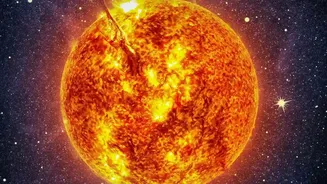
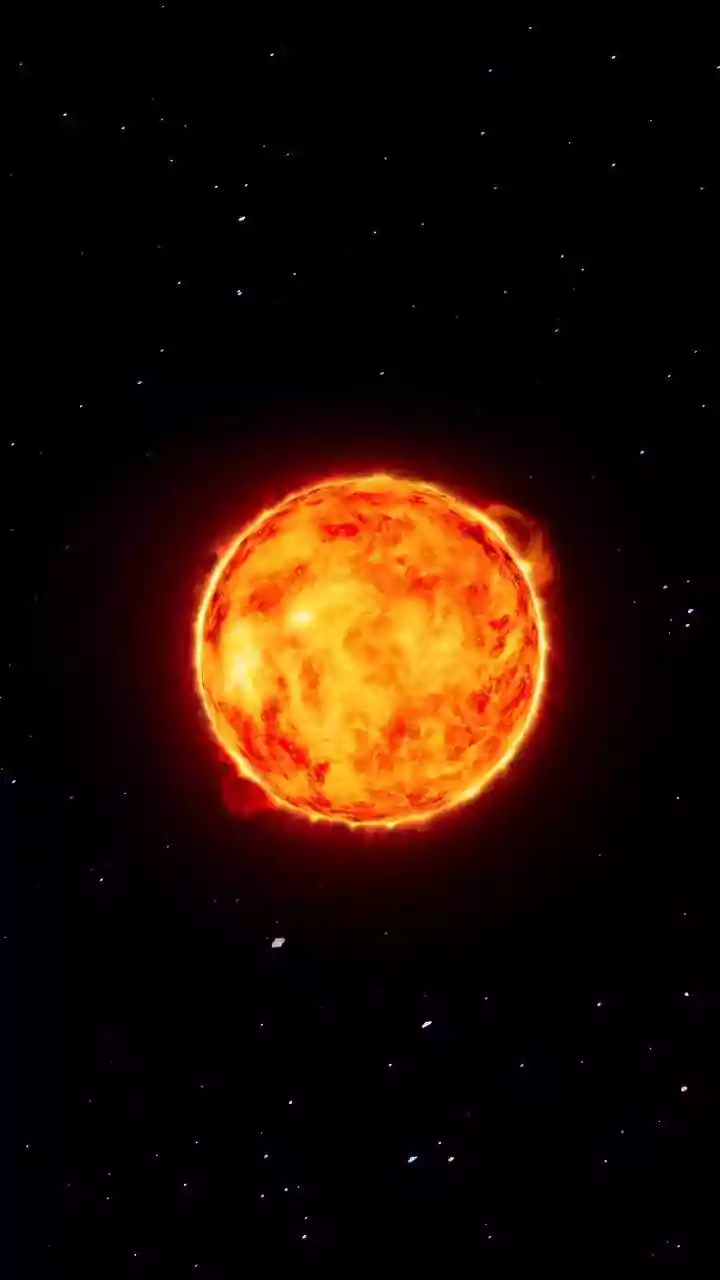
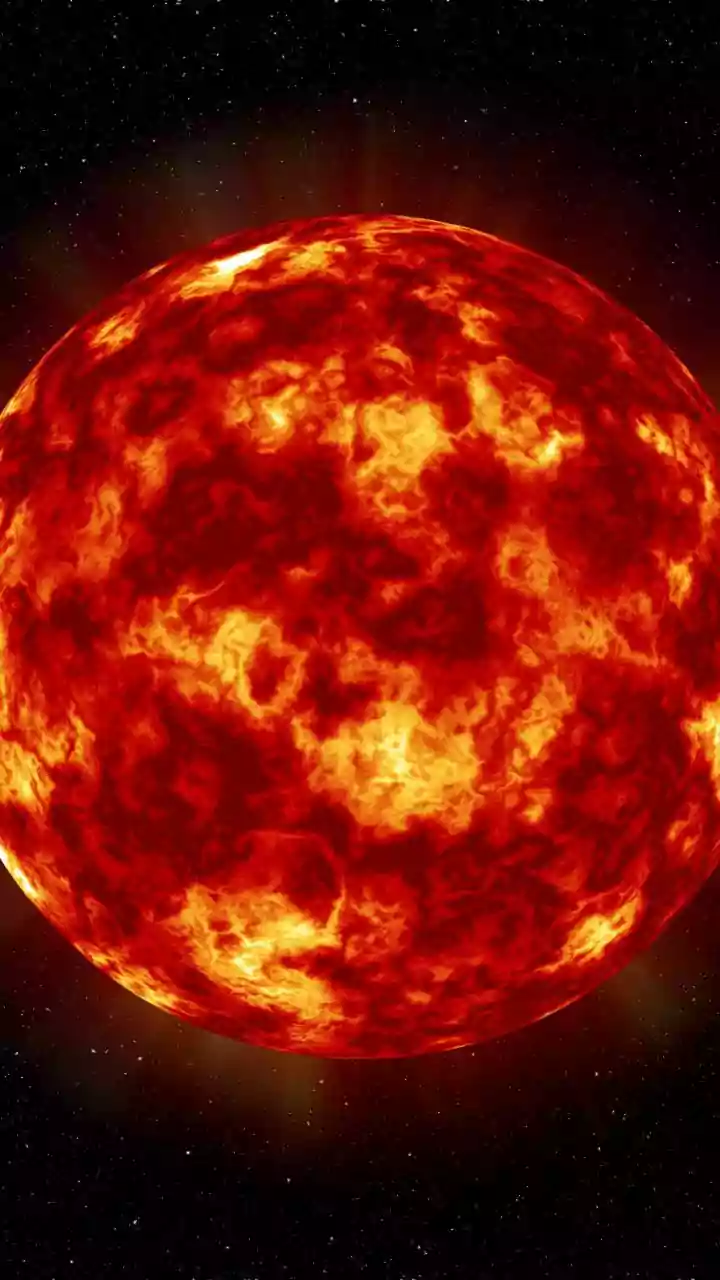
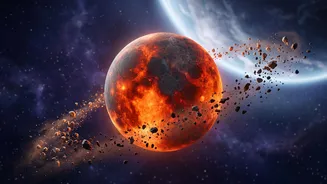
So, where did this ghost planet go? The most dramatic theory is that it was consumed by our own star. In the chaotic early days of the solar system, planetary orbits were not as stable as they are today. A protoplanetary disc of gas and dust would have surrounded the young sun, creating drag and causing planets to migrate inward. It’s plausible that one or more Super-Earths formed and then spiraled toward their doom, ultimately plunging into the sun. The research suggests that a planet of this size could have penetrated deep into the star before being destroyed, leaving a lasting chemical signature. This ancient act of stellar cannibalism could account for the sun's strange composition and also neatly explain why we don't see any Super-Earths in our system today—they were wiped out before they could settle into stable orbits.
Searching for the Evidence
While this is a compelling story, it's important to remember that it is still a theory based on computer models. It has not been definitively proven. However, scientists believe there may be a way to test it. The collision would have altered the sun's internal structure in subtle ways. By using a technique called helioseismology, which studies the vibrations and sound waves traveling through the sun, researchers hope to find evidence of these structural and chemical changes. Detecting these faint fingerprints from a billions-of-years-old event would be a monumental achievement, proving not only what happened to a lost world but also showing that stars can preserve evidence of the planets they consume. This idea differs from earlier theories about a planet named 'Vulcan' inside Mercury's orbit, which was hypothesized in the 19th century to explain quirks in Mercury's movement and was later disproven by Einstein's theory of general relativity.