








The Silicon Brains of AI
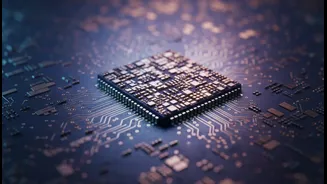
At its core, 'AI silicon' refers to semiconductor chips specifically designed to run artificial intelligence algorithms with maximum speed and efficiency. Unlike general-purpose processors, these chips are optimised for the massive parallel calculations
required for tasks like machine learning and neural networks. They are the physical brains behind the digital intelligence that is reshaping everything from smartphones and cars to healthcare and national defence. Having a domestic supply of these chips is not just about manufacturing; it's about owning a foundational piece of the 21st-century economy. Whoever controls the chips, controls the future. This is why nations are racing to secure their own semiconductor supply chains, viewing it as a matter of critical national infrastructure.
India's Multi-Billion Dollar Mission
India's strategy is taking concrete shape through ambitious government initiatives. The India Semiconductor Mission (ISM), first launched in 2021, has been supercharged with a second phase, Semicon 2.0, approved in July 2026 with an outlay of over ₹1.27 lakh crore. This program is designed to build a complete ecosystem, moving beyond just attracting foreign investment to fostering domestic capabilities in chip design, manufacturing (fabrication), and packaging (ATMP/OSAT). Major projects are already underway, including Tata Electronics' foundry in Dholera, Gujarat, in partnership with Taiwan's PSMC, and multiple assembly and test facilities in states like Assam and Karnataka. These efforts are complemented by the IndiaAI Mission, which allocates significant funds to build the massive computing infrastructure needed to power AI development.
The Strategic Gains of Control
Developing a domestic AI silicon industry offers India a host of strategic advantages. The most immediate benefit is supply chain resilience. Heavy reliance on imports, primarily from a few East Asian countries, leaves India vulnerable to geopolitical tensions and global shortages. Domestic production ensures a stable supply for critical sectors. Economically, it represents a monumental opportunity to move up the value chain, creating high-value jobs and boosting exports. The domestic semiconductor market is projected to reach over $100 billion by 2030. Furthermore, controlling the hardware layer provides a significant boost to national security. It allows for the development of trusted, secure chips for sensitive applications in defence, space, and critical infrastructure, reducing the risk of embedded foreign spyware or backdoors. This technological sovereignty is a core pillar of the 'Viksit Bharat 2047' vision.
A Marathon, Not a Sprint
Despite the momentum, the path to semiconductor self-reliance is fraught with challenges. Setting up a state-of-the-art fabrication plant, or 'fab', is incredibly expensive, requiring billions in investment and sophisticated infrastructure, including uninterrupted power and vast quantities of pure water. The global semiconductor industry is also highly competitive, dominated by established players in Taiwan, South Korea, and the US. Perhaps the biggest hurdle is the need for a highly skilled workforce. While India has a strong base of chip designers, the country faces a significant shortage of talent in the specialised fields of fabrication and advanced manufacturing. Government and industry are working to address this through extensive training programs, aiming to equip hundreds of thousands of engineers with the necessary skills.
From Design Strength to Manufacturing Prowess
For decades, India's strength has been in semiconductor design, with Indian engineers contributing to 20% of the world's chip designs. The current mission aims to translate this design expertise into manufacturing and production. The government's Design Linked Incentive (DLI) scheme supports local startups and companies in developing their own chips for applications ranging from AI and drones to telecommunications. This focus on the entire value chain—from intellectual property and design to fabrication and packaging—is crucial. By nurturing homegrown champions like Tata Electronics alongside attracting global giants like Micron, India is building a diversified ecosystem. This dual approach aims to create a flywheel effect, where local manufacturing drives more design innovation, and a vibrant design ecosystem provides a ready market for domestic fabs.