




The Foundation: What Is Coconut Coir?
Coconut coir is a versatile, natural fibre extracted from the husk of coconuts. Once considered a waste product, it has become a favourite among gardeners as a sustainable alternative to peat moss. Available in fine 'pith', fibrous strands, or chunkier
'chips', coir has a remarkable ability to hold several times its weight in water. This sponge-like quality means it provides a consistent supply of moisture to plant roots, reducing the frequency of watering. Despite its water-holding capacity, its fibrous structure helps create air pockets, which are crucial for preventing roots from becoming waterlogged. With a naturally neutral pH level, coir won't alter the soil's chemistry, making it a stable and safe base for a wide variety of houseplants.
The Aerator: Understanding Perlite
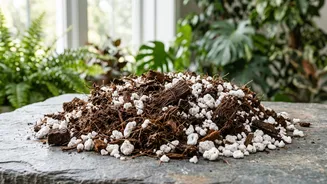
Those little white, lightweight specks in your potting soil are most likely perlite. Perlite is not a plastic or foam product; it's a naturally occurring volcanic glass that is heated to extreme temperatures until it expands, or 'pops', much like popcorn. This process creates an incredibly lightweight, porous material riddled with tiny air pockets. Perlite's primary role in a potting mix is not to retain water but to improve drainage and aeration. It creates channels throughout the soil, allowing excess water to drain away freely and preventing the mix from becoming dense and compacted. This ensures that plant roots have access to the oxygen they need to breathe and grow strong, which is a key factor in preventing root rot, one of the most common killers of houseplants.
A Perfect Partnership for Roots
When combined, coconut coir and perlite create a growing medium that offers the best of both worlds. The coir acts as a moisture-retentive sponge, ensuring the plant doesn't dry out too quickly. Meanwhile, the perlite provides structural integrity, keeping the mix light and airy while allowing excess water to escape. This balance is critical for healthy root development. Roots need consistent access to both moisture and oxygen to thrive. A mix dominated by coir alone might stay too wet, while a mix with too much perlite could dry out too fast. Together, they create a forgiving environment that buffers against both overwatering and underwatering, giving your houseplants the stable conditions they need for robust growth.
How to Create Your Custom Mix
Creating your own coir and perlite mix is simple and allows you to tailor the soil to your specific plants. Most coconut coir comes in compressed bricks that must be rehydrated with water before use; a 5 kg brick can expand to fill around 70-75 litres. Once the coir is fluffy and damp, you can begin mixing. A great all-purpose ratio for many common houseplants like Pothos, Monsteras, and Philodendrons is about 70% coconut coir to 30% perlite by volume. For plants that prefer to stay on the drier side, such as succulents, cacti, or snake plants, you should increase the perlite, aiming for a ratio closer to 50% coir and 50% perlite. Conversely, for moisture-loving plants like ferns and Calatheas, you might use a mix with less perlite, such as 80% coir and 20% perlite. Always mix by volume, not weight, as perlite is extremely light.
Important Considerations Before You Start
While this combination is powerful, remember that neither coconut coir nor perlite contains significant nutrients. They are a sterile growing medium, not a fertilizer. To ensure your plants receive the food they need, you must amend your mix with compost or worm castings, or commit to a regular feeding schedule with a balanced liquid fertilizer. Furthermore, look for 'washed' or 'buffered' coconut coir. Low-quality coir can be high in natural salts, which can harm plants over time. Buffered coir has been treated to prevent it from locking up essential nutrients like calcium and magnesium, ensuring they remain available to your plants.