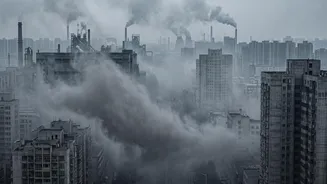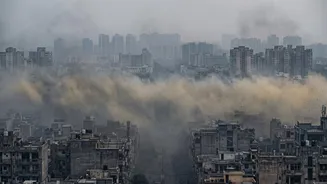










An Invisible Airborne Threat
When we talk about Delhi's pollution, it's not just dust or smog. The air is a toxic cocktail of pollutants, but the most dangerous villain is PM2.5. These are fine particulate matter, so microscopic—about 30 times smaller than the width of a human hair—that
they bypass our body's natural defences. Unlike larger particles that get trapped in the nose and throat, PM2.5 particles travel deep into the lungs, lodging in the delicate air sacs (alveoli). From vehicle exhaust, industrial emissions, and crop burning, this invisible menace is inhaled with every breath, starting a destructive journey inside the body.
The Body Under Siege
Once inside the lungs, PM2.5 doesn't just sit there. These particles are small enough to penetrate the lung lining and enter the bloodstream. From there, they circulate throughout the entire body, triggering inflammation, cellular stress, and immune system responses. Think of it as a constant, low-grade assault on your internal systems. This systemic inflammation is the root cause of the widespread damage. The World Health Organization (WHO) has classified outdoor air pollution, and specifically PM2.5, as a Group 1 carcinogen—the same high-risk category as tobacco, asbestos, and radiation. The link is no longer a theory; it is a proven medical fact.
The 'Smoking' Comparison Explained
To make the risk tangible, experts have drawn a chilling comparison. Breathing the air in Delhi on a typical polluted day has been estimated to be equivalent to smoking between 9 and 10 cigarettes daily. On severely polluted days, that number can climb even higher. This doesn't just mean a higher risk of lung cancer. It reflects a similar pattern of damage. A landmark 2025 study found that high PM2.5 exposure can trigger a specific type of DNA damage pattern historically linked to tobacco smoking. In Delhi, where about half of all lung cancer surgery patients are now non-smokers—a huge jump from 10% in 1988—this comparison has become a devastating reality.
Damage Far Beyond the Lungs
While lung cancer is a major concern, the health impacts of air pollution are not confined to the respiratory system. In fact, research shows that air pollution is linked to more cases of heart-related disease than lung disease. The inflammation caused by pollutants contributes to strokes, heart attacks, and high blood pressure. Beyond the cardiovascular system, evidence links air pollution to a frightening range of other conditions: diabetes, bone density loss in women, and adverse pregnancy outcomes like low birth weight. It can worsen existing conditions like asthma and COPD, and studies show it reduces overall life expectancy—by as much as 11.9 years for Delhi residents, according to one 2023 study.
A New Kind of Lung Cancer Patient
Doctors in Delhi are witnessing a dramatic shift in patient profiles. The stereotypical lung cancer patient—an older male with a long history of smoking—is being replaced. Today, clinicians are increasingly diagnosing the disease in younger people, women, and lifelong non-smokers. A specific type of lung cancer called adenocarcinoma, which has long been more common in non-smokers, is on the rise, a trend that directly parallels the rising pollution levels. For this new cohort of patients, the primary risk factor isn't a personal habit but the environment they live in, making it clear that vulnerability is no longer a matter of individual choice alone.