



What is Tai Chi?
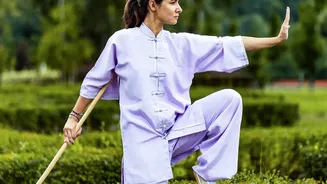
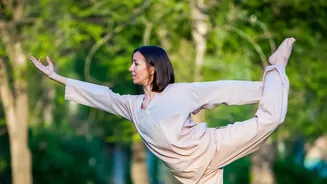
Often described as 'meditation in motion,' Tai Chi is a martial art that has evolved into a graceful form of exercise. It involves a series of slow, deliberate movements, each transitioning smoothly into the next, coordinated with deep, mindful breathing.
Unlike high-impact workouts that leave you breathless, a Tai Chi session is designed to leave you feeling calm, centred, and clear-headed. While its roots are in self-defence, today it is practised globally primarily for its profound health benefits, particularly its ability to reduce stress and improve mental acuity. It doesn't require special equipment or a high level of physical fitness to start, making it one of the most accessible forms of mindful movement available.
The Science of Quiet Focus
How does this gentle practice translate into sharper focus? The magic lies in its unique combination of physical activity, breathwork, and mental concentration. The slow, controlled movements demand your full attention, pulling your mind away from external distractions and internal chatter. This creates a state of mindfulness, where you are fully present in the moment. Studies have shown that regular practice can help reduce levels of the stress hormone cortisol. When stress levels are high, our ability to concentrate plummets. By calming the body's stress response, Tai Chi creates the ideal internal environment for sustained focus. The emphasis on deep diaphragmatic breathing increases oxygen flow to the brain, further enhancing cognitive function and clarity.
Meditation in Motion
For many people who find it difficult to sit still for traditional meditation, Tai Chi offers a perfect alternative. It channels the same principles of mindfulness into physical form. The continuous, circular motions are not just random gestures; they are part of a sequence, or 'form,' that you learn and memorise. This process itself is a powerful cognitive exercise. Recalling and executing the form requires and builds concentration, improving working memory and executive function over time. Each movement is performed with an awareness of posture, balance, and energy flow. This total mind-body engagement effectively quiets the mental noise that so often fragments our attention, leading to a state of profound but active calm.
More Than Just Mental Benefits
While the impact on focus is significant, the benefits of Tai Chi are holistic. Practitioners often report improved balance, flexibility, and muscle strength. Because it is a low-impact, weight-bearing exercise, it can be particularly beneficial for joint health. The gentle movements can help alleviate stiffness and improve range of motion. Furthermore, the practice is associated with better sleep quality, which is intrinsically linked to cognitive performance and the ability to concentrate during the day. This powerful synergy of physical and mental benefits makes it a comprehensive tool for overall well-being, promoting not just a quiet mind but also a healthier body.