






The Scale of the AI Surge
A new report from global consultancy Wood Mackenzie forecasts a seismic shift in India's digital infrastructure landscape. By 2030, the country's total operational data centre capacity is projected to explode to 12 gigawatts (GW), a more than five-fold
increase from the 2.2 GW expected in 2025. The driving force behind this exponential growth is unequivocally Artificial Intelligence. The report indicates that AI-dedicated capacity alone will skyrocket from just 275 megawatts (MW) in 2025 to a staggering 6,546 MW—or 6.5 GW—by 2030. This means that AI workloads, which are negligible today, are on track to consume about 54% of the nation's entire data centre load within the next few years. This surge is fueled by hyperscale cloud providers, widespread enterprise digitalization, and the rapid adoption of AI technologies across the economy.
Why AI Needs So Much Power
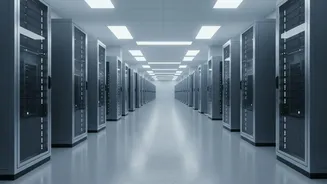
Unlike traditional computing workloads like email or web hosting, AI—especially generative AI—is incredibly resource-intensive. Training large language models and running complex inference tasks requires specialized, high-powered graphics processing units (GPUs) that are packed densely into server racks. These AI factories, as they are sometimes called, consume significantly more power and generate far more heat than conventional data centres. An AI-focused facility requires a complete rethink of power delivery and cooling systems. This voracious appetite for electricity is putting power at the forefront of development. According to one analyst, access to reliable and cost-effective electricity has now overtaken land and capital as the primary constraint on the industry’s growth.
The Staggering Energy Demand
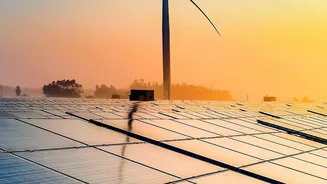
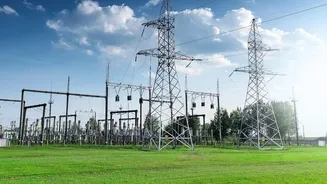
The numbers are eye-watering. Data centre electricity demand is forecast to grow nearly 20-fold, from 10 terawatt-hours (TWh) in 2025 to 191 TWh by 2040. By that time, data centres could account for 7% of India's total electricity demand. The Indian government is already planning for this. In July 2026, the Ministry of Power informed parliament that AI data centres could add an additional load of 26.3 GW by 2031-32, a figure nearly double its projection from just a few months prior. This massive, continuous power demand creates a dual challenge and opportunity: it strains local electricity grids but also drives significant investment in new energy generation, particularly from renewable sources, to meet both sustainability goals and power requirements.
Who is Building India's AI Future?
A mix of domestic giants and global hyperscalers are racing to build out this capacity. While traditional hubs like Maharashtra and Tamil Nadu currently host about 65% of the installed IT load, the next wave of investment is spreading to states like Andhra Pradesh, Telangana, Uttar Pradesh, and Karnataka. Domestic operators such as AdaniConnex, which has announced a 2.6 GW development pipeline, and Nxtra Data are major players. They are competing and collaborating with global cloud providers like Amazon Web Services and Google, who are making significant commitments to expand their infrastructure in India. Other key companies in this expanding ecosystem include NTT, STT GDC, and CtrlS Datacenters.
The Bigger Picture for Digital India
This data centre boom is a cornerstone of India's ambition to become a trillion-dollar digital economy. The country's expanding digital ecosystem, with over a billion active internet users and a thriving UPI payment system, provides a massive domestic market. The domestic AI market itself is projected to be worth ₹11.7 trillion by 2032. Successfully building out the required high-performance computing infrastructure is critical to capturing this value. However, the path forward is not without challenges. Beyond securing reliable power, developers also face the challenge of water availability for cooling systems, which is becoming an increasingly important factor in site selection, especially in water-stressed regions.