

Why Is Everyone Walking Backwards?
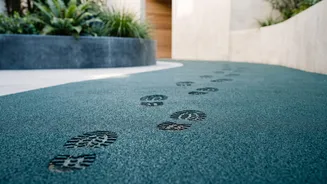
Reverse walking is exactly what it sounds like: intentionally walking in the opposite direction. While it might look strange, the practice is gaining popularity as a low-impact exercise with significant rewards. It's not a new fad; retro walking has roots
in ancient China and has been used by athletes and physical therapists for decades to improve performance and aid rehabilitation. Today, thanks to social media, it has found a mainstream audience eager to try new fitness hacks. The core idea is that moving backwards challenges your body in ways that forward motion does not, forcing different muscles to engage and your brain to work harder to maintain balance and coordination.
The Surprising Health Benefits
The hype around reverse walking is backed by some impressive benefits. One of the most celebrated is knee pain relief. By landing on your toe and rolling to your heel, you reduce the compressive forces on your knee joints, which can be a game-changer for people with osteoarthritis or runner's knee. This backward motion strengthens the quadriceps and other muscles that support the knee. Studies also show that walking backwards can burn up to 40% more calories than walking forward at the same speed because it requires more effort and energy. It also helps improve balance, posture, and gait by engaging core muscles and forcing you to be more mindful of your movements. Some research even suggests it can boost cognitive function because it demands more focus and spatial awareness.
The Dangers of Walking Blind
The biggest and most obvious risk of walking backwards is that you cannot see where you are going. This is the central point of caution stressed by every fitness expert and physiotherapist. Tripping over unseen obstacles like uneven pavement, curbs, rocks, or discarded items is a major concern that can lead to falls and serious injuries. Colliding with other people, cyclists, or even stray animals is another significant hazard in public spaces. Trying to glance over your shoulder frequently to check your path can throw off your balance, negating one of the exercise's key benefits and increasing your fall risk. Crowded parks, busy streets, and any area with unpredictable terrain are completely unsuitable for this activity. The potential for injury in an uncontrolled environment far outweighs the benefits.
Your Safety-First Guide to Retro Walking
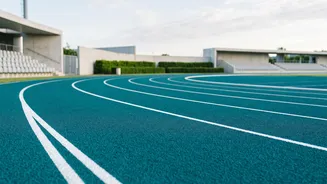
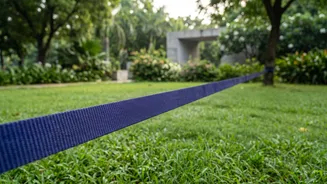
To reap the rewards of reverse walking without the risks, your environment is everything. Experts overwhelmingly recommend starting on a treadmill. This provides a smooth, predictable surface and handrails for support as you get used to the motion. You can control the speed, starting slowly at around 1.5 km/h, and there are no surprise obstacles. If you don't have access to a treadmill, choose a safe and controlled outdoor space. An empty running track, a clear and flat grassy area in a park during off-peak hours, or even a long, uncluttered hallway at home are good alternatives. Always scan the area for any hazards before you begin. Start with short intervals, such as walking backwards for one or two minutes, then switching back to forward walking. As you become more confident and stable, you can gradually increase the duration.
Who Should Be Extra Cautious?
While reverse walking is a low-impact exercise, it's not for everyone. Individuals with severe balance problems, vertigo, or certain neurological conditions should avoid it, as the risk of falling is much higher. Similarly, if you have acute joint instability or are recovering from a recent hip, knee, or ankle injury, it's best to consult a doctor or physical therapist before attempting this exercise. The unfamiliar movement pattern could potentially worsen some conditions if not done correctly. For seniors or anyone with a history of falls, getting clearance from a medical provider is crucial. The golden rule is to listen to your body and never push through pain or dizziness.