


The Perfect Quinoa Foundation
The key to a great quinoa salad isn't just the toppings; it's the base. Quinoa, a seed celebrated for its nutritional profile, is a complete protein containing all nine essential amino acids. It's also packed with fiber, iron, and magnesium, making it a powerful
ingredient for a satisfying meal. The goal is to achieve a fluffy, distinct texture, not a mushy clump. To do this, always rinse your quinoa in a fine-mesh sieve under cold water for about 30 seconds. This removes its natural coating, called saponin, which can taste bitter. For every cup of dry quinoa, use slightly less than two cups of water or vegetable broth. Many package directions call for a 2:1 ratio, but reducing the liquid slightly prevents sogginess. Bring the mixture to a boil, then reduce the heat to low, cover the pot, and let it simmer for about 15 minutes, or until all the liquid is absorbed. Once cooked, remove it from the heat and let it stand, covered, for another 5 to 10 minutes. Finally, fluff it with a fork and spread it on a baking sheet to cool completely. This ensures your salad vegetables stay crisp.
Crisp Veggies and Vibrant Color
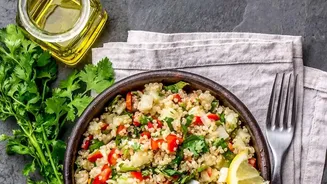
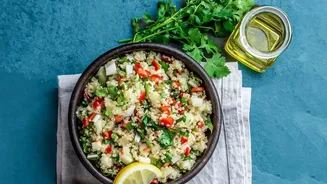
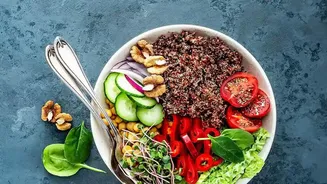
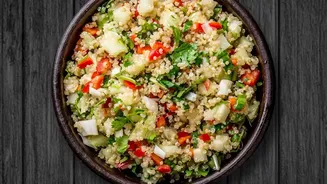
With your quinoa cooled, it's time to prepare the fresh components. English cucumbers are an excellent choice because their thin skin is edible and they have minimal seeds. Dicing them provides a cool, hydrating crunch in every bite. For the bell peppers, red is often a go-to for its sweet flavor and vibrant color, which contrasts beautifully with the pale quinoa and green cucumber. Bell peppers are also a fantastic source of vitamin C. Don't be afraid to use yellow or orange peppers for a similar sweetness and visual appeal. Chopping the vegetables into a uniform, bite-sized dice ensures a balanced forkful every time. For a bit of sharp, savory flavor, a finely chopped red onion is another classic addition to this mix.
The Ultimate Lemon Vinaigrette
A simple lemon vinaigrette is what truly elevates this dish from a plain mix of ingredients to a cohesive, bright-tasting meal. Store-bought dressings can't compare to a homemade version, which takes only minutes to whisk together. The classic formula is straightforward: fresh lemon juice, high-quality extra virgin olive oil, and a touch of Dijon mustard. The mustard acts as an emulsifier, helping to bind the oil and lemon juice into a creamy, stable dressing. For a standard batch, combine the juice of one or two fresh lemons with an equal or slightly greater amount of olive oil. Whisk in a teaspoon of Dijon mustard, and season generously with salt and freshly ground black pepper. For a deeper flavor, you can add a minced garlic clove or a small amount of honey or maple syrup to balance the acidity. Simply combine all ingredients in a jar, seal the lid, and shake vigorously until well combined.
Build and Customize Your Bowl
Assembling the salad is the easy part. In a large bowl, combine your cooled quinoa, diced cucumber, and chopped bell peppers. Pour the lemon vinaigrette over the top and toss gently until everything is evenly coated. While the base recipe is delicious on its own, its true strength lies in its versatility. Think of it as a canvas for endless variations. To add more plant-based protein and fiber, stir in a can of rinsed chickpeas or black beans. For a briny, savory kick, add crumbled feta cheese and some halved cherry tomatoes. Fresh herbs like chopped parsley or mint will instantly brighten the flavor profile. If you want to turn it into a more substantial dinner, top it with grilled chicken or a scoop of avocado for creamy texture and healthy fats.
Smart Storage and Meal Prep
This salad is a meal prepper's dream. It holds up exceptionally well in the refrigerator, and the flavors often meld and become even better overnight. You can make a large batch and portion it into airtight containers for grab-and-go lunches that will last for up to four or five days. If you prefer your vegetables to remain as crisp as possible, you can store the dressing separately and add it just before serving. However, many find that the quinoa absorbs the dressing beautifully without becoming soggy, creating a more flavorful base. If you plan to add ingredients like avocado or leafy greens like spinach, it is best to add those just before eating to prevent browning and wilting.