






A System Overload on Screen
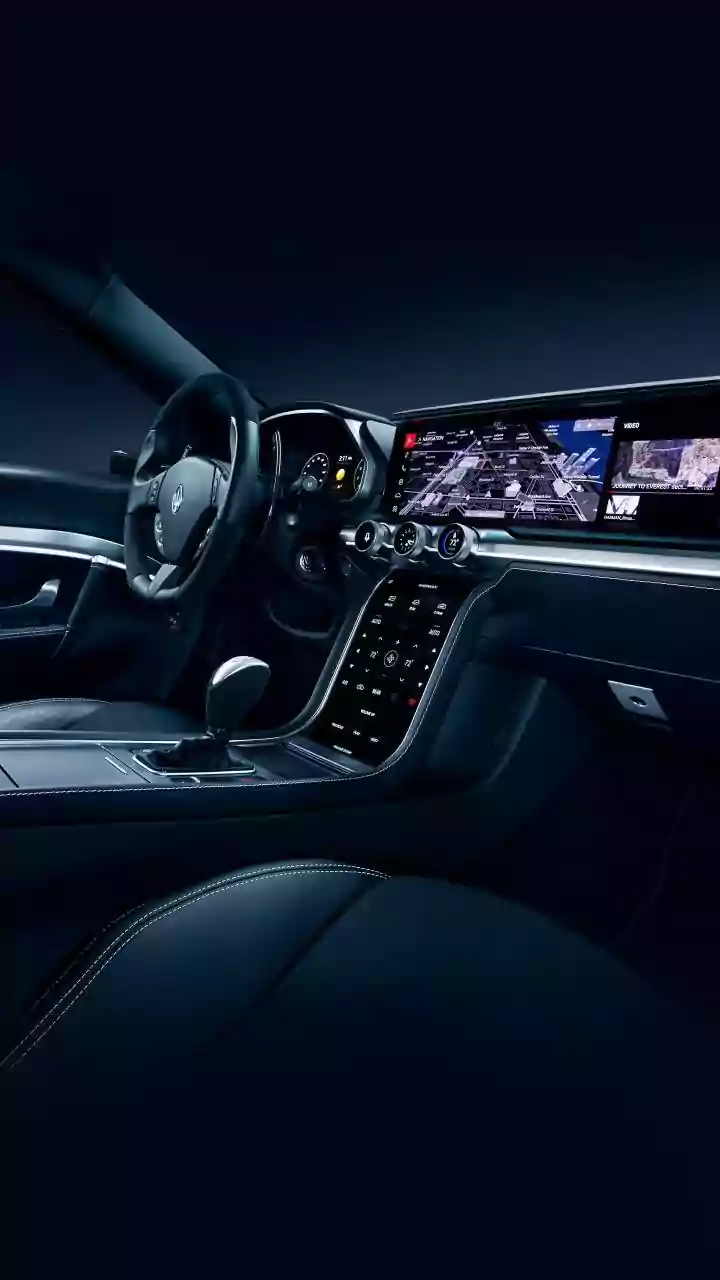
Anyone who has driven in Gurugram has a story. Now, a Tesla Model Y has provided a new way to tell it. A recent viral video, which has amassed millions of views, shows the car's central touchscreen trying to make sense of its surroundings. The display,
which is designed to create a clean, minimalist digital model of the road, is instead a frantic cluster of icons. Cars, motorcycles, pedestrians, and auto-rickshaws flicker in and out of view, packed so densely that the system appears overwhelmed. Social media users joked that the car was having a "desi reality check" or a "brain migraine." While the cluttered screen doesn't necessarily mean the system failed, it perfectly illustrates the sheer volume of data an autonomous vehicle must process on a typical Indian road.
Gurugram's Unpredictable Traffic Cocktail
The Tesla video is relatable precisely because it validates a lived experience. Gurugram's roads are a complex ecosystem unlike the orderly highways where most autonomous systems are trained. The traffic mix is uniquely heterogeneous: cars compete for space with auto-rickshaws, weaving motorcycles, delivery executives on scooters, cyclists, and pedestrians who often cross mid-block. Add to this the inconsistent lane markings, unexpected potholes worsened by monsoon rains, and the common practice of wrong-side driving, and you have a recipe for unpredictability. In the first two weeks of August 2026 alone, Gurugram police issued over 4,700 challans for wrong-side driving and improper lane changes, highlighting how deeply these habits are ingrained. For a machine learning model that thrives on patterns and predictability, this environment presents an almost infinite number of 'edge cases'—scenarios it was never designed to handle.
A Stress Test for Global Technology
Advanced Driver-Assistance Systems (ADAS), like Tesla's Autopilot, are built on algorithms trained on millions of kilometres of driving data, primarily from North America, Europe, and China. These systems excel at functions like maintaining lane discipline and managing highway traffic, but they rely on a certain level of order and rule-following. The viral video shows what happens when this technology is dropped into a 'brownfield' environment like Gurugram, where traffic flow is more fluid and intuitive than rule-based. Commentators noted the system seemed particularly confused by auto-rickshaws, struggling to classify the three-wheeled vehicles. This isn't just a Tesla issue; it's a fundamental challenge for the entire autonomous vehicle industry. For these systems to work in India, they can't just be imported; they must be re-engineered from the ground up, trained on local data that accounts for everything from stray animals to the specific ways people navigate intersections.
Can Self-Driving Ever Conquer Indian Roads?
The Gurugram video has sparked a serious debate: is fully autonomous driving a pipe dream for India? Experts believe that while Level 5 autonomy (where the car does everything) is a distant goal, there is immense potential for ADAS to improve safety. However, this requires a dual approach. First, the technology itself needs to adapt. This involves developing more robust sensor suites and AI models specifically validated for Indian conditions, which some Indian startups are already working on. Second, achieving higher levels of automation will require significant improvements in infrastructure, including clear lane markings, smart signalling, and better enforcement of traffic laws. Without structured environments, even the smartest car will struggle. The viral clip, therefore, isn't just a funny internet moment; it’s a critical data point showing the long road ahead for autonomous technology in the country.