


The Strategic Handshake
At its core, the collaboration between NASA and the Department of Energy (DOE) is a formal agreement to combine their unique expertise for a shared, ambitious goal. This partnership is formalized through a Memorandum of Understanding (MOU) that outlines
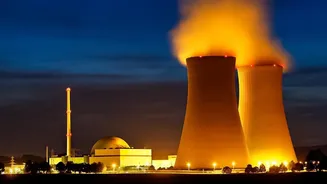
how the two agencies will work together. Think of it as a strategic alliance: NASA, with its decades of experience in space missions and exploration, defines the 'what' and 'why'—what power is needed for a lunar base, what conditions the hardware must survive, and how it will integrate with missions. The DOE, which oversees the nation's nuclear technology and material, provides the 'how'—the deep scientific and engineering knowledge required to design, build, and safely test a nuclear reactor. This partnership covers the entire lifecycle of development, from early research and fuel production to testing and eventual mission integration.
A Blueprint Versus a Building
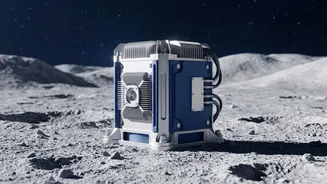
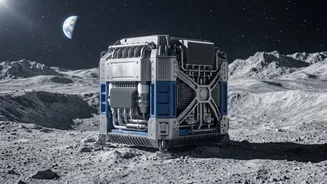
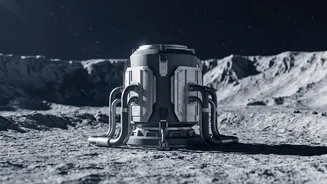
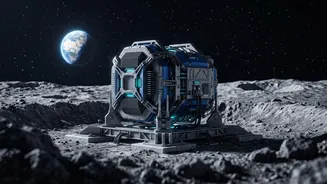
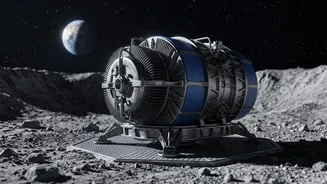
The headline's question gets to the heart of the matter: a partnership is the blueprint, while an operational reactor is the finished building. The current partnership is a framework for research, design, and development. It involves studies, concept designs from industry partners, and ground testing of components. An operational reactor, on the other hand, is the physical, flight-ready hardware. It's a fully assembled and tested system capable of being launched into space, landing on another world, and generating continuous, reliable power for years. The goal of the current Fission Surface Power project is to produce a 40-kilowatt reactor, enough to power about 30 households on Earth, and have it ready for a lunar demonstration by the early 2030s. The partnership is the multi-year process to get there; the operational reactor is the prize at the end.
Why Nuclear Power Is a Game-Changer
For long-term habitats on the Moon and Mars, solar power has significant limitations. The Moon, for example, experiences nights that last for two Earth weeks, plunging everything into darkness and extreme cold. Solar arrays would be useless during this long period. A small nuclear fission reactor, however, can provide constant, uninterrupted power regardless of sunlight, location, or weather, like a Martian dust storm. This makes it an essential technology for running life support systems, recharging rovers, conducting scientific experiments, and utilizing local resources. The Fission Surface Power project is the successor to earlier concepts like the Kilopower project, which successfully demonstrated the viability of a small-scale reactor and its Stirling engine technology in 2018.
The Road to a Lunar Reactor
Getting from the current partnership to a working reactor on the Moon is a long and meticulous process. The first phase involved soliciting design concepts from commercial partners. In 2022, NASA and the DOE selected three teams—led by industry giants Lockheed Martin, Westinghouse, and Intuitive Machines/X-energy—to develop initial designs. This phase focuses on maturing the technology, studying materials, and testing components like the instrumentation and control systems. The next steps involve fabricating a prototype for extensive ground testing in simulated space environments. Safety is paramount; the reactor is designed to be launched cold, with no radioactive hazard, and would only be activated once it is safely in space or on the lunar surface. The entire process is a deliberate, multi-year effort to ensure the final system is safe, reliable, and effective before it's sent to the Moon.