







What is the US-Saudi Nuclear Deal?
The United States and Saudi Arabia have signed a civilian nuclear cooperation agreement, often called a "123 Agreement." This legal framework, named after Section 123 of the U.S. Atomic Energy Act, allows American companies to export nuclear technology,
materials, and expertise to other nations. For Saudi Arabia, this deal is a cornerstone of its Vision 2030 plan to diversify its economy away from oil and meet rising energy demands. For the U.S., it represents a multi-billion-dollar commercial opportunity for companies to build and support the Kingdom's planned nuclear power program. The agreement is intended to create a long-term strategic partnership, but its terms have sparked significant debate about regional security and nuclear proliferation.
The Core Controversy: Uranium Enrichment
The primary point of contention is whether Saudi Arabia will be permitted to enrich its own uranium. While enrichment to low levels is necessary for nuclear power, the same technology can be used to enrich uranium to weapons-grade levels. The United States has historically pushed its partners to forgo domestic enrichment, creating a "gold standard" for nonproliferation, as seen in its 2009 deal with the United Arab Emirates. However, reports suggest the new agreement with Saudi Arabia does not contain this prohibition, potentially leaving a door open for a future Saudi nuclear weapons program. This has raised alarms among nonproliferation experts and lawmakers, especially given a statement from Crown Prince Mohammed bin Salman that Saudi Arabia would pursue a nuclear bomb if its regional rival, Iran, develops one.
Congress's Role and the 90-Day Clock
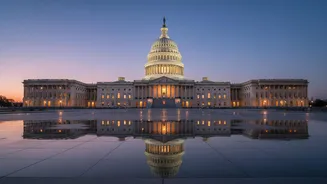
Under the Atomic Energy Act, once the executive branch formally submits the agreement, Congress has 90 days of continuous session to review it. During this window, lawmakers can hold hearings and debate the deal's merits. If Congress does not pass a joint resolution of disapproval within that timeframe, the agreement automatically becomes law. Passing such a resolution is a high bar, but the controversy surrounding the enrichment issue guarantees intense scrutiny. Bipartisan concerns have already emerged, focusing on the potential for a nuclear arms race in the Middle East and whether the deal contains sufficient safeguards to prevent the misuse of U.S. technology. The review process forces a clash between the strategic goal of maintaining influence in Riyadh and the long-standing U.S. policy of preventing the spread of sensitive nuclear capabilities.
High-Stakes Geopolitics and Economic Competition
The debate in Congress is not happening in a vacuum. Washington is also competing with global rivals, particularly China and Russia, who are eager to build Saudi Arabia's nuclear reactors if the U.S. does not. From the administration's perspective, staying involved allows the U.S. to shape the program and maintain high standards of safety and security, rather than ceding influence to competitors. The deal is also seen as a way to solidify the U.S.-Saudi relationship at a time of shifting alliances in the Middle East. However, critics argue that the potential proliferation risks outweigh the commercial and geopolitical benefits, and that providing enrichment technology to the Kingdom would set a dangerous precedent for the global non-proliferation regime.