




First, What Is El Niño?
El Niño, which means 'the little boy' in Spanish, is a naturally occurring climate pattern. It’s the warm phase of the larger El Niño-Southern Oscillation (ENSO) cycle. It happens when sea surface temperatures in the central and eastern equatorial Pacific
Ocean become significantly warmer than average for an extended period, typically lasting nine to twelve months. This warming isn't just a local event; it disrupts atmospheric circulation patterns across the globe, influencing weather, temperature, and rainfall far and wide. The opposite phase is La Niña, characterized by cooler-than-average ocean temperatures in the same region. These cycles occur every two to seven years and are one of the most powerful drivers of year-to-year climate variability on our planet.
What Are Forecasters Seeing for 2026?
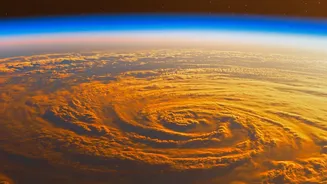
Global meteorological agencies are in strong agreement: a powerful El Niño is not just likely, but is already developing and intensifying. Forecasts from the World Meteorological Organization (WMO) and the U.S. National Oceanic and Atmospheric Administration (NOAA) indicate that this event is on a trajectory to become a 'very strong' El Niño, potentially peaking late in 2026. Some models even suggest sea surface temperature warming could reach historic levels. The driver is a massive pool of warm water deep below the ocean surface, known as a Kelvin Wave, which is providing the fuel for this rapid intensification. The atmospheric response is already being observed, with weakened trade winds confirming that the ocean and atmosphere are locked in a classic El Niño pattern.
The Critical Link to India's Monsoon
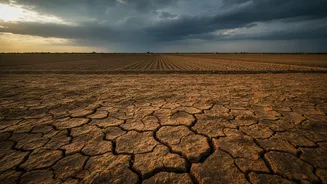
For India, El Niño is often bad news for the monsoon. The southwest monsoon, which provides about 70% of the country's annual rainfall, is the lifeline for its agriculture-dependent economy. Historically, there is a strong correlation between El Niño years and below-normal monsoon rainfall, sometimes leading to drought. The warming of the Pacific Ocean tends to alter large-scale wind patterns in a way that suppresses the development of the rain-bearing systems that are crucial for India. The WMO's global outlook for August-October 2026 explicitly notes that drier-than-normal conditions are more likely over the Indian subcontinent due to the classic footprint of a strong El Niño event.
Ripple Effects on the Economy
A weak monsoon has significant economic consequences. The most immediate impact is on the agricultural sector, where lower crop yields can lead to reduced farm incomes and increased rural distress. With a large portion of India's farmland still being rain-fed, a rainfall deficit directly threatens the livelihoods of millions. This, in turn, dampens rural demand for goods like tractors, two-wheelers, and other consumer products. Beyond the farm, the biggest risk for the wider population is food inflation. Lower agricultural output leads to food shortages, which can drive up prices and put pressure on household budgets across the country.
Is a Drought Guaranteed?
Not necessarily. While a strong El Niño significantly increases the probability of a weak monsoon, it doesn't make it a certainty. Other climate phenomena can play a role. One key factor is the Indian Ocean Dipole (IOD), a sort of cousin to El Niño that plays out in the Indian Ocean. A 'positive' IOD, characterized by warmer waters in the western Indian Ocean, can sometimes help counteract El Niño's drying effect and bring rain to parts of India. Current forecasts suggest a positive IOD is also expected to develop in 2026. However, the intensity and exact timing of both these events will determine the ultimate outcome. A strong El Niño is a powerful force, and its influence often dominates.