





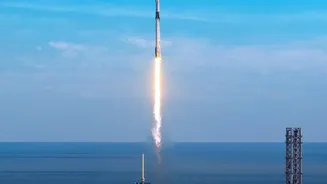
India's New Space Age
For decades, Indian space exploration was synonymous with the Indian Space Research Organisation (ISRO). But since the government opened the sector to private players in 2020, a vibrant ecosystem of over 400 space-tech startups has emerged. Companies
like Skyroot Aerospace, Agnikul Cosmos, and Pixxel are already making headlines, developing everything from 3D-printed engines to constellations of advanced satellites. This policy shift has unlocked a torrent of private investment and ambition, positioning India not just as a user of space technology, but as a key innovator. EtherealX, officially known as Ethereal Exploration Guild, is one of the most ambitious entrants in this new landscape, tackling one of the industry's toughest challenges.
Who is EtherealX?
Founded in 2022 by Manu J. Nair, Shubhayu Sardar, and Prashanth Sharma, EtherealX is a Bengaluru-based aerospace company with a singular focus: reducing the cost of space transportation. The startup has attracted significant attention and capital, raising over $28 million in funding from prominent investors including Accel, Prosus, and TDK Ventures. Their mission is to develop and manufacture next-generation launch vehicles and spacecraft. Unlike some peers who are taking incremental steps, EtherealX has chosen a high-stakes path by aiming directly for what is considered the holy grail of launch technology: full reusability.
The Reusability Revolution
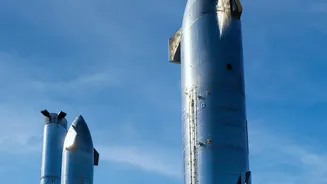
So, what exactly is a reusable rocket, and why is it so important? For most of history, rockets were single-use, with every expensive component burning up or crashing into the ocean after launch. SpaceX's Falcon 9 famously changed this by successfully landing and reusing its first stage, or booster. This dramatically lowered costs and increased launch frequency. However, even the Falcon 9 expends its upper stage on every flight. Full reusability—recovering and reusing both the booster and the upper stage—remains an unsolved challenge at a commercial scale. Cracking this code would make getting to orbit radically cheaper, potentially lowering costs from thousands of dollars per kilogram to just a few hundred.
EtherealX's Ambitious Bet
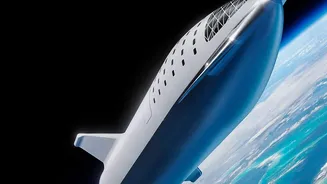
This is where EtherealX sees its opportunity. The company is developing the 'Razor Crest Mk-1', a medium-lift launch vehicle designed from the ground up to be fully reusable. Its goal is to leapfrog existing technology by solving the complex problem of safely returning the rocket's upper stage from orbit. The key, according to the company, lies in its proprietary engine architecture and thermal management systems, which are designed to handle the extreme heat of atmospheric reentry without the heavy shielding that weighs down other designs. The startup's plan is to build a fleet of four or five rockets capable of conducting 60 to 80 launches per year, a cadence that would make it a major global player.
Challenges on the Launchpad
The path forward is incredibly challenging. EtherealX is not only competing with established global players but also with fellow Indian startups also eyeing reusability. The technical hurdles are immense, requiring breakthroughs in materials science, propulsion, and autonomous landing systems. The company is currently manufacturing its powerful 1.2-meganewton semi-cryogenic engine and plans a technology demonstrator flight in 2027, with the first commercial launch of Razor Crest Mk-1 slated for the end of 2028. These milestones will require flawless execution and continued financial backing to turn their ambitious vision into a reality that flies.