







Seeing the World Through Jewels
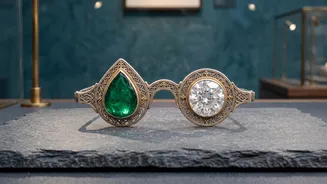
In 2021, the art world was captivated by the emergence of two pairs of 17th-century spectacles unlike any ever seen before. Hailing from the height of the Mughal Empire in India, these were not ordinary glasses. One pair, poetically named 'Gate of Paradise',
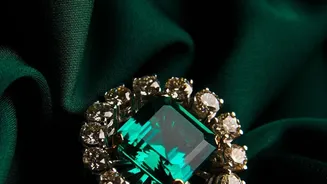
featured lenses fashioned from a magnificent Colombian emerald. The other, called 'Halo of Light', had lenses sliced from a flawless diamond believed to be from the legendary Golconda mines. The emeralds were cut into elegant teardrop shapes, while the diamonds were formed into flat, transparent planes. Both were originally designed as pince-nez, resting on the bridge of the nose, but were later fitted with new diamond-studded frames in the 1890s. Their appearance at a Sotheby's auction marked the first time they had been offered for public sale, astounding historians and gemologists alike.
A Monument to Master Craftsmanship
The creation of these spectacles represents a level of technical mastery that is difficult to comprehend even today. Experts estimate the original emerald was a single, spectacular gem of over 300 carats, while the diamond was likely a single stone weighing more than 200 carats. To slice such monumental stones into perfectly formed, transparent lenses without shattering them required genius-level skill. The artisans, whose names are lost to history, would have been supreme masters of both lapidary arts and optics. It was a feat of craftsmanship so audacious that no other comparable examples are known to exist. The sheer quality and size of the gemstones suggest they were reserved for the highest echelons of power—most likely an emperor or a prince within the imperial court.
A Vision of Spiritual Enlightenment
While functional as eyewear, these spectacles served a purpose far beyond simple vision correction. For the Mughals, gemstones were not just symbols of wealth but also conduits of spiritual and healing power. Emeralds, with their verdant hue, were deeply connected to paradise, salvation, and eternal life in Islamic tradition. It was believed they could ward off evil and had miraculous healing properties. There is even a story that Emperor Shah Jahan soothed his eyes with emeralds after weeping extensively for his wife Mumtaz Mahal. Diamonds, on the other hand, were associated with enlightenment and divine light. To wear these glasses was not just to see the world, but to filter it through a lens of celestial power, offering the wearer a glimpse of paradise or a path to spiritual illumination.
A Mysterious and Princely Provenance
The exact identity of the patron who commissioned these extraordinary objects remains a mystery. They were created during the peak of Mughal artistic achievement in the 17th century, under emperors like Shah Jahan and Aurangzeb. The raw materials alone—a flawless Golconda diamond and a massive Colombian emerald—would have been the exclusive reserve of the imperial treasury. The emerald would have travelled from South America via Spanish trade routes to India, a testament to the global reach of the Mughal court. After their creation, the spectacles were likely held in an unknown princely collection, passed down through generations for centuries. They remained hidden from public view until they were sold by the family in the 1980s and only re-emerged for auction decades later.
An Auction and a Lasting Legacy
When the 'Gate of Paradise' and 'Halo of Light' spectacles were announced for auction at Sotheby's in London, they carried estimates of up to $3.4 million each. The news generated immense excitement, showcasing a global fascination with the treasures of the Mughal era. Despite the buzz, the spectacles ultimately failed to find a buyer at the 2021 auction. However, their brief time in the spotlight cemented their status as legendary artifacts. They stand as a powerful symbol of a time when art, science, and faith were inextricably linked. More than just fashion accessories, they are a window into the soul of the Mughal Empire, reflecting a worldview where beauty was a path to the divine and craftsmanship could achieve the impossible.