






What is Muscle Reaction Time, Anyway?
Before we pit these two workouts against each other, let’s clarify what we mean by muscle reaction time. It isn't just about how fast you can dodge a ball. It’s the split-second duration between when your brain perceives a signal and when your muscles
execute the required action. This rapid communication between your nervous system and muscles is crucial for everything from preventing a fall if you trip on the pavement to executing a precise movement in a sport. This ability relies on our nerves' efficiency and the type of muscle fibers being activated. While some of it is genetic, this is a skill that can be significantly sharpened with the right kind of training. Improving it leads to better coordination, agility, and overall physical control.
Skipping: Training for Explosive Speed
Skipping, or jumping rope, is a classic for a reason, especially among athletes like boxers. It's a high-impact, plyometric exercise that forces your body to make constant, rapid adjustments. The quick, repetitive motion primarily engages fast-twitch muscle fibers. These are the fibers responsible for powerful, explosive movements, and they contract much faster than their slow-twitch counterparts. Every time you jump, your neuromuscular system learns to decrease the time it takes to generate force. This trains your body to be 'light on its feet'. You are building reflexive speed, where the body learns to react almost automatically to the rhythm of the rope, enhancing coordination and agility for situations that demand quick directional changes.
Yoga: Cultivating Mindful Control
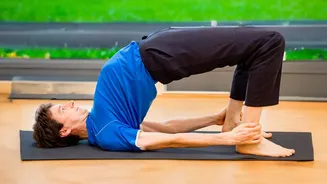
Yoga takes a completely different path to improving your responses. Instead of focusing on speed, it focuses on awareness and control through a concept called proprioception. Proprioception is your body's ability to sense its own position in space, a skill honed by holding balancing postures like Tree Pose or Warrior III. When you hold a challenging pose, your brain receives constant feedback from your muscles and joints, forcing it to make tiny adjustments to maintain stability. This strengthens the neural pathways responsible for body awareness. Rather than training for a sudden, explosive reaction, yoga trains you to have a more controlled, deliberate, and precise response. This enhanced mind-muscle connection helps improve balance, reduce clumsiness, and allows for more fluid movements in daily life.
The Head-to-Head Comparison
So, which is better? The answer depends entirely on the kind of reaction time you want to build. Skipping is superior for developing raw, reflexive speed. It conditions your fast-twitch fibers for immediate, powerful responses, which is ideal for athletes in sports requiring rapid acceleration and footwork. The feedback from a fast-moving rope forces your brain to make instant corrections, building reflexes that work faster than conscious thought. Yoga, on the other hand, excels at improving controlled reaction and stability. It enhances proprioception, giving you a deeper understanding of your body's alignment and movement. This leads to more graceful and intentional actions, preventing missteps and injuries by making you more aware. One builds a fighter's reflex; the other builds a dancer's grace.
Which Workout Is Right for You?
Your choice between skipping and yoga should align with your personal fitness goals. If you're an athlete looking to boost your agility, foot speed, and explosive power for sports like cricket, football, or tennis, incorporating skipping sessions is a must. It directly trains the systems needed for high-speed performance. If your goal is to improve balance, reduce everyday clumsiness, gain better posture, and move with more control and less stiffness, then a consistent yoga practice is invaluable. It fine-tunes the connection between your mind and body, leading to more deliberate physical actions. However, these two workouts are not mutually exclusive. Combining the explosive training of skipping with the mindful control of yoga can create a well-rounded athlete who is both powerful and precise, able to react quickly but with full control.