




A New View of Martian Weather
Indian scientists have offered a fresh perspective on the climate of Mars, successfully mapping how temperatures fluctuate and drive atmospheric circulation across the planet. The study, published in the prominent journal Current Science, was led by researchers
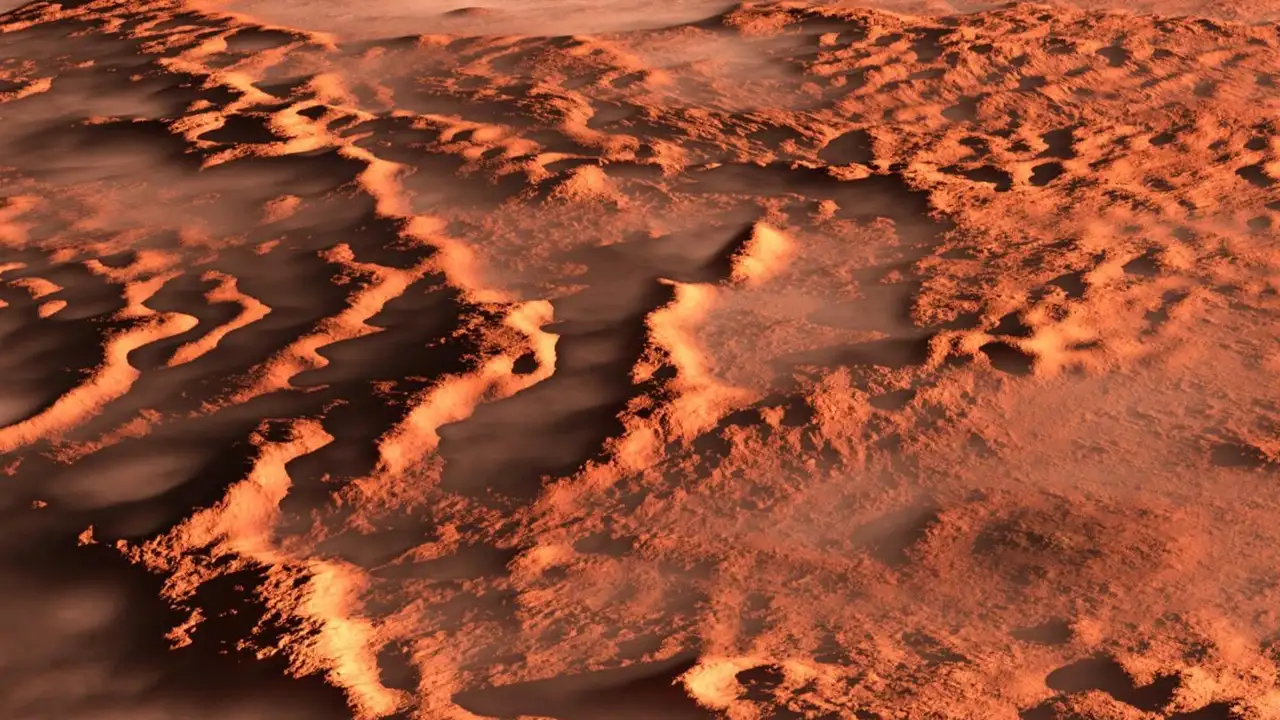
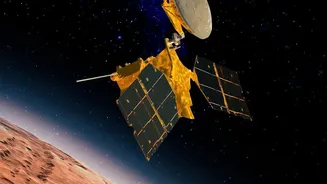
at the Physical Research Laboratory (PRL) in Ahmedabad. They analysed infrared data from the Emirates Mars Mission's 'Hope' spacecraft, focusing on two of the planet's largest and most dramatic impact basins: Hellas and Argyre. The findings paint a picture of a world with extreme temperature shifts that are far more complex than previously thought, providing a crucial new layer of understanding for Martian weather systems.
The Daily Temperature Rollercoaster
Mars's thin atmosphere can't hold onto heat the way Earth's does. This leads to a dramatic daily cycle of heating and cooling. The PRL study documented this in detail, observing surface temperatures swinging wildly from as low as -123 degrees Celsius to a relatively balmy 22 degrees Celsius. During the southern summer, when Mars is closest to the Sun in its elliptical orbit, surface temperatures can even approach 27°C before plummeting again after sunset. This constant, extreme temperature cycle is the primary engine driving the planet's atmospheric activity, creating pressure differences that move air across the globe.
What Are Zonal Waves?
The study's most fascinating discovery is how these temperature changes create large-scale atmospheric patterns known as 'zonal waves'. Think of them as massive ripples in the atmosphere that travel along lines of latitude, much like waves in an ocean. These are not small gusts of wind but planetary-scale disturbances that reveal the underlying circulation patterns of Mars's thin air. By studying the shape and movement of these thermal waves, scientists can indirectly map how the Martian atmosphere is moving on a global scale. The researchers found different wave patterns dominating different regions; for instance, the Argyre basin was dominated by a simple wave-1 pattern, while the deeper Hellas basin showed more complex wave-2 and wave-3 patterns, highlighting the immense influence of topography on weather.
Why This Discovery Matters
Mapping these zonal waves is about more than just academic curiosity. A precise understanding of Martian weather is critical for the success of future missions, both robotic and crewed. Knowing how winds and temperatures behave can help engineers design landers and equipment that can survive the harsh environment. Furthermore, these atmospheric patterns are linked to dust storms, which can sometimes grow to engulf the entire planet, posing a significant risk to solar-powered rovers and future infrastructure. This research refines our climate models, helping to predict such events and understand the long-term evolution of Mars's climate from a once-wetter world to the cold desert it is today.
An Indian Legacy in Martian Science
This research adds another chapter to India's significant contributions to the study of Mars. Scientists from institutions like the Physical Research Laboratory have been at the forefront of planetary science, building on the legacy of India's own Mars Orbiter Mission (Mangalyaan). That historic mission provided invaluable data on the Martian atmosphere and surface. While this new study utilized data from an international mission, it showcases the continued expertise of Indian scientists in analysing complex planetary data to unlock the secrets of our celestial neighbours. It's a collaborative approach that pushes the boundaries of our knowledge and solidifies India's role as a key player in space exploration.