






From California to Mahabaleshwar
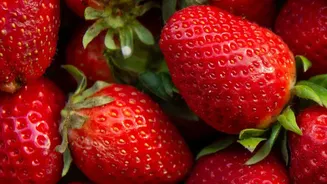
For decades, India's successful strawberry industry has relied almost entirely on foreign planting material. Farmers, primarily concentrated in the Mahabaleshwar-Panchgani belt which accounts for around 85% of national production, import mother plants
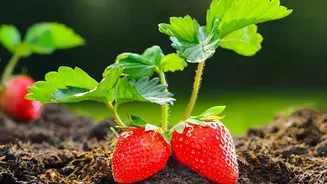
from places like California, Italy, and Spain every year. These imported varieties, such as Camarosa and Albion, are chosen for their large fruit size and durability. Propagators import these certified mother plants, multiply them in local nurseries to produce daughter plants, and then sell these saplings to farmers for the seasonal planting. While this system has made strawberry cultivation one of Western India's most profitable horticultural crops, it creates a risky dependence on international supply chains and plants that are not always perfectly suited to local conditions.
The Quest for an Indian Strawberry
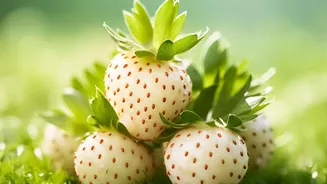
The core of the new pipeline is a long-term vision to develop India's own indigenous, climate-resilient strawberry varieties. At the forefront of this effort is a collaboration between Mahatma Phule Krishi Vidyapeeth (MPKV), an agricultural university in Maharashtra, and the Bhabha Atomic Research Centre (BARC). Researchers are using advanced techniques, including low-dose gamma irradiation, to induce genetic mutations in plant tissues. The goal is to fast-track the creation of a unique Indian cultivar that can withstand heatwaves and unpredictable rains while matching the size and texture of popular foreign varieties. While developing a new variety from scratch could take over a decade, the initiative marks a crucial step toward self-reliance.
Smarter Farming, Stronger Plants
While the perfect Indian strawberry is being developed, the research pipeline is already delivering immediate benefits to farmers. Agricultural bodies like MPKV and Krishi Vigyan Kendras are creating scientific 'packages of practices'. These are detailed, region-specific guides for farmers, standardising everything from planting schedules and fertiliser application to the use of growth regulators. This knowledge transfer is critical. It helps farmers optimise their use of resources and manage common problems like fungal diseases or poor fruit development, which can arise from issues like overcrowding plants or poor soil planning. The aim is to bridge the gap between lab research and on-farm reality, making cultivation more predictable and profitable.
Technology on the Farm
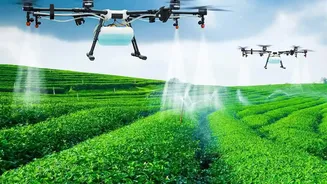
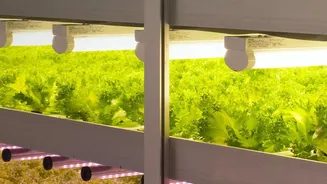
The pipeline isn't just about biology; it's also about technology. Faced with erratic weather, which can ruin an entire crop in a single downpour, growers are innovating. Some large farms and Farmer Producer Organisations (FPOs) are investing in protected cultivation methods like hydroponics and vertical farming in polyhouses. These systems, which grow plants in nutrient-rich water or coco-peat substrate instead of soil, offer greater control over the micro-climate. Others are using AI-powered systems that monitor weather data to precisely time the spraying of protective agents. By stacking plants in vertical towers, farmers can multiply their plant density five-fold on the same patch of land, dramatically increasing potential yield.
Tackling the Final Hurdle
Growing the perfect strawberry is only half the battle; getting it to the consumer is the other. Post-harvest losses for the delicate fruit can be as high as 40-50% due to its high perishability and gaps in the cold chain infrastructure. The research pipeline is increasingly focused on this area, exploring solutions like modified atmosphere packaging, edible coatings, and better on-farm pre-cooling techniques to extend shelf life. Government initiatives also play a role in supporting the development of better storage and processing infrastructure. Ultimately, combining scientific breakthroughs in cultivation with robust post-harvest management will be the key to ensuring that more of these high-value fruits make it from the farm to markets across India.