






Meet the Super-Earths
In the vast cosmic gallery of planets, 'super-Earths' are among the most intriguing. These are worlds with a mass greater than Earth's but considerably less than that of ice giants like Neptune or Uranus. They are common throughout the galaxy, but what
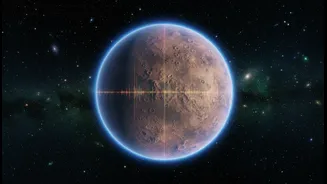
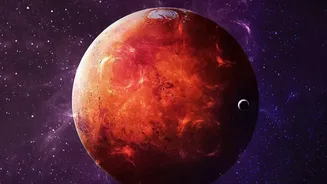
makes them truly compelling is when they are 'temperate'—orbiting their star in the so-called habitable zone. This is the region where conditions are just right for liquid water to potentially exist on a planet's surface, a crucial ingredient for life as we know it. The recent focus has been on LHS 1140 b, a super-Earth about 48 light-years away, which is roughly 5.6 times the mass of our own planet. Its discovery in 2017 immediately made it a prime candidate for further study.
The Challenge of Seeing Air
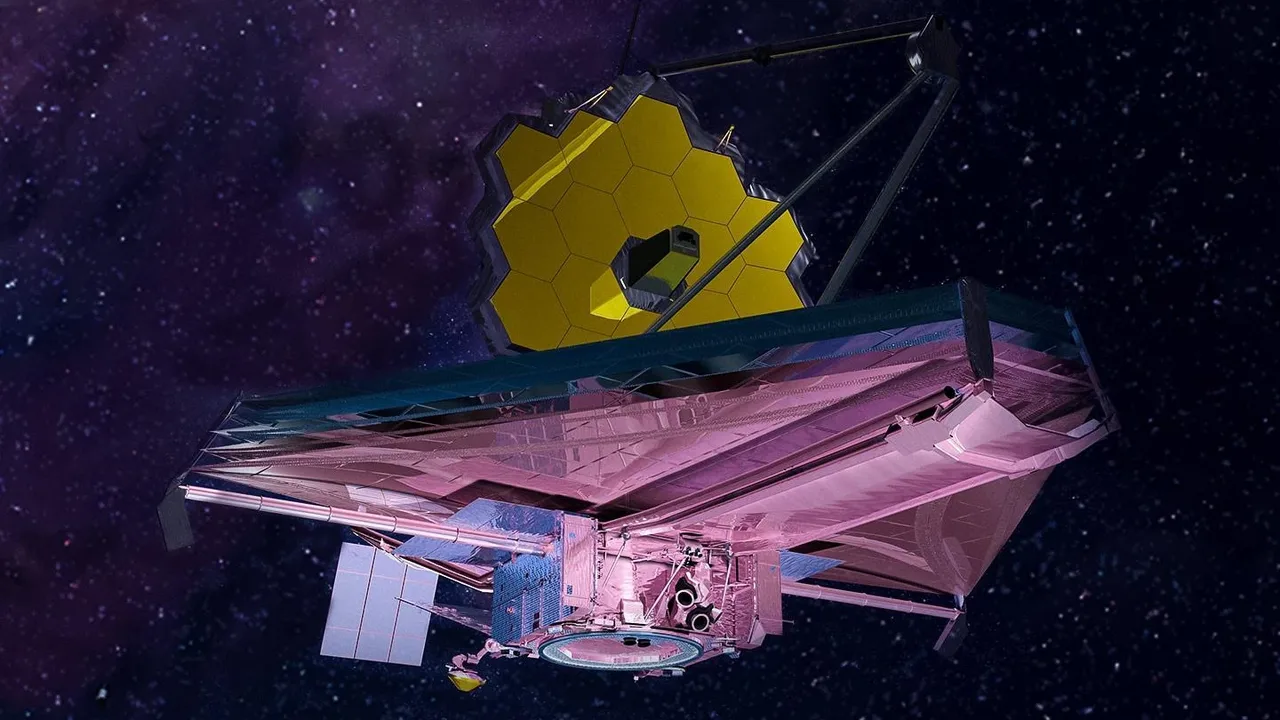
Studying a planet trillions of kilometres away is hard enough; trying to see its atmosphere is a monumental challenge. Atmospheres are incredibly thin and faint compared to the blazing light of their parent stars. For years, astronomers have looked for atmospheres on rocky worlds in habitable zones, often to find they are bare, airless cinders. The primary method involves watching a planet as it 'transits' or passes in front of its star. As the starlight filters through the planet's atmosphere, different gases absorb specific wavelengths of light, leaving a tell-tale barcode in the spectrum that telescopes can analyse. This requires incredible precision, and it's a field where powerful instruments like the James Webb Space Telescope (JWST) and large ground-based observatories are pushing the boundaries of what’s possible.
A Major Breakthrough for LHS 1140 b
The new evidence strengthening our models comes from observations of LHS 1140 b. In a study published in mid-July 2026, scientists announced the first confirmed atmosphere on a rocky planet within its star's habitable zone. Using the Magellan Clay Telescope in Chile, they detected helium gently leaking from the planet’s upper atmosphere. Helium is a light gas that can escape into space when heated by a star's radiation, and its presence is a clear sign that a much thicker atmosphere lies beneath. This was a huge moment because many previous searches on similar planets had come up empty, leading some to wonder if such worlds could hold onto their air at all.
Validating the Models
This discovery is more than just finding air on one planet; it's a powerful validation of the scientific models that predicted it. Researchers had developed theories about which planets could retain their atmospheres, creating a kind of 'cosmic shoreline' separating worlds that keep their air from those that lose it to space. A model developed in 2025 by a team at Harvard predicted that LHS 1140 b would be a prime candidate for having a helium-rich atmosphere. The recent observations confirmed this prediction, providing a huge boost of confidence in the underlying theories. When scientists observed another, hotter planet in the same system, LHS 1140 c, they found no trace of an atmosphere, further strengthening the model that placed it on the 'bare' side of the cosmic shoreline.
What This Means for the Search for Life
Confirming an atmosphere on a habitable-zone rocky world is a critical milestone. An atmosphere is essential for life as we know it, providing pressure for liquid water to exist, regulating temperature, and shielding the surface from harmful radiation. While the detection of helium doesn't tell us the composition of the lower atmosphere, it proves that this planet has been able to hold onto a gaseous envelope for billions of years. It refines our search, allowing astronomers to better distinguish promising targets from barren rocks. This success validates the methods and theories used to hunt for habitable worlds, meaning we can now search for other, similar planets with a much greater degree of confidence. It moves us from educated guessing to observation-backed science.