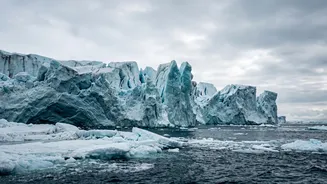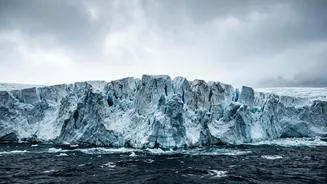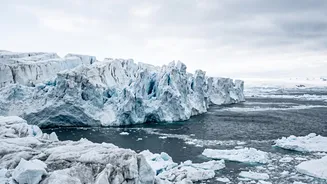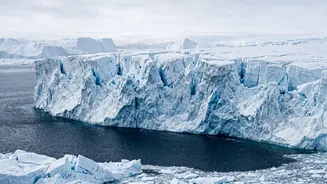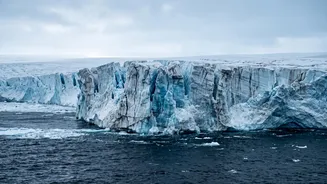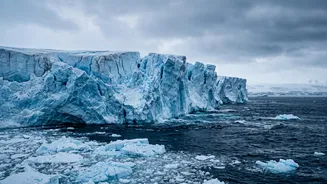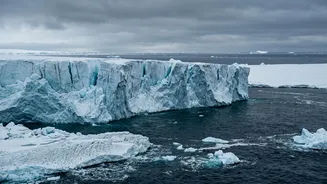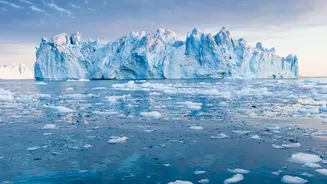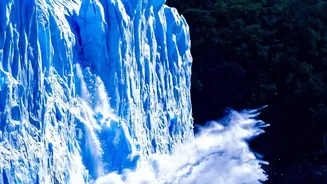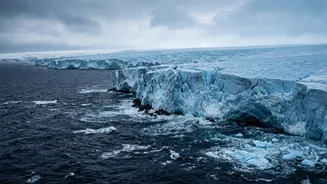

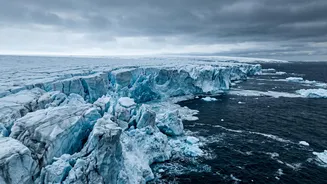
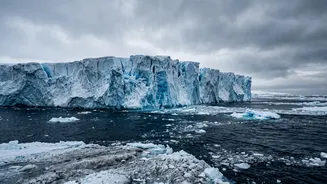
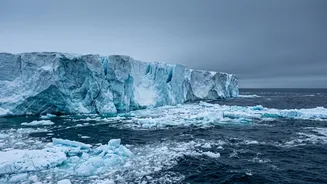
It’s been called the 'Doomsday Glacier' for a reason. New research into Antarctica's enormous Thwaites Glacier is refining our understanding of its potential to dramatically raise global sea levels, and it all comes down to a critical, complex area.
The Doomsday Glacier Explained
Covering
an area of 192,000 square kilometres, roughly the size of Great Britain or the US state of Florida, Thwaites is one of the largest and fastest-melting glaciers on Earth. Its ominous nickname comes from the catastrophic impact its total collapse would have. If the entire glacier were to melt, it holds enough ice to raise global sea levels by over 65 centimetres, or more than two feet. More critically, it acts as a natural cork, holding back the rest of the West Antarctic Ice Sheet. Scientists believe its failure could trigger a chain reaction, ultimately leading to about 3 metres (10 feet) of sea-level rise over centuries, which would devastate coastal communities globally.
What Is the Grounding Line?
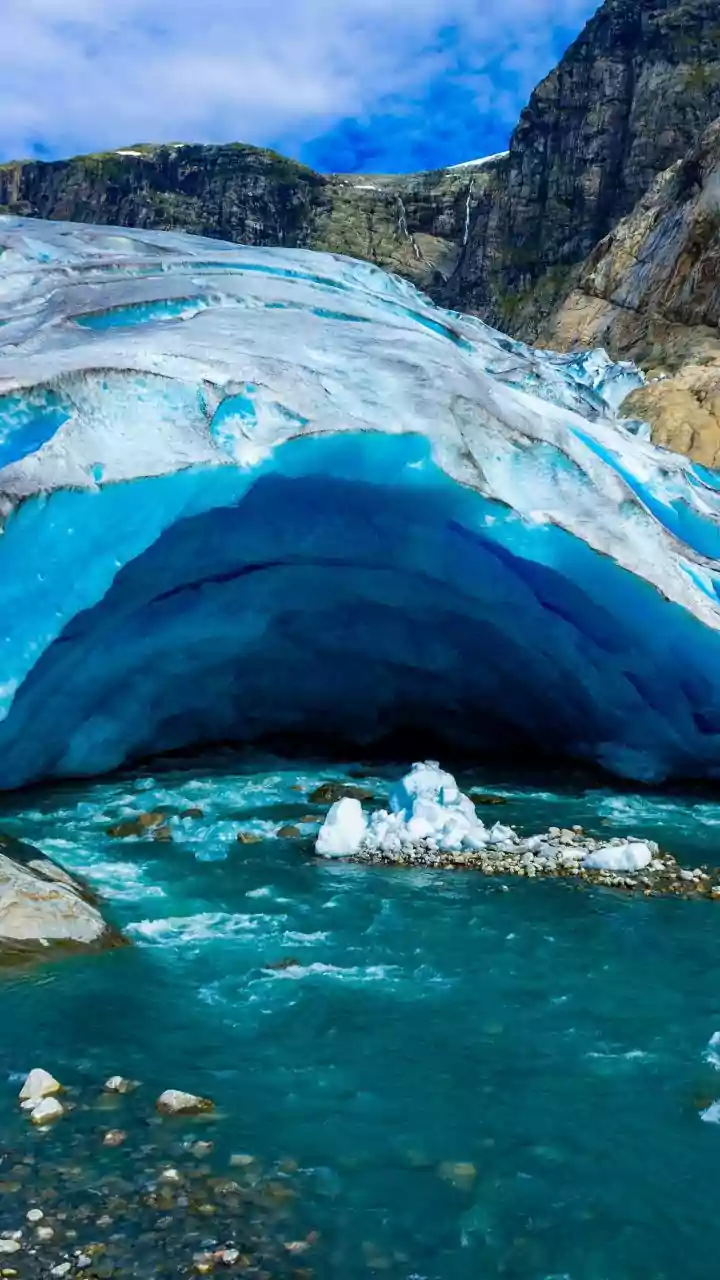
The key to understanding Thwaites' instability lies at its 'grounding line'. This is the point where a glacier lifts off the seabed and begins to float, forming an ice shelf. For years, scientific models treated this as a simple, fixed line. However, recent research reveals a more complex and concerning reality. Instead of a sharp boundary, there is a 'grounding zone' that can be several kilometres wide. Within this zone, tides act like a pump, pushing warm, salty ocean water deep beneath the grounded ice. This process dramatically increases melting from below, weakening the glacier at its very foundation and causing it to retreat faster.
What the New Models Reveal
By incorporating this wider, more dynamic grounding zone, new models developed by researchers at the University of California, Irvine, and NASA's Jet Propulsion Laboratory paint a more urgent picture. Published in late 2026, the findings show that Thwaites could contribute up to 30 millimetres (1.2 inches) to global sea levels by the year 2100. This figure is roughly double the amount projected by previous models, even without accounting for future global warming. The new simulations, which more accurately reproduce the glacier's observed retreat since the 1990s, suggest that earlier forecasts may have significantly underestimated the pace of ice loss.
The Risk of 'Unpinning'
A crucial part of this new forecast involves underwater ridges that currently act as brakes, slowing the glacier's slide into the ocean. One of the most important is the Mouginot Ridge. The new models calculate a 60% probability that the glacier will become 'unpinned' from this ridge by 2100. Once that happens, the glacier's retreat is expected to accelerate significantly as it slides down a slope toward the next natural barrier. This detachment doesn't mean the entire glacier will collapse this century, but it represents a critical tipping point that could lock in more rapid and irreversible ice loss for the future.
What This Means for India's Coastline
While a few centimetres of sea–level rise might not sound like much, the consequences are enormous. Every centimetre of rise exposes millions more people worldwide to coastal flooding. For India, with its long and densely populated coastline, the threat is particularly acute. Rising seas amplify the destructive power of storm surges, accelerate coastal erosion, and threaten freshwater resources in major coastal cities like Mumbai, Chennai, and Kolkata. The updated projections for Thwaites serve as a stark reminder that even distant events in Antarctica have direct and significant implications for national security and economic stability in India.