




An Epic Annual Journey
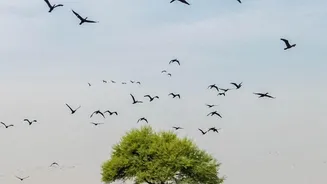
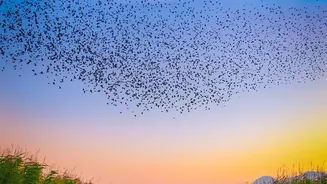
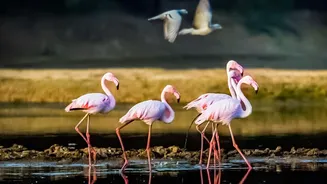
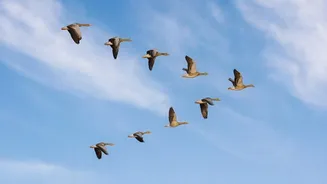
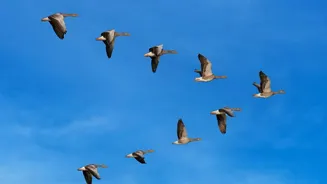
Twice a year, billions of birds undertake one of nature's most spectacular feats: migration. Driven by ancient instincts, they travel vast distances between their breeding grounds and wintering habitats. India plays a starring role in this global drama,
sitting at the heart of the Central Asian Flyway (CAF), a critical migration corridor that stretches from the Arctic to the Indian Ocean. This makes our country a vital stopover point for hundreds of species, from the famous Amur falcons to bar-headed geese and Siberian cranes. These journeys are incredibly demanding, pushing the birds to their physical limits. Their survival depends not just on a safe destination, but on the quality of the journey itself.
What Are Connected Habitats?
Imagine driving from Delhi to Mumbai without a single petrol station, restaurant, or rest stop. You wouldn’t make it. For migratory birds, connected habitats are exactly that: a network of life-sustaining pit stops. These are not necessarily vast national parks but can include a chain of wetlands, forests, coastal mudflats, and even agricultural fields that provide food and shelter. This concept, known as habitat connectivity, is about ensuring that the landscape facilitates movement. The network can be a series of large, preserved areas or smaller 'stepping stones' that allow birds to rest and refuel before continuing their arduous flight. Without this unbroken chain, the journey becomes impossible.
An Unbroken Chain of Survival
A bird's journey is a race against time and energy depletion. Stopover sites are where they find the resources to win that race. For instance, the Amur falcon travels from East Asia to southern Africa, a journey of over 20,000 kilometres. They make a crucial stop in Nagaland to feast on termites, gaining the necessary fuel for their non-stop, 4,000-kilometre flight across the Indian Ocean. Similarly, millions of waterfowl depend on wetlands like Chilika Lake in Odisha and Keoladeo National Park in Rajasthan to feed and rest during the winter. These sites are not optional; they are essential links in a survival chain. Breaking even one link can have disastrous consequences for the entire population.
When the Chain Breaks
Unfortunately, this vital chain is under constant threat. Human activities are the primary cause of what scientists call 'habitat fragmentation'. The rapid expansion of cities, conversion of wetlands for agriculture and aquaculture, construction of highways and dams, and pollution all contribute to breaking the links. India has lost nearly 30% of its natural wetlands in the last three decades, which are critical stopover sites. When a wetland is drained or a forest is cleared, a crucial 'petrol station' for these birds vanishes. This forces them to fly longer distances, exhausted and without food, increasing their risk of mortality and ultimately leading to population declines.
Mending the Gaps Together
Recognising the urgency, conservation efforts in India are increasingly focused on protecting these migratory corridors. India is a signatory to the Convention on Migratory Species (CMS) and has a National Action Plan for the conservation of migratory birds. Success stories show what is possible. In Nagaland, community-led efforts transformed the area from a mass hunting ground for Amur falcons into a celebrated conservation site. In Kashmir, an all-women group has been working to revive wetlands, leading to an increase in visiting bird populations. These local actions, combined with transboundary cooperation between countries along the flyway, are essential to mending the broken links and ensuring safe passage for these global travellers.