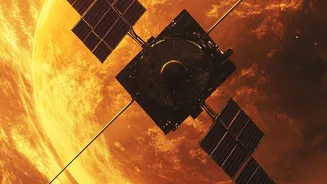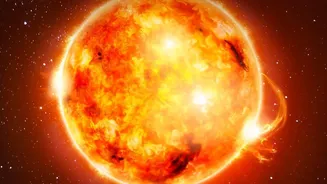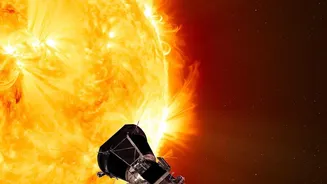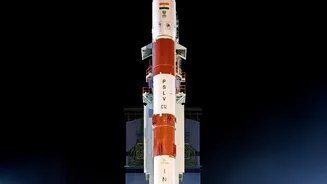


India's pioneering solar mission, Aditya-L1, is not just observing our nearest star; it's acting as a sentinel. New findings are revealing the sun's volatile nature, helping scientists understand the very real threats it poses to our modern world.
Our Sun, A Double-Edged Sword
The
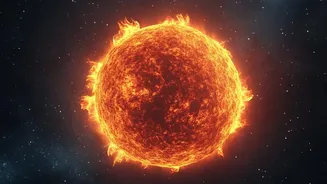
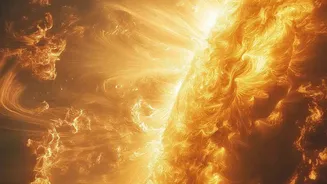
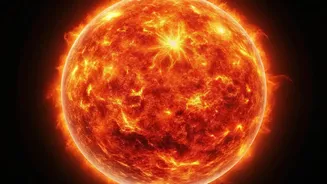
sun gives life, but it also has a violent temper. It frequently unleashes enormous explosions of energy, plasma, and magnetic fields known as solar flares and Coronal Mass Ejections (CMEs). While Earth’s magnetic field protects us from the worst of this onslaught, our increasingly tech-dependent society remains vulnerable. These solar tantrums can send high-energy particles and radiation hurtling toward Earth, posing a significant threat to the infrastructure that powers our daily lives—from the satellites that provide GPS navigation and communication to the power grids that light our cities. Understanding and predicting this 'space weather' is no longer just an academic pursuit; it's a matter of global security and economic stability.
The Threat to Our Digital World
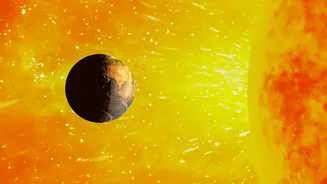
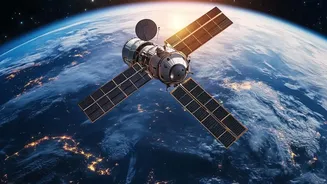
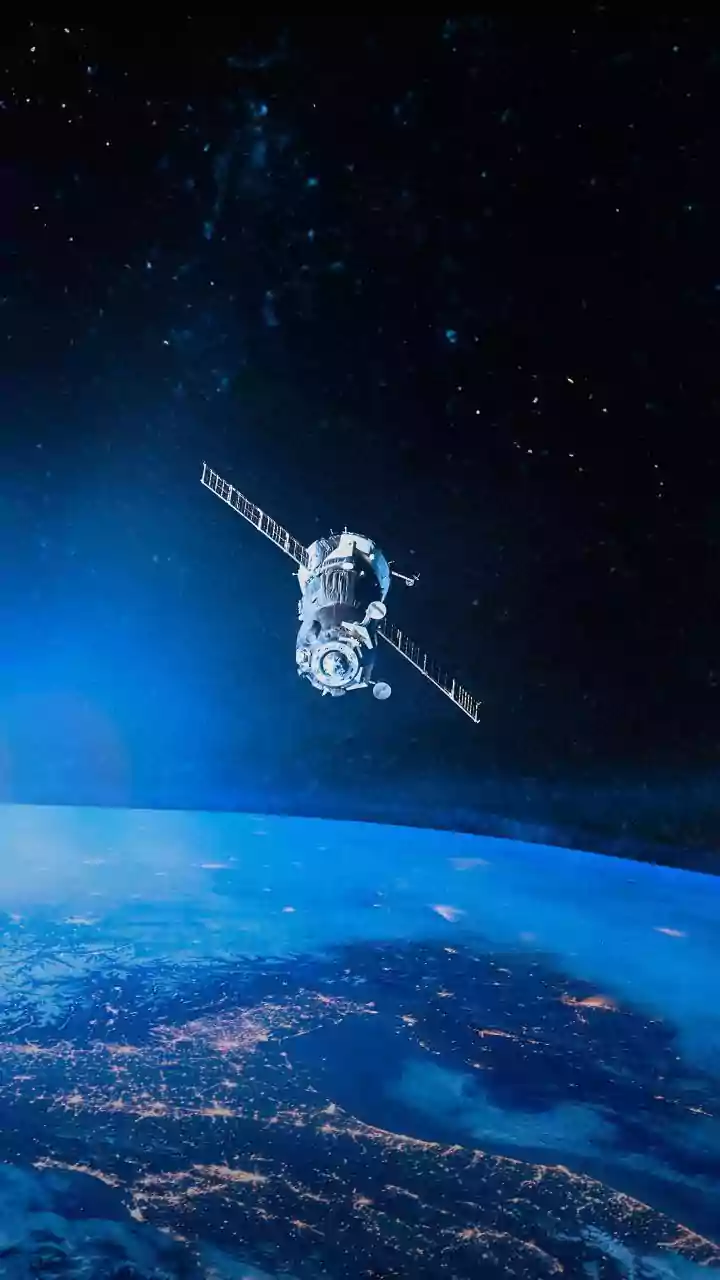
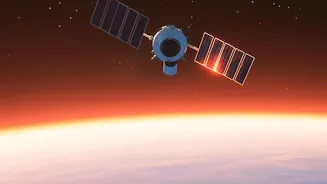
When a powerful CME strikes Earth, it can have cascading consequences. For satellites in low-Earth orbit, the sudden heating of the upper atmosphere increases atmospheric drag, which can alter their orbits and even cause them to re-enter prematurely. High-energy particles can fry sensitive electronics, degrade solar panels, and cause 'single-event upsets'—essentially flipping a bit in a computer's memory and potentially causing the satellite to malfunction. Down on the ground, the effects can be just as disruptive. Solar flares can cause high-frequency radio blackouts, affecting aviation and emergency communications. Geomagnetic storms induced by CMEs can disrupt GPS signals, creating positioning errors that impact everything from shipping to precision agriculture, and can even induce damaging electrical currents in power grids.
Aditya-L1: India's Eye on the Sun
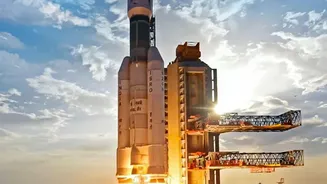
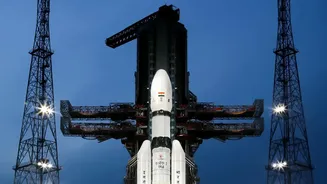
This is where ISRO's Aditya-L1 mission comes in. Positioned 1.5 million kilometres from Earth at the strategic Lagrange Point 1 (L1), the observatory has an uninterrupted view of the sun. It is equipped with seven sophisticated instruments designed to study the sun's various layers and phenomena. Recent findings have been particularly revealing. Scientists using data from the Visible Emission Line Coronagraph (VELC) and Solar Ultraviolet Imaging Telescope (SUIT) have made crucial observations. One major discovery is that CMEs don't always expand like a uniform bubble, as was often assumed. Instead, they can expand asymmetrically, with a tilt, which significantly affects how their speed and arrival time at Earth are calculated.
Decoding the Sun's Warning Signs
Even more critically, Aditya_L1 is helping scientists spot the warning signs of solar eruptions. Researchers have identified small, short_lived brightenings in the sun's atmosphere that appear hours before a major flare and are clustered around the eventual eruption site. By combining data from its ultraviolet and X_ray instruments, Aditya_L1 can link activity in the sun's lower atmosphere to the massive energy releases in the corona above. This suggests that a series of small energy releases may destabilise a region, leading to a major event. This ability to detect precursor activity is a crucial step towards developing more reliable flare forecasting systems, giving satellite operators and grid managers valuable time to take protective measures.
A Global Contribution to Space Safety
The insights from Aditya_L1 are not just a national achievement; they are a vital contribution to a global effort. Scientists are combining Aditya_L1's data with that from other observatories, like NASA's Solar Dynamics Observatory and the European Space Agency's Proba_3 mission, to create a more complete, three_dimensional picture of solar events. By challenging old assumptions and providing unprecedented detail on how solar storms are born and evolve, India's mission is fundamentally improving the models used for space weather forecasting. This collaborative work helps the entire world better understand the risks from our star and protect the critical technological infrastructure we all depend on.