






A Vision to See Everything
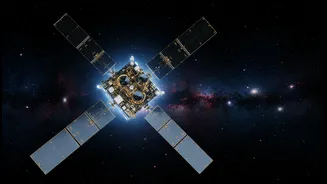
GalaxEye was founded in 2021 by a group of IIT Madras alumni with a powerful goal: to build a satellite that could see the Earth in unprecedented detail. Their plan hinged on creating the world's first OptoSAR satellite. This technology uniquely combines
two types of sensors. An optical sensor works like a powerful camera, capturing high-resolution photos in clear daylight. The second, Synthetic Aperture Radar (SAR), can see through clouds, smoke, and even at night by bouncing radar signals off the Earth's surface. By merging these, GalaxEye promised a persistent, all-weather eye in the sky. This capability is invaluable for industries like agriculture, disaster management, insurance, and national security, which often find their satellite data useless due to bad weather or darkness.
The Promise of Mission Drishti
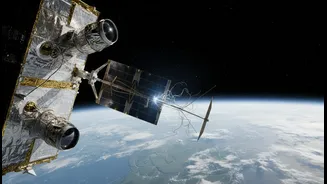
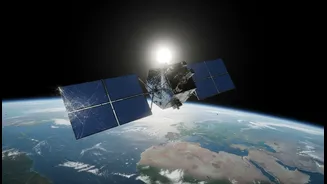
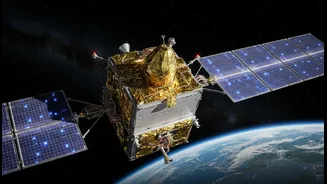
Mission Drishti was the company's first big step. The mission's centerpiece, the Drishti-1 satellite, was launched on a SpaceX Falcon 9 rocket on May 3, 2026. For the Bengaluru-based team, this was more than just a launch; it was the culmination of years of design and engineering. The goal was to prove their technology worked in the harsh environment of space. Before the setback, things looked promising. The satellite successfully established contact with GalaxEye's mission control in Bengaluru, completed its initial deployment phases, and validated several key onboard systems. It was a successful demonstration of the company's ability to design, launch, and operate a sophisticated spacecraft from India.
When Space Weather Strikes
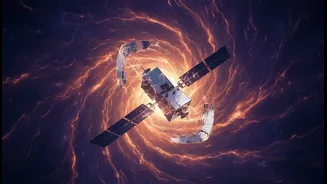
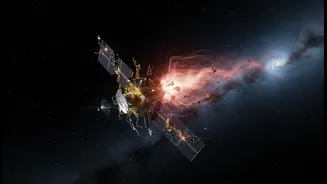
The mission encountered a critical failure during its final early orbit phase. According to the company's statements on July 7, 2026, the satellite flew into an intense geomagnetic solar storm. The initial analysis suggests that the intense radiation from this storm likely damaged a critical electronic system on the satellite. Communication became intermittent before being lost entirely. While recovery efforts were made, GalaxEye has conceded that the likelihood of re-establishing contact with the spacecraft is low. The groundbreaking mission was silenced not by a design flaw, but by the unpredictable and unforgiving nature of space itself.
Failure is Part of the Process
While the loss of the satellite is a significant blow, it is not a story of total failure. In the high-risk field of deep-tech, and especially in the space industry, such setbacks are often considered part of the journey. The mission, though cut short, provided GalaxEye with invaluable real-world data. The company successfully tested its ground control systems, deployment mechanisms, and attitude control, proving that much of its core technology is sound. As CEO Suyash Singh noted, the mission yielded engineering insights that will directly strengthen future endeavours. This philosophy of learning from failure is a core tenet of the startup ecosystem and essential for pushing technological boundaries.
The Path Forward for GalaxEye
GalaxEye is already looking ahead. The company has announced that the experience has catalysed a strategic shift. They plan to accelerate the move to bring more of their manufacturing and supply chain in-house, giving them greater control over quality and reliability for future missions. Far from being deterred, the startup has announced an ambitious plan to launch two new, larger OptoSAR satellites within the next two years. These next-generation spacecraft will be built incorporating the tough lessons learned from Mission Drishti. This quick pivot demonstrates a resilience that is crucial for survival and long-term success in the competitive global space market.