




A Park That Actually Floats
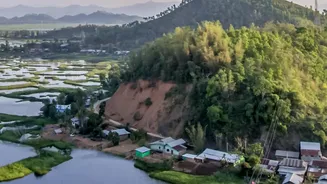
In the Bishnupur district of Manipur lies Keibul Lamjao National Park, an integral part of the famous Loktak Lake. What makes it a global marvel is that it is the world’s only floating national park. The entire 40-square-kilometre park rests not on solid
ground, but on a collection of floating, decomposed plant matter locally called 'phumdis'. These are not flimsy lily pads; they are thick, buoyant masses of vegetation, soil, and organic material that have compacted over time, creating a solid-enough surface to support a rich grassland ecosystem, wildlife, and even small hills. The phumdis are like natural trampolines, with most of their mass hidden beneath the water's surface, creating a landscape that is constantly, subtly, in motion.
The Science of the Phumdis
Phumdis are a miracle of natural engineering. These floating islands are a heterogeneous mix of vegetation, soil, and organic matter in various stages of decomposition. Their lifecycle is tied to the seasonal water levels of Loktak Lake. Traditionally, during the dry season, the lake's water level would drop, allowing the phumdis to touch the lakebed. This 'grounding' process allowed the plant roots to absorb vital nutrients from the soil below. When the monsoon rains arrived and the lake swelled, the newly nourished phumdis would rise and float once more. This natural cycle is what has sustained the unique ecosystem for centuries, creating a habitat found nowhere else on Earth.
Last Home of the 'Dancing Deer'
The park’s primary purpose is to protect its most famous resident: the Sangai deer (Rucervus eldii eldii), Manipur's state animal. This subspecies of the brow-antlered deer is critically endangered and found nowhere else in the wild. Once thought to be extinct in the 1950s, a small population was rediscovered, prompting the creation of the park in 1977. The Sangai has adapted perfectly to its bouncy environment; its hooves are well-suited to the spongy phumdis. Its delicate, distinctive gait as it navigates the floating meadows earned it the nickname the 'dancing deer'. The park is the last natural refuge for the Sangai, making its preservation a critical conservation priority.
A Fragile, Threatened Paradise
Despite its protected status, Keibul Lamjao faces serious threats to its existence. The construction of the Ithai Barrage for a hydroelectric project in the 1980s has been the most significant challenge. The dam keeps the water level in Loktak Lake artificially high and stable throughout the year, preventing the phumdis from sinking to the lakebed to absorb nutrients. As a result, these floating islands are gradually thinning, breaking apart, and losing their ability to support the weight of the Sangai and other wildlife. Furthermore, pollution from rivers feeding the lake, illegal fishing, and encroachment by the surrounding human population add to the pressure on this fragile habitat. Climate change projections also warn that the deer's suitable habitat could shrink significantly in the coming decades.