


A Laboratory Unlike Any Other
The Moon has long been considered a sterile world, hostile to life as we know it. With no atmosphere, wild temperature swings, and a constant bombardment of sterilizing ultraviolet (UV) radiation, it's one of the harshest environments in our cosmic neighbourhood.
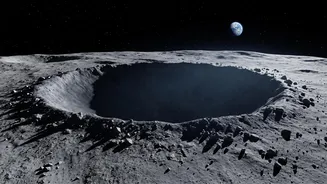
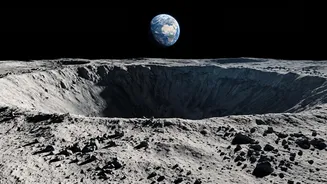
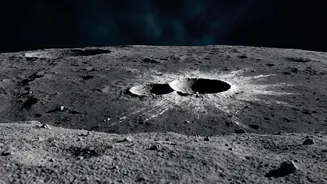
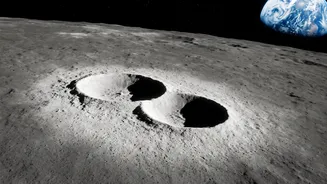
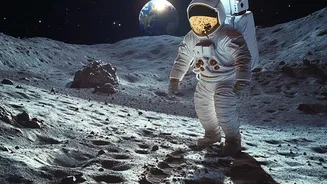
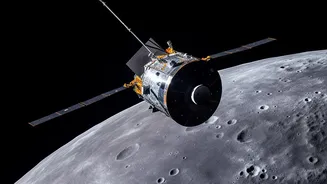
However, a recent study published in Science Advances challenges this view, not by suggesting life could thrive there, but by asking if it could simply survive. Rather than sending microbes to the Moon, NASA-led scientists used detailed data from the Lunar Reconnaissance Orbiter to create sophisticated simulations of conditions at the lunar South Pole. This region, a prime target for upcoming Artemis missions, is vastly different from the equatorial sites visited by Apollo astronauts. Its low-angle sunlight creates permanently shadowed craters where conditions are less extreme.
The Five Microscopic Contenders
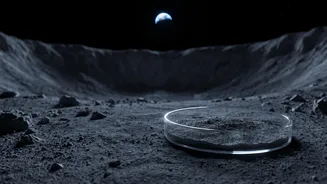
Researchers selected five microorganisms for their simulated lunar vacation, all of which are commonly found alongside humans, particularly in spacecraft like the International Space Station (ISS). This makes them likely hitchhikers on any future mission. The candidates included two types of fungi and three types of bacteria. The fungi were Aspergillus niger, a common black mould found in damp places like bathrooms, and species of Fusarium, a fungus often found in soil. The bacteria were Deinococcus radiodurans, known for its incredible resistance to radiation; Staphylococcus aureus, commonly found on human skin; and Bacillus subtilis, a microbe present in soil and the human gut. Some of these, surprisingly, are not considered 'extremophiles'—organisms specifically adapted to harsh environments—making their potential resilience all the more intriguing.
Surviving the Unsurvivable
The study found that the topography of the lunar poles plays a crucial role in survival. The deep shadows cast by craters and ridges offer significant protection from direct, lethal UV radiation and extreme heat. The simulations showed that 'survivable niches' exist, ranging in size from vast crater floors to areas as small as an astronaut's bootprint. The results were clear: fungi proved hardier than bacteria. The standout survivor was Aspergillus niger, the black mould. Thanks to its extreme UV resistance, it could potentially survive for weeks or even months in some locations, even those with some limited sunlight exposure during the lunar winter. All five microbes found potential havens in the permanently shadowed regions, able to persist for at least a week in some models.
Survival, Not Growth
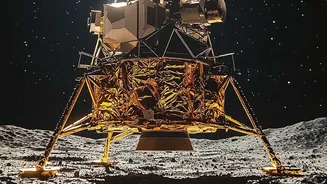
Scientists are quick to emphasize the critical difference between survival and growth. The microbes in these simulations were in a dormant, cryptobiotic state, meaning their metabolic processes were suspended to endure the harsh conditions. They were not growing, reproducing, or thriving. The Moon still lacks the key ingredients for life to flourish, most notably liquid water and a protective atmosphere. However, the fact that these microbes could survive at all is a game-changer. It raises concerns about 'forward contamination'—the risk of inadvertently carrying Earth life to other celestial bodies. This could complicate the scientific search for ancient lunar chemistry or potential signs of native life, as scientists would have to distinguish between what was originally there and what we brought with us.