




Stem Cuttings in Water: The Classic Method
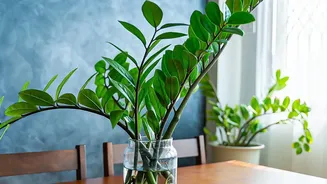
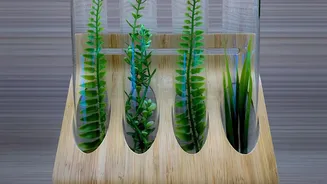
This is one of the easiest and most visually rewarding ways to propagate. It works wonderfully for vining plants common in Indian homes, like money plants (Pothos) and philodendrons. Simply find a healthy stem on your mother plant and use a clean pair
of scissors or a knife to cut a four to six-inch piece just below a node. A node is the small bump on the stem where a leaf grows from. This is where new roots will sprout. Remove any leaves on the lower part of the cutting that would sit below the water line to prevent them from rotting. Place the cutting in a clear glass or jar filled with room-temperature water, ensuring at least one or two nodes are submerged. Keep the jar in a spot with bright, indirect sunlight and change the water every three to five days to keep it fresh. In a few weeks, you'll see delicate white roots begin to grow. Once the roots are about one to two inches long, your new plant is ready to be transferred to a pot with soil.
Stem Cuttings in Soil: A More Direct Approach
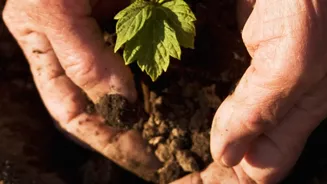
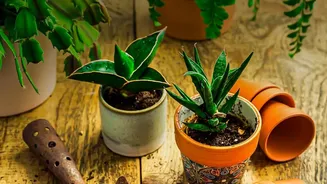
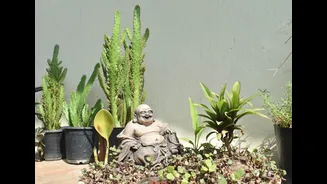
Some plants prefer to root directly in soil. This method is great for succulents and hardier plants like snake plants and ZZ plants. The process is similar to water propagation: take a healthy cutting from the mother plant. For snake plants, you can even cut a large leaf into several sections. The most crucial step for this method is to let the cutting 'callous' over. Leave the cut end to dry in the air for a day or two. This forms a protective layer that prevents the cutting from rotting when you plant it. Once calloused, you can dip the cut end in rooting hormone, though this is optional for most easy-to-propagate plants. Then, simply insert the cutting into a pot filled with a well-draining potting mix. Water it lightly and place it in a location with indirect sunlight. Keep the soil lightly moist but not waterlogged to encourage root growth without causing rot.
Division: For When Plants Get Too Crowded
If you have plants that grow in clumps, like spider plants, peace lilies, or even some ferns, division is an excellent way to create new, full-sized plants instantly. This is also a great way to manage a plant that has become too large for its pot. To divide a plant, carefully remove it from its container. Gently shake off the excess soil so you can see the root system. You should be able to identify natural points where the plant can be separated into smaller sections, each with its own set of roots and leaves. Using your hands or a clean knife, gently pull or cut these sections apart. Repot each new division into its own container with fresh potting mix. Water them thoroughly and care for them as you would the parent plant. Since these divisions already have established root systems, they often experience less shock and begin growing quickly.
Planting Runners: The Spider Plant's Gift
Mature spider plants make propagation incredibly easy by producing 'babies' or 'spiderettes' on the ends of long stems called runners. These are essentially mini-plants, often with tiny roots already starting to form. You have a couple of options here. You can snip off a spiderette and place it in a glass of water until its roots are more developed, just like a stem cutting. Alternatively, you can plant the spiderette directly into a small pot of soil. For a nearly foolproof method, you can place a small pot of soil next to the mother plant and plant the spiderette into it while it is still attached to the runner. The baby plant will receive nutrients from the parent while it establishes its own roots. Once the new plant feels secure and shows signs of new growth, you can simply snip the runner connecting it to the mother plant.