





First, What Is El Niño?
El Niño is a naturally occurring climate pattern characterized by the unusual warming of surface waters in the eastern and central equatorial Pacific Ocean. This isn't just a local event; this vast expanse of warm water releases a tremendous amount of heat
into the atmosphere, which can disrupt weather patterns across the globe. For India, the primary concern is its historical relationship with the southwest monsoon, the lifeblood of the country's agriculture-driven economy. During an El Niño year, the atmospheric circulation patterns that typically bring rain to the subcontinent can weaken, shift, or become more erratic. This is why its development is monitored so closely by forecasters and policymakers alike. The World Meteorological Organization (WMO) has confirmed that a strong El Niño is not just developing, but rapidly intensifying through August 2026.
The Historical Link to Indian Droughts
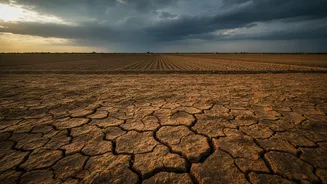
The anxiety surrounding El Niño is well-founded in history. There is a strong correlation between El Niño years and deficient monsoon rainfall in India. Historically, many of the most severe droughts the country has faced have occurred during strong El Niño events. The phenomenon tends to suppress rainfall, leading to prolonged dry spells, particularly in the crucial latter half of the monsoon season in August and September. The India Meteorological Department (IMD) acknowledged this risk in its forecasts for 2026, predicting below-normal rainfall for the season, citing the strengthening El Niño as a primary driver. As of early August 2026, the country had already registered a cumulative rainfall deficit of 12% below the Long Period Average (LPA), a figure consistent with early El Niño impacts.
Why It's Not a Simple Equation
This is where the story gets more complicated. While a strong El Niño significantly increases the probability of a weak monsoon, it does not make it a certainty. Not all El Niño years have resulted in drought. The monsoon is a complex system influenced by multiple factors, and El Niño is just one, albeit very powerful, piece of the puzzle. The timing and intensity of the El Niño event matter, as does the influence of other regional and global climate phenomena. Sometimes, other favourable conditions can partially or even fully counteract El Niño’s drying effect. This is a critical distinction: El Niño loads the dice in favour of drought, but it doesn't guarantee the outcome of the roll.
Meet the IOD: The Monsoon's Other Driver
The most important of these other factors is the Indian Ocean Dipole, or IOD. The IOD is the Indian Ocean's own version of El Niño, defined by a temperature difference between the western and eastern parts of the ocean. A 'positive' IOD, with warmer-than-average waters in the western Indian Ocean (near the Arabian Sea), tends to boost the Indian monsoon. It can enhance rainfall by pushing more moisture towards the subcontinent. Crucially, a positive IOD can sometimes ride to the monsoon's rescue, offsetting the negative impact of an El Niño. Several forecast models are now indicating the development of a positive IOD from August 2026 onwards. This is the key development that adds a layer of hope and uncertainty to the forecast.
The Current Tug-of-War: El Niño vs. IOD
As of August 2026, we are witnessing a climatic tug-of-war. On one side, a strong El Niño is intensifying in the Pacific, which has already contributed to a rainfall deficit. The IMD has forecast below-normal rain for the second half of the season. On the other side, a positive IOD appears to be developing in the Indian Ocean. While it was in a neutral or negative phase in June, forecasts show a high probability of it turning and remaining positive through the rest of the monsoon season. The World Meteorological Organization has highlighted that these two powerful, and somewhat opposing, forces will shape weather patterns concurrently. This complex interaction makes forecasting the exact outcome difficult. A strong positive IOD could moderate the drought-like conditions threatened by El Niño, but the sheer strength of the current El Niño event means its influence will likely remain dominant.