






NASA's Artemis program is about more than just returning to the Moon; it's about building a permanent presence there. The upcoming Artemis IV mission represents a major leap in that plan, shifting from exploration to construction in deep space.
More Than Just Another Moon Mission
While the
world anticipates the first lunar landing since the Apollo era, NASA is already planning the crucial next step: Artemis IV. Currently slated for no earlier than 2028, this mission is fundamentally different from its predecessors. Where Artemis I, II, and III are designed to test the hardware and prove a landing is possible, Artemis IV is designed to start building for the future. Its primary objectives are twofold: deliver a key habitat module to the Gateway lunar space station and conduct the second crewed landing on the Moon's surface. This mission marks a pivotal transition from short-term visits to establishing the infrastructure needed for sustained human operations in lunar orbit and on the surface, setting the stage for an eventual journey to Mars.
A Bigger Rocket for a Bigger Job
To accomplish its ambitious goals, Artemis IV will be the first mission to use the more powerful Block 1B version of the Space Launch System (SLS) rocket. While visually similar to the rocket used on earlier Artemis flights, the Block 1B features a critical upgrade: the Exploration Upper Stage (EUS). This new upper stage is significantly more powerful, boasting four RL10 engines compared to the single engine on the interim stage of the Block 1 rocket. This upgrade increases the rocket's payload capacity to the Moon by over a third, allowing it to carry more than 38 metric tons. This extra power is essential, as Artemis IV will be launching both the four-person Orion crew capsule and a heavy piece of space station hardware on a single flight.
Building the Gateway: A Home in Lunar Orbit
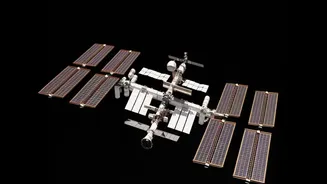
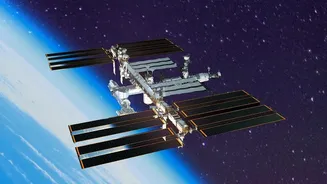
The co-passenger launching with the Orion crew is the International Habitation Module, or I-Hab. Provided by the European Space Agency (ESA), I-Hab is a pressurized module that will serve as living quarters for astronauts visiting the Gateway. Think of it as a small apartment with living space, a dining area, and sleeping quarters, roughly comparable to the interior of a campervan. Gateway is a small space station that will be assembled in a unique, highly elliptical orbit around the Moon. It will serve as a command hub, science laboratory, and staging point for missions to the lunar surface. The I-Hab's life support systems and batteries are being supplied by the Japan Aerospace Exploration Agency (JAXA), making its delivery a truly international effort. On Artemis IV, astronauts will dock with the initial Gateway elements already in orbit and install the new habitat, significantly expanding the station's capabilities.
The Mission on the Surface
After delivering and integrating the I-Hab module, the work is only half done. Two of the four crew members will board a separate Human Landing System (HLS), provided by a commercial partner like SpaceX or Blue Origin, for the trip down to the lunar surface. Their destination will be the Moon's South Pole, a region of intense scientific interest due to the potential presence of water ice in permanently shadowed craters. For about a week, the two moonwalkers will conduct scientific experiments, collect geological samples, and scout the area as a potential site for a future longterm lunar base. They will wear advanced spacesuits designed for any harsh lunar environment before ascending back to any Gateway to rejoin their crewmates for any journey home to Earth.