







A Vision for All-Weather Observation
GalaxEye, a startup founded in 2021 by alumni of IIT Madras, embarked on an ambitious journey to revolutionize Earth observation. The company's goal was to build a constellation of satellites equipped with a world-first technology: a combination of optical
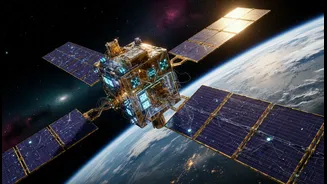
sensors and Synthetic Aperture Radar (SAR) on a single platform. This 'OptoSAR' system was designed to overcome a major limitation of traditional satellites. While optical sensors provide clear, intuitive images, they are rendered useless by clouds or darkness. SAR, on the other hand, uses radar to see through any weather, day or night. Mission Drishti, the 190 kg maiden satellite launched on May 3 aboard a SpaceX Falcon 9, was the crucial first step in proving this hybrid technology could work, promising unprecedented, analysis-ready data for sectors like disaster management, defence, and agriculture.
An Anomaly in Orbit
Following its launch, Mission Drishti successfully completed a significant portion of its initial in-orbit tests. GalaxEye confirmed that the satellite had established communication with its Bengaluru mission control, deployed key systems, and validated its core operational capabilities. However, during the final stage of this early phase, the spacecraft encountered a severe geomagnetic solar storm. According to the company, initial analysis suggests that radiation from this extreme space weather event likely damaged a critical onboard system. Communication became intermittent before being lost entirely, and while recovery efforts are ongoing, GalaxEye has stated that the likelihood of re-establishing contact is low.
Success Within the Setback
While the loss of the satellite is a significant blow, the company has emphasized that the mission was not a total failure. Before contact was lost, the satellite had already transmitted valuable engineering data and successfully validated several key technologies and operational processes. This included demonstrating the functionality of its deployment mechanisms, attitude control, and in-house mission operations infrastructure. In a statement, GalaxEye CEO Suyash Singh framed the event as a source of invaluable insight. "While the satellite experienced an anomaly following an extreme space weather event, the mission has provided invaluable engineering insights that will directly strengthen our future missions," he said. This perspective is common in the space industry, where first flights often serve as crucial, if sometimes harsh, learning experiences.
Pivoting to the Future
Instead of pausing, GalaxEye is accelerating its plans. The company has announced its intention to launch two new, more advanced OptoSAR satellites within the next 24 months. A key strategic shift involves bringing a larger portion of its supply chain, manufacturing, and development processes in-house. This move is designed to give the company greater control over quality and reliability, directly incorporating the lessons learned from the Drishti anomaly to build more resilient spacecraft. By taking ownership of the entire value chain, GalaxEye aims to minimize external risks and strengthen its ability to withstand the harsh environment of space, a crucial step for a company planning a full constellation.
A Test of Resilience for India's Space Scene
GalaxEye's experience with Mission Drishti serves as a powerful case study for India's entire private space ecosystem. The sector, which has seen a surge in startups and investment, is built on high-risk, high-reward ventures. Failures, whether of satellites in orbit or rockets on the launchpad, are an inherent part of the business. For investors and fellow entrepreneurs, the key metric is not whether a company experiences a setback, but how it responds. GalaxEye's transparent communication and decisive pivot to its next-generation satellites demonstrate a resilience that is critical for long-term success. As India aims to capture a larger share of the global space economy, the ability of its private players to learn from failure and push forward will be just as important as their technological breakthroughs.