






What is India's core theme for 2026?
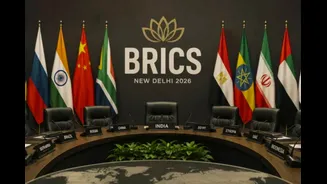
India's chairship is guided by the theme “Building for Resilience, Innovation, Cooperation and Sustainability”. This vision, first articulated by the Prime Minister, reflects a 'people-first' approach. The goal is to move beyond political declarations
and focus on practical cooperation that delivers concrete benefits to the citizens of member nations. The agenda is structured around four key pillars: strengthening resilience against global shocks, fostering innovation through technology, deepening cooperation on development and security, and promoting sustainability.
What is the economic agenda?
A major focus is on strengthening economic and financial cooperation. This includes bolstering the New Development Bank (NDB) to mobilize resources for infrastructure and sustainable development. India is also championing increased trade in national currencies to reduce dependency on the US dollar and lower transaction costs. However, officials have made it clear that India does not support the creation of a common BRICS currency, preferring to focus on strengthening bilateral local currency settlement systems. The agenda also includes building resilient supply chains, enhancing digital payment systems like UPI, and creating a BRICS MSME Cooperation Portal to connect small businesses across member states.
How will global governance and security be addressed?
Reforming global governance institutions like the UN, WTO, and IMF remains a cornerstone of the BRICS agenda, and India continues to advocate for a greater voice for the Global South. Counter-terrorism is another critical priority for New Delhi. India has consistently pushed for stronger, more coordinated efforts within the bloc to combat terrorism, including through the BRICS Counter-Terrorism Working Group. As chair, India will navigate complex geopolitical issues, including ongoing conflicts, to build consensus among the diverse members of the expanded group.
What is the plan for innovation and sustainability?
India aims to position BRICS as a hub for innovation. A key proposal is the creation of a BRICS Digital Public Infrastructure Repository to share knowledge on scalable solutions like digital identity and payment platforms. There is a strong emphasis on cooperation in emerging technologies like AI and fintech to drive future-ready growth. The sustainability pillar focuses on accelerating climate action, promoting green finance, and ensuring a just energy transition. The goal is to pursue economic growth that is environmentally responsible and aligns with the developmental priorities of member nations.
How does India view the expanded BRICS?
The BRICS group has expanded significantly, now including nations like Egypt, Ethiopia, Iran, Saudi Arabia, and the UAE, with others showing interest. For India, managing this expansion is a key task. New Delhi has advocated for a criteria-based approach to adding new members. A primary challenge and priority for India's chairship will be to integrate these new members effectively into the BRICS framework and ensure the bloc remains cohesive and focused on its core development agenda. India's leadership aims to steer the group towards a constructive, non-confrontational path, focusing on practical cooperation rather than allowing it to become an explicitly anti-Western coalition.