




The 'Water Towers' in Peril
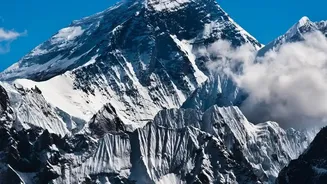
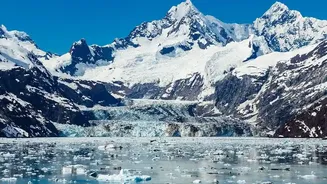
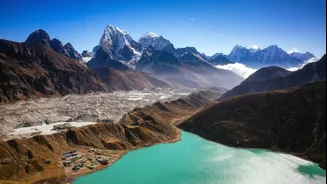
The Hindu Kush Himalaya region's glaciers are a lifeline for nearly two billion people, feeding major river systems. However, this region is warming significantly faster than the global average. This accelerated warming is causing glaciers to melt and
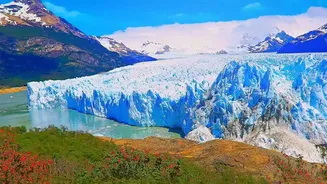
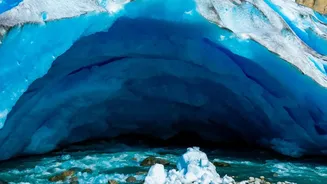
retreat at an alarming rate, losing nearly a third of their ice in just over 30 years. This isn't just about sea-level rise; it creates immediate, local dangers. As glaciers shrink, they leave behind vast lakes, often held in place by unstable natural dams made of rock and debris called moraines. These moraine dams are inherently weak and can breach suddenly, creating a severe and immediate hazard.
The Anatomy of a GLOF
The most significant of these hazards is a Glacial Lake Outburst Flood, or GLOF. A GLOF is a catastrophic flood that occurs when the dam containing a glacial lake fails. This failure can be triggered by several factors, including the pressure of the ever-increasing water volume from melt, an earthquake, or a large avalanche of rock or ice falling into the lake. The result is the sudden release of millions of cubic metres of water, mud, and debris that surges down narrow mountain valleys at incredible speeds. These floods can destroy villages, roads, bridges, and critical infrastructure like hydropower plants, with the destructive force felt for hundreds of kilometres downstream. Recent events, such as the August 2026 disaster in Nepal, highlight how a massive collapse of rock and glacial ice can trigger a similar devastating flow, travelling nearly 100 kilometres and causing immense destruction.
Why Nepal Is So Vulnerable
Nepal's unique geography, nestled in the heart of the Himalayas, places it at extreme risk. The country has seen the number of its glacial lakes swell rapidly over the past few decades. A 2010 inventory identified over 3,800 glaciers in Nepal, and subsequent studies have shown a dramatic increase in both the number and size of glacial lakes. Of these, dozens are considered potentially dangerous, with a high risk of producing a GLOF. The Koshi river basin in eastern Nepal is a particular hotspot, with 42 dangerous lakes identified. Compounding the physical risk is the human element; thousands of people live in downstream valleys, and vital infrastructure, including a growing number of hydropower projects, is situated in these hazardous zones. This combination of unstable lakes and vulnerable downstream populations creates a recipe for disaster.
The Human and Economic Cost
The impacts of these climate-driven disasters are profound and are defined as 'Loss and Damage'—irreversible consequences that can't be prevented by adaptation. In September 2024, extreme rainfall in Nepal led to over 230 deaths and more than USD 335 million in economic damage. The August 2026 glacial collapse was even more catastrophic, with a death toll exceeding 1,000 in Nepal and thousands more missing. These events don't just cause immediate death and destruction; they trigger long-term crises. Communities are displaced, agricultural lands are washed away, and livelihoods are destroyed. This climate-induced migration sees people leaving their ancestral homes in mountain villages for an uncertain future in urban areas, putting further strain on resources.
A Race Against Time
Addressing this escalating threat is a monumental challenge, but efforts are underway. In Nepal, initiatives supported by international partners like the UNDP and Green Climate Fund are focused on moving from a reactive to a proactive stance. Key strategies include physically lowering the water levels in the most dangerous lakes to reduce pressure on their dams, as was done at Imja Lake. Another crucial component is the establishment of early warning systems, using sensors and community-based networks to provide downstream villages with precious time to evacuate. Projects aim to train local communities, improve hazard mapping, and integrate risk management into national policy. However, the scale of the problem is immense, and sparse monitoring in remote, high-altitude areas remains a significant hurdle.