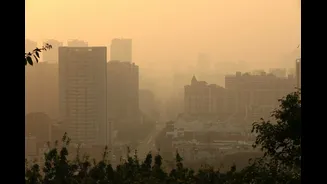







The twin concerns of rising dementia rates and poor air quality are major public health challenges. Now, a massive new study provides some of the strongest evidence yet that the air we breathe could be directly impacting our long-term brain health.
What the Landmark Study Found
A major
new study based on data from the UK Biobank has established a clear and concerning link between long-term exposure to air pollution and a higher risk of developing dementia. Researchers tracked the health of 488,348 participants over a period of nearly 14 years. During that time, they found that individuals exposed to the highest levels of fine particulate matter had a 14% greater risk of a dementia diagnosis compared to those with the lowest exposure. This large-scale analysis adds significant weight to a growing body of evidence suggesting that environmental factors, and specifically air quality, should be considered a key modifiable risk factor for neurodegenerative diseases.
The Pollutants in Focus
The primary culprit identified in this and other similar studies is 'fine particulate matter', or PM2.5. These are microscopic particles, less than 2.5 micrometres in diameter, or about 1/30th the width of a human hair. Their minuscule size is what makes them so hazardous. They are generated by sources like vehicle exhaust, industrial emissions, power plants, and smoke from wildfires or wood burning. Because they are so small, they can be inhaled deep into the lungs and from there, can enter the bloodstream, circulating throughout the body. Other pollutants also implicated in raising dementia risk include nitrogen dioxide (NO2), which mainly comes from burning fossil fuels, and soot (also known as black carbon).
How Might Pollution Affect the Brain?
Scientists are exploring several ways that air pollution could inflict damage on the brain. One leading theory is that these inhaled particles trigger a widespread inflammatory response throughout the body, which can damage the delicate blood vessels in the brain and harm brain tissue over time. Another possibility being investigated is that these ultrafine particles may travel more directly to the brain, possibly through the olfactory nerve in the nose, where they can interfere with normal cell processes. Studies have shown pollution exposure is linked to physical changes in the brain, including reduced brain volume. Some research suggests these pollutants can cause or accelerate the buildup of harmful proteins, like alpha-synuclein, which are hallmarks of diseases like Parkinson's and Lewy body dementia.
Putting the Risk into Context
While a 14% or 17% increased risk sounds alarming, it is important to place it in the context of other dementia risk factors. The association is generally considered smaller than risks posed by factors like genetics, smoking, or level of education. However, unlike those factors, air pollution is an involuntary exposure that affects entire populations. The Cambridge University review noted that for every 10 microgram per cubic metre increase in PM2.5 exposure, dementia risk could rise by 17%. To put that into perspective, average roadside levels in a major city like London have been measured at that exact level, highlighting the real-world relevance of these findings. Experts suggest that while individual actions matter, the greatest impact in reducing this risk will come from public policy and regulation aimed at cleaning the air for everyone.
A Growing Body of Evidence
This UK Biobank study does not stand alone. It reinforces the findings of a massive 2025 systematic review that analyzed 51 previous studies involving over 29 million participants. That review also found a statistically significant association between dementia and exposure to PM2.5, nitrogen dioxide, and soot. While most studies have been conducted in wealthier nations, the implications are global, especially for regions set to experience rises in ageing populations. Though research continues to refine our understanding of the exact mechanisms, the overall trend is clear: the evidence linking air pollutants to an increased risk of dementia is compelling and growing stronger.