






1. High Plank with Shoulder Taps
This variation adds an element of instability, forcing your core to work harder to prevent your torso from rotating. It’s a fantastic way to build anti-rotational strength, which is crucial for protecting your spine during dynamic movements. Start in a high
plank (push-up) position with your hands directly under your shoulders and feet about shoulder-width apart for better stability. Keeping your hips as still as possible, lift your right hand and tap your left shoulder. Return your hand to the floor with control and repeat on the other side, lifting your left hand to tap your right shoulder. The key is to minimize rocking or swaying; engage your abs to keep your body in a straight, solid line from head to heels. Aim for 10-12 controlled taps per side.
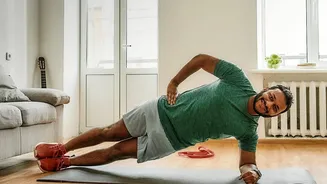
2. Side Plank with Hip Dips
To specifically target your obliques—the muscles on the sides of your abdomen—the side plank with hip dips is an essential move. Strong obliques contribute to a defined waistline and improve your ability to bend and twist. To perform it, lie on your side with your forearm on the floor and your elbow directly under your shoulder. Stack your feet and lift your hips, creating a straight line from your head to your ankles. From this side plank position, slowly lower your bottom hip until it almost touches the floor, then use your obliques to lift it back to the starting position. This dynamic movement creates both a stretch and a contraction in the side abs. Perform 10-15 dips per side, focusing on quality movement over quantity.
3. Plank Jacks
Ready to add a cardiovascular challenge to your core work? Plank jacks elevate your heart rate while demanding serious abdominal stability. This move strengthens your entire core, shoulders, and even your inner and outer thighs. Begin in a standard plank position, either on your forearms or hands. Keeping your upper body stable and your back flat, jump both feet out to the sides, wider than your hips, as if doing a horizontal jumping jack. Quickly jump your feet back together. The goal is to maintain a rigid plank posture without letting your hips drop or rise as your legs move. This exercise builds explosive power and endurance. Start with 20-30 seconds and gradually increase the duration as you get stronger.
4. Reverse Plank
It’s easy to focus only on the front of your core, but a truly strong midsection includes the posterior chain—your lower back, glutes, and hamstrings. The reverse plank is perfect for strengthening these often-neglected muscles, which are vital for good posture and preventing lower back pain. Sit on the floor with your legs extended in front of you. Place your hands on the floor behind you, fingers pointing toward your feet. Lift your hips off the ground until your body forms a straight line from your shoulders to your heels. Squeeze your glutes and engage your core to prevent your hips from sagging. Hold this position for 20-30 seconds, focusing on keeping your body straight.
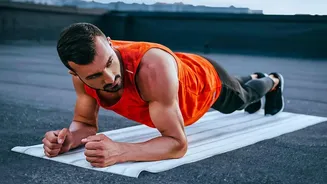
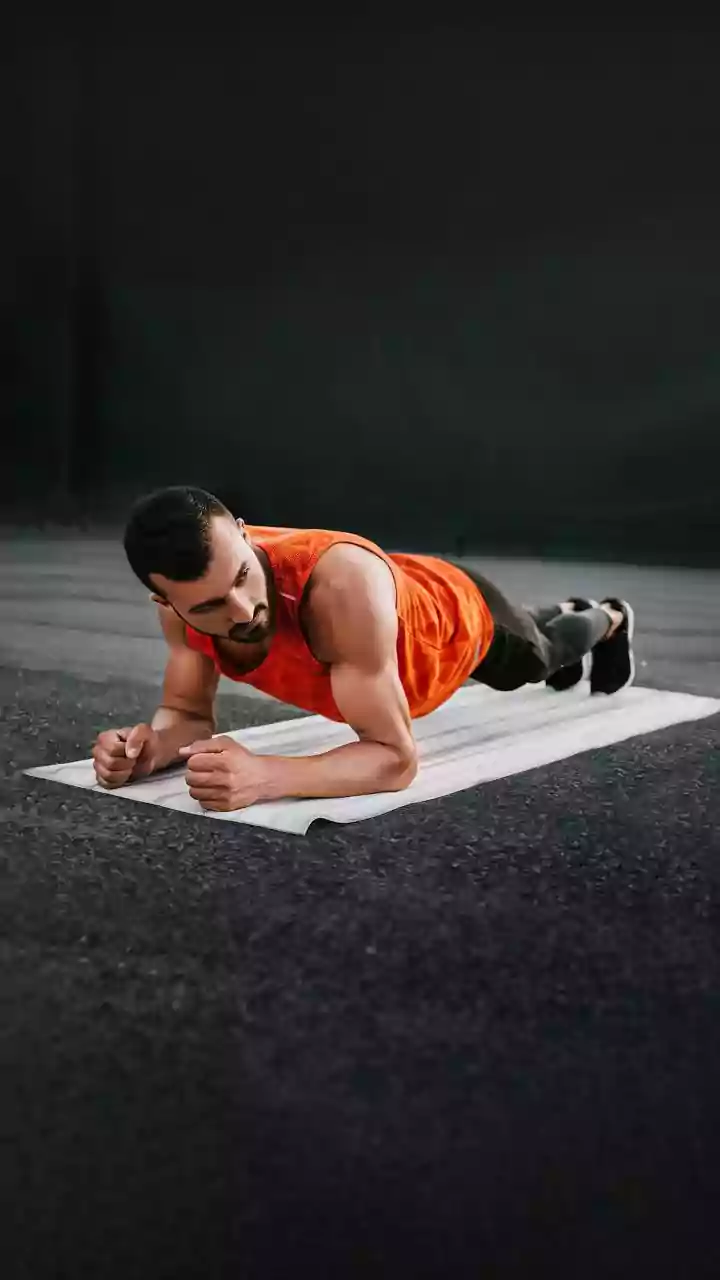
5. Forearm Plank with Hip Twists
This final variation combines an isometric hold with a rotational movement, targeting the deep transverse abdominis and the obliques from a different angle. Start in a forearm plank, with elbows under your shoulders and your body in a straight line. Engage your core and glutes. From here, slowly rotate your hips, dipping your right hip toward the floor. Return to the center with control, and then rotate to dip your left hip toward the floor. The movement should be deliberate, not rushed. This twisting motion intensely fires up the obliques and challenges your ability to control your trunk. Alternate sides for a total of 20 controlled rotations, feeling the squeeze in your side-abs with each twist.