







Mission 02: A Triple-Threat in Space
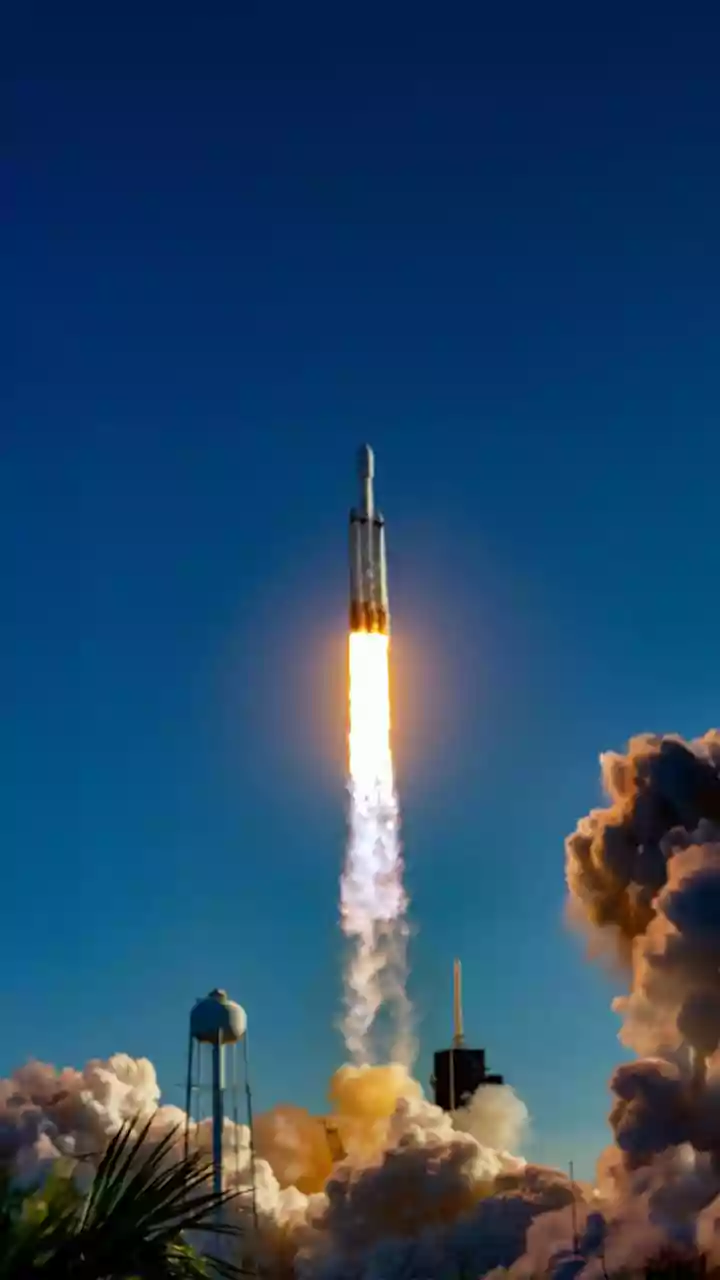
Agnikul's upcoming flight, dubbed Mission 02, isn't just a standard satellite delivery. It's a bold, three-part demonstration of technologies that could dramatically lower the cost of accessing space. The primary objective, according to CEO Srinath Ravichandran,
remains placing customer satellites in orbit. But layered on top are two secondary goals that represent the frontier of modern rocketry. First, the company will attempt to recover the rocket's first-stage booster after it separates. Second, instead of letting the upper stage become space junk after deploying its payload, Agnikul plans to demonstrate that it can continue to function as an operational platform in orbit. This combination of a commercial launch, booster recovery, and upper-stage repurposing in one go is what makes Mission 02 a landmark attempt for India's private space sector.
The Return: Recovering the First Stage
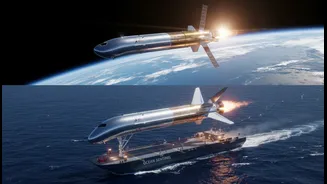
The most dramatic part of the mission will be the attempt to bring the first-stage booster back. After powering the initial ascent, the booster will separate and begin a controlled descent. Unlike a conventional rocket stage that is discarded, this one will be equipped with its own landing legs, grid fins for steering, and an independent flight computer to navigate its return journey. The plan is to have it perform a powered vertical landing on a barge stationed in the Bay of Bengal, a technique famously pioneered by SpaceX. This process, often called ocean recovery, is a crucial first step toward full reusability. Successfully recovering the hardware is essential for inspecting, refurbishing, and eventually reflying it, which is the key to unlocking major cost savings. Confidence gained from the controlled flight of the Agnibaan SOrTeD mission in May 2024 convinced the team to pursue recovery immediately.
In-Orbit Reuse: A Second Life for the Upper Stage
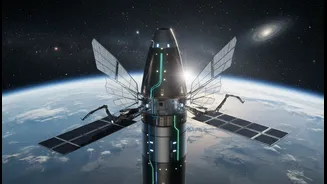
While booster recovery grabs headlines, Agnikul's plan for its upper stage is arguably just as innovative. Typically, the final stage of a rocket becomes debris after releasing its satellite payload. Agnikul, however, has developed a 'convertible' upper-stage architecture, for which it holds patents in India, the US, and Europe. The idea is to keep the stage operational, transforming it into a useful platform in space. This in-orbit asset could then host experiments, test new technologies, or support other space infrastructure, effectively giving the hardware a second, revenue-generating life. Ravichandran explains the philosophy as not wanting to "throw away anything." While the upper stage is too difficult to bring back to Earth, keeping it functional in space extracts maximum value from the launch.
The 'Why' Behind Reusability
Agnikul's ambitious plans are driven by simple economics. Reusability has fundamentally changed the global launch market. When you can reuse the most expensive parts of a rocket instead of building a new one for every mission, launch costs plummet. Agnikul has stated that successful reusability could slash its launch costs by as much as 80%. This would make launching small satellites, its target market, significantly more affordable and frequent. This strategy is essential for competing with global giants like SpaceX and Rocket Lab, who have made reusability a core part of their business model. The mission is a major step in proving that a private Indian company can develop and master this complex technology, a feat that could position India's space sector as a major commercial player.
Technology and Team Powering the Dream
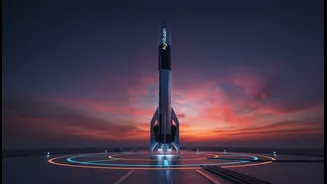
Underpinning these ambitions is Agnikul's unique technology. The Agnibaan rocket is powered by the Agnilet engine, the world's first single-piece, 3D-printed, semi-cryogenic engine. This engine, which can be manufactured in a matter of days, is a testament to the company's focus on agile and advanced manufacturing. The rocket itself is designed to be configurable to match mission needs. To guide this complex mission, the Chennai-based startup, incubated at IIT Madras, has also brought former ISRO Chairman S. Somanath onto its board as an observer. His deep experience with complex launch systems is seen as invaluable as Agnikul prepares for what he described as a "genuine technical frontier" for India.