


An Alien Weather System
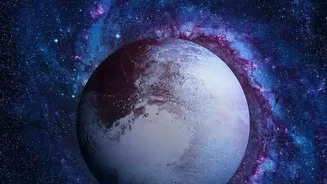
On Earth, our weather is governed by a water cycle. Water evaporates, forms clouds, and falls as rain. On Saturn, and its largest moon Titan, a similar cycle exists, but with a different core ingredient: methane. High in Saturn's atmosphere, methane exists as a gas.
But the planet is home to incredibly powerful lightning storms, which can break apart the methane molecules. This process releases carbon, which clumps together to form vast clouds of soot. As these soot particles fall deeper into the planet's thick atmosphere, they encounter a world of rising pressure and temperature. This alien weather system is the first step in a proposed chain of events far more dramatic than any forecast on Earth.
From Soot to Diamonds
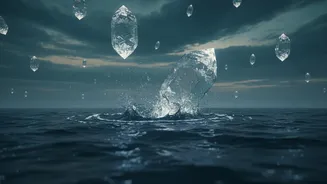
The journey of a carbon particle through Saturn's atmosphere is a transformative one. As the soot falls, the immense pressure begins to compress it. Scientists theorise that it first crystallises into graphite, the same familiar, soft carbon used in pencils. But the descent continues. Deeper still, where pressures are millions of times greater than on Earth's surface, this graphite is crushed into something much harder: diamonds. This isn't just a handful of gems; some models estimate that around 1,000 tonnes of diamonds could be formed this way every year. This "diamond rain" is a key component of the theoretical carbon cycle, providing a mechanism for transporting carbon from the upper atmosphere toward the planet's deep interior.
Oceans of Liquid Diamond?
The fate of these falling diamonds is even more speculative and astounding. The journey downwards covers tens of thousands of kilometres, with heat and pressure continuing to build to unimaginable levels. Eventually, the conditions may become so extreme that even solid diamonds cannot survive. Scientists have proposed that these diamonds melt, potentially forming a vast sea of liquid carbon deep within the planet. While the exact state of matter under such conditions is uncertain, this molten diamond layer would represent a massive reservoir of carbon, locked away far below the cloud tops we can observe. This process would effectively sequester carbon deep within the planet, mirroring how Earth's geology traps carbon in rocks.
Completing the Carbon Cycle
For this to be a true cycle, the carbon must eventually return to the atmosphere. This is the most significant unknown in the theory. A deep carbon cycle requires a mechanism to transport material from the core back to the upper layers. On Earth, this is accomplished through processes like volcanism, which releases trapped gases. On Saturn, the mechanism is unclear. It could involve massive convection currents within the gas giant's interior, slowly churning and dredging material upward over geological timescales. Another possibility is that Saturn’s strange, diffuse core, which may extend to 60% of the planet's radius, facilitates a more complex mixing of elements than previously thought. While spacecraft like Cassini have provided crucial data on atmospheric composition, the planet's deep interior remains a mystery.