



The Challenge: Navigating in a Void
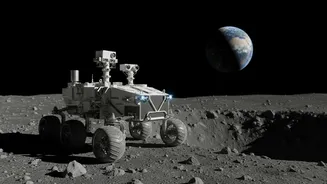
For as long as humanity has sent machines to the Moon, guiding them has been a complex, Earth-centric affair. Every movement, every turn of a rover's wheel, has traditionally required constant communication with mission control. Operators use a system
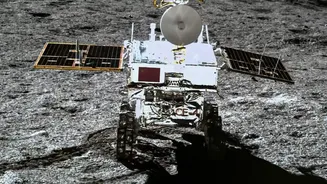
of radio signals and orbital tracking from networks like the Deep Space Network to pinpoint a lander's or rover's location. This method is reliable but has significant drawbacks. There are time delays as signals travel the vast distance, and a mission needs a direct line of sight to a ground station on Earth. As NASA plans for a sustained human presence on the Moon under the Artemis program, with more rovers, landers, and astronauts working simultaneously, this reliance on Earth becomes a critical bottleneck. For true exploration and the construction of a lunar base, vehicles and people need to know where they are and where they're going on their own.
Introducing the Lunar Node 1 Beacon
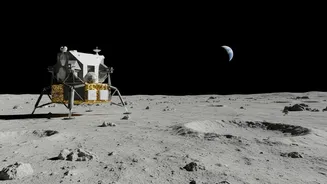
Enter the Lunar Node 1, or LN-1. It’s a small, deceptively simple-looking piece of hardware that represents the first step toward a true lunar GPS. Developed at NASA's Marshall Space Flight Center, LN-1 is a navigation beacon. It was designed to be delivered to the lunar surface as part of NASA's Commercial Lunar Payload Services (CLPS) initiative, hitching a ride on an Intuitive Machines lander. The primary goal of LN-1 is to demonstrate that an autonomous navigation system can work on the Moon. Instead of relying solely on pings from Earth, LN-1 acts as a fixed reference point on the lunar surface, broadcasting its own signal. This allows other assets—like rovers or orbiting spacecraft—to determine their position relative to the beacon, a crucial move towards operational independence.
How a Lunar GPS Would Work
Think of LN-1 as the very first satellite in a future GPS-like constellation for the Moon. On Earth, your phone receives signals from multiple GPS satellites, using the timing of those signals to triangulate your exact position. The vision for lunar navigation is similar. The LN-1 payload is designed to test the algorithms for a Multi-spacecraft Autonomous Positioning System (MAPS). In the future, a network of several such nodes, placed strategically on the surface and perhaps in lunar orbit, could create a comprehensive navigation grid. A rover could receive signals from multiple beacons and calculate its own position in real-time, without needing to phone home to mission control for directions. This system would provide rovers and astronauts with the instant, precise location data they need to navigate complex terrain, find scientifically interesting sites, or return safely to their base.
Beyond the Beacon: LunaNet and a Connected Moon
The LN-1 is just one piece of a much larger puzzle NASA is building called LunaNet. LunaNet is an ambitious architecture designed to provide a communications and navigation network for the Moon, much like the internet and GPS on Earth. This framework would allow different missions from various countries and private companies to communicate with each other and navigate accurately. Other related technologies are also in development, such as the NavCube3-mini, a compact receiver designed to use faint signals from Earth's own GPS and Galileo satellites at lunar distances. By combining surface beacons like LN-1, orbital relays, and advanced receivers that can use Earth's GPS, NASA is creating a multi-layered, robust system. This ensures that even if one method is unavailable, there are backups to keep missions safe and on track.
The Future of Autonomous Lunar Exploration
The ability for rovers and astronauts to navigate independently will revolutionize lunar exploration. Autonomous rovers could cover far more ground, conducting scientific surveys over vast areas that are currently impractical to explore. They could transport materials for building infrastructure like habitats or landing pads without human oversight, a key requirement for establishing a permanent lunar outpost. This also dramatically improves safety. If a rover can accurately determine its own position, it can navigate around hazards and find the quickest route back to base in an emergency. This technology is not just for NASA; it will provide a crucial service for the growing number of commercial companies planning missions to the Moon, enabling everything from mining operations to tourism. By proving this technology works, NASA is laying the essential groundwork for a bustling, multi-user economy on the Moon.