




The 'Health Halo' Deception
The core of the issue lies in a psychological bias known as the 'health halo' effect. When a food is marketed with a single positive attribute—like 'organic', 'low-fat', or 'natural'—we tend to perceive the entire product as being healthier than it is.
Studies show that this halo can lead people to underestimate calories and over-consume. One study noted that people ate significantly more cookies when they were described as 'healthy'. This bias is powerful. Researchers have found that most adults overrate the quality of their diet, often by a large margin, demonstrating a clear disconnect between what we perceive as healthy and what truly is. What looks fresh, green, or wholesome can distract from high levels of sugar, sodium, or unhealthy fats lurking within.
Myth: All Salads Are a Safe Bet
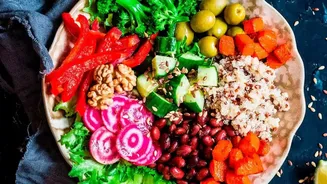
A salad seems like the ultimate healthy meal, but it's often a prime example of this deception. The base of leafy greens is fantastic, but the final nutritional value depends entirely on the toppings and dressing. A Chef salad, for instance, can contain over 370 calories and 31 grams of fat, largely due to meats, cheeses, and creamy ranch dressing. Similarly, a seemingly innocent Caesar salad's calories come mostly from the rich dressing and croutons. Even colourful vegetable salads can become calorie-dense meals once you add bacon bits, large amounts of cheese, and prepared dressings, which are often packed with sugar and sodium. The key is to be mindful of these additions, which can easily turn a light lunch into a high-calorie burden.
Myth: Smoothies and Juices Are Pure Health
Grabbing a pre-made smoothie or a colourful juice feels like an efficient way to get your vitamins. While they can contain nutrients, they are also one of the most common traps for hidden sugars. A single serving of a flavoured yogurt, a common smoothie base, can contain as much sugar as a chocolate bar. When fruits are juiced or blended, you often lose the fibre that helps you feel full and regulates sugar absorption. What's left is often a concentrated source of sugar. Some store-bought smoothies and 'vitamin waters' are essentially just sugary drinks, with a serving size on the label that's much smaller than the bottle it comes in, tricking you into consuming far more calories and sugar than you realise.
Myth: 'Organic' or 'Gluten-Free' Means Healthy
Labels like 'organic' and 'gluten-free' can create a powerful health halo, but they don't automatically make a food nutritious. The term 'organic' refers to how the food was produced, not its nutritional content. Organic sugar is still sugar, and organic snacks can be just as high in fat and calories as their non-organic counterparts. Likewise, 'gluten-free' simply means a product lacks a specific protein, which is crucial for those with celiac disease or sensitivity, but it says nothing about the food's overall health profile. Many gluten-free products are highly processed and may contain more sugar or fat to compensate for taste and texture. Relying on these buzzwords without checking the full nutrition label is a common pitfall.
How to Make Genuinely Healthy Choices
The first step to overcoming the health halo is to ignore the claims on the front of the package and turn it over to read the nutrition facts and ingredient list. Look for hidden sugars (often listed as fruit juice concentrate, corn syrup, or dextrose), high sodium levels, and unhealthy saturated fats. Portion size is also critical. Many foods advertised as healthy, like granola, have a very small recommended serving size that is easy to exceed. A better approach is to focus on whole, minimally processed foods. When choosing a salad, load up on colourful vegetables, include a lean protein source, and opt for a simple vinaigrette made with oil and vinegar. For a truly healthy smoothie, make it yourself with plain yogurt, whole fruits, and vegetables to retain the fibre.