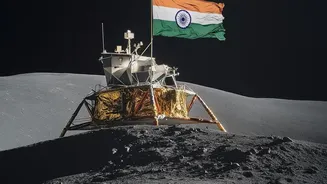









Redefining the Mission, Not Replacing It
Recent headlines and employee concerns have sparked debate about the potential privatisation of the Indian Space Research Organisation (ISRO). However, government and ISRO officials have been quick to clarify that the agency is not for sale. The ongoing
reforms, crystallized in the Indian Space Policy 2023, are not about dismantling ISRO but strategically unburdening it. For decades, ISRO has been the sole player, responsible for everything from designing rockets to manufacturing satellites and conducting launches. This end-to-end model was necessary to build the nation's space capabilities from the ground up. Now, with a mature foundation, the strategy is shifting. The new policy allows ISRO to transition out of routine manufacturing and operations, handing these over to a burgeoning private sector. This move is designed to free up ISRO's immense scientific talent and resources for more complex, frontier-pushing endeavours.
From Operator to Pioneer
ISRO's new mandate is to focus on what it does best: pioneering research and development, deep space exploration, and missions of national strategic importance. Instead of spending resources on the repetitive production of well-established systems like the Polar Satellite Launch Vehicle (PSLV), ISRO will concentrate on next-generation challenges. This includes the Gaganyaan human spaceflight programme, the ambitious goal of establishing a 'Bharatiya Antariksh Station' (Indian Space Station) by 2035, and sending an Indian astronaut to the Moon by 2040. The agency will also lead the charge in developing new propulsion systems, advanced satellite technologies, and planetary science missions. By stepping away from the assembly line, ISRO can operate more like its global counterpart, NASA, which has long relied on private contractors like SpaceX and Boeing for routine launches, allowing it to focus on deep space exploration with its Artemis program and James Webb Space Telescope.
The Rise of a Private Space Ecosystem
The success of this new model hinges on a robust private industry ready to take on the operational workload. The Indian Space Policy 2023 formally empowers Non-Governmental Entities (NGEs) to undertake end-to-end space activities. This includes building their own launch vehicles and satellites, operating ground stations, and providing space-based services. Startups like Skyroot Aerospace and Agnikul Cosmos are already making headlines with their own launch vehicle development. This is not just about offloading work; it's about creating a dynamic new industry. The goal is to significantly expand India’s share of the global space economy, which is projected to grow substantially. To meet its own domestic demand, India needs an estimated 50 launches per year, a cadence ISRO alone cannot meet. By fostering a competitive private market, the country can increase its launch capacity, attract investment, and drive innovation.
IN-SPACe: The Bridge Between Two Worlds
To manage this transition and ensure a level playing field, the government established the Indian National Space Promotion and Authorisation Centre (IN-SPACe) in 2020. This autonomous body acts as a single-window agency to promote, authorise, and supervise the activities of all private space companies. Its role is crucial: it serves as the interface between ISRO and the private sector. IN-SPACe facilitates the transfer of mature ISRO technologies to private firms and grants them access to ISRO's world-class testing facilities and launch infrastructure. It is both a regulator and an enabler, tasked with nurturing the startup ecosystem while ensuring safety and compliance. By creating a clear and predictable regulatory environment, IN-SPACe aims to make the Indian space sector an attractive destination for domestic and foreign investment, further boosting its growth potential.