


The Woman Known as 'Turmeric Trinity'
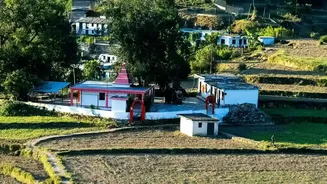
Trinity Saioo, from Mulieh village in the West Jaintia Hills, is a name synonymous with Lakadong turmeric. A schoolteacher by profession, her journey into farming began as a way to support her family but quickly evolved into a mission. In 2003, she recognized
the potential of the local Lakadong variety of turmeric, which had been largely abandoned by farmers in favour of less profitable crops or, more recently, the lure of coal mining. Realizing its superior quality and market value, she started cultivating it herself and soon began encouraging others to do the same. Her tireless efforts in leading a women-led farming movement eventually earned her the moniker 'Turmeric Trinity' and, in 2020, the prestigious Padma Shri award.
Meghalaya's Golden Spice
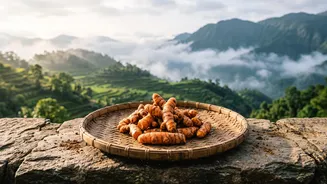
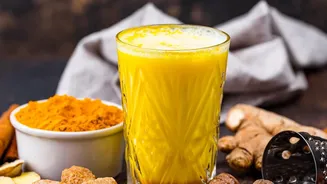
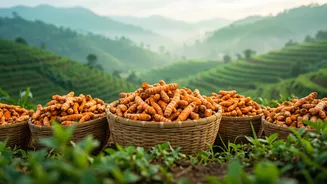
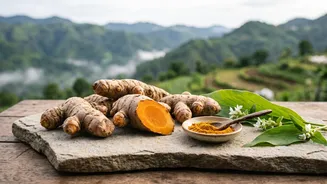
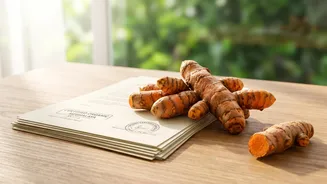
Lakadong turmeric is not just any turmeric. Grown in the Jaintia Hills, this indigenous variety is renowned for its exceptionally high curcumin content, often exceeding 7%, compared to the 2-4% found in regular varieties. This high concentration of curcumin, the active compound that gives turmeric its potent anti-inflammatory and antioxidant properties, makes Lakadong a premium product in global health and wellness markets. The unique ecological conditions of the region contribute to its superior quality. For the farmers of Meghalaya, this 'golden spice' represents more than just a crop; it's a ticket to economic stability and a way to preserve their agricultural heritage.
The Overlooked Hurdle: Paperwork
While the market for Lakadong turmeric is strong, farmers, particularly illiterate women in remote villages, face a significant barrier: paperwork. Accessing government schemes, applying for subsidies for high-quality seeds, and obtaining organic certification all require navigating a maze of documentation. This administrative hurdle can be insurmountable for those without the literacy or means to travel to government offices. Without these crucial documents, farmers cannot get the support needed to switch to the high-yielding Lakadong variety, prove their produce is organic, or access wider, more profitable markets. They are often forced to sell their premium product at lower prices, unable to unlock its true value.
Saioo's Hands-On Solution
This is where Trinity Saioo’s initiative becomes transformative. Leveraging her background as a teacher, she began hand-holding farmers through the entire documentation process. She liaised with the Spices Board of India and other government departments to understand the requirements and then worked directly with the women in her community to complete the necessary forms. Her efforts ensure that farmers can successfully apply for subsidies for seed tubers and gain organic certification, a critical step for fetching higher prices. By demystifying the bureaucracy, Saioo removes a key obstacle, empowering farmers to take control of their livelihoods.
The Ripple Effect of Empowerment
The impact of helping with paperwork goes far beyond a stamped form. It's an act of empowerment that has tripled the income of many women farmers. With access to subsidies and certifications, farmers can confidently invest in Lakadong cultivation. Saioo has been instrumental in organizing these women into Self-Help Groups (SHGs), fostering a community of support. She helped revive the Life Spice Federation of Self-Help Groups, which now includes over 100 SHGs and more than 900 farmers. This collective power enables them to manage processing units, market their products more effectively, and even export their turmeric to other states, ensuring the entire community shares in the success.