




A Pinpoint Lunar Landing
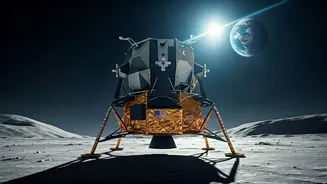
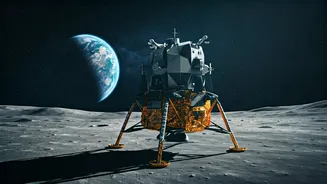
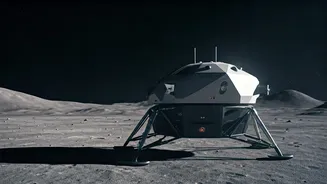
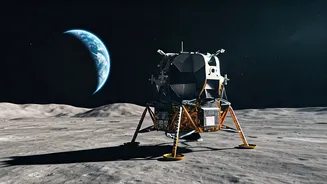
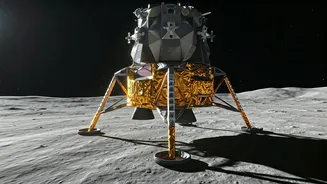
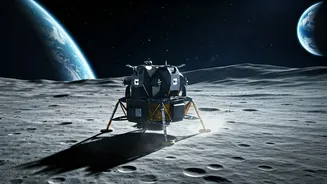
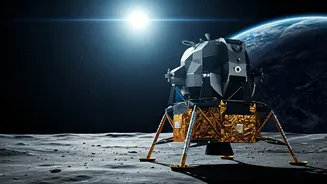
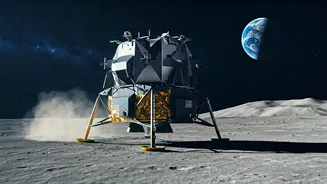
Firefly Aerospace's Blue Ghost Mission 1 achieved a historic milestone by executing a flawless soft landing on the Moon. The spacecraft, named after the Phausis reticulata firefly, touched down in Mare Crisium, a vast basin on the Moon's near side. This
marked the first fully successful commercial lunar landing, a significant achievement distinguishing it from previous attempts by other companies that either failed to reach the Moon or experienced issues upon landing. The solar-powered lander not only landed safely but operated for a full 14 days, surviving the extreme temperature swings of a lunar day and even capturing a solar eclipse from the Moon's surface before its mission ended at lunar sunset. This operational success demonstrated the robustness of Firefly's design and its ability to support long-duration science.
Validating the CLPS Strategy
This success is a huge win for NASA's Commercial Lunar Payload Services (CLPS) program. Established in 2018, the CLPS initiative tasks private American companies with delivering science and technology payloads to the lunar surface. The model treats NASA as one of many potential customers, aiming to foster a competitive commercial market for lunar logistics, drive down costs, and increase the frequency of missions. The program has seen mixed results, including a failed landing by Astrobotic and a tipped-over-but-operational lander from Intuitive Machines. Firefly's complete mission success provides powerful validation for this high-risk, high-reward strategy, proving that commercial partners can deliver on complex lunar missions and build a reliable pipeline to the Moon.
Pioneering Science and Technology
Onboard Blue Ghost was a suite of ten NASA payloads designed to gather critical data for future missions. These instruments performed a range of tasks, from studying the Moon's thin atmosphere and magnetic field to testing a new soil-sampling technology called PlanetVac. The mission also successfully tested a GPS-like navigation system for the Moon, a vital step for future infrastructure. One instrument studied how rocket plumes interact with the lunar surface, providing key data to prevent future landings from damaging nearby hardware. The wealth of data collected, totaling nearly 120 gigabytes, was so valuable that NASA paid an extra $10 million for additional images and performance metrics, including unique views of a sunset from the Moon.
Building on Success
Firefly's achievement has solidified its position as a key player in the burgeoning lunar economy. The company is already leveraging the data and experience from Mission 1 to streamline production for future landers. On June 30, 2026, NASA awarded Firefly a new $144 million CLPS contract for another mission in 2028. The company says it can now cut development time for a new lander in half. This rapid iteration is precisely what NASA envisioned. Firefly also has plans for Blue Ghost Mission 2, an ambitious trip to the far side of the Moon scheduled for late 2026, which will deploy a European Space Agency satellite and carry an array of international payloads. These missions are crucial building blocks, paving the way for the larger Artemis program, which aims to establish a sustained human presence on the Moon.